Hercule Florence: The Forgotten Pioneer of Photography and the Mystery in Russia’s Archives
An overlooked inventor, a Brazilian rainforest and a trail leading to St Petersburg. At a Monaco screening of a new documentary, the history of photography proved rather less straightforward than the textbooks would have us believe.
Russia is not the first place one thinks of when discussing the invention of photography. Nor, for that matter, is Monaco. Yet both have a part to play in the curious story of Hercule Florence, a nineteenth-century inventor who was experimenting with photographic images years before Louis Daguerre became famous.
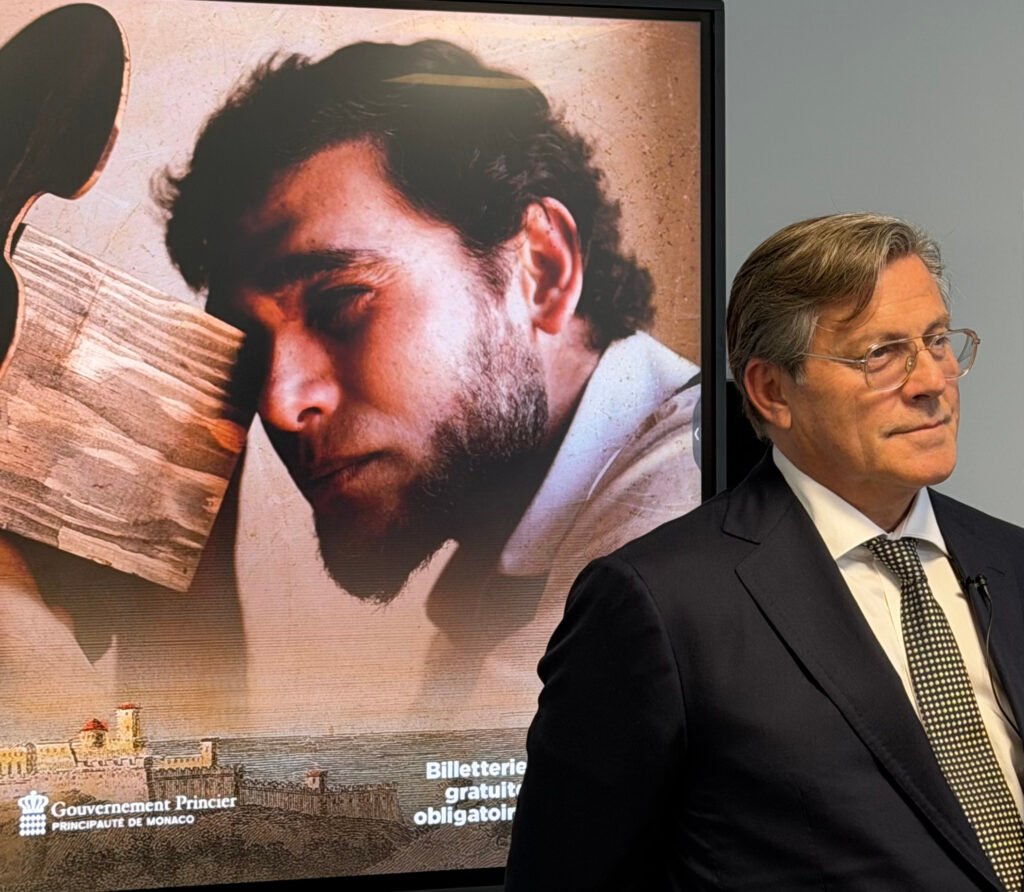
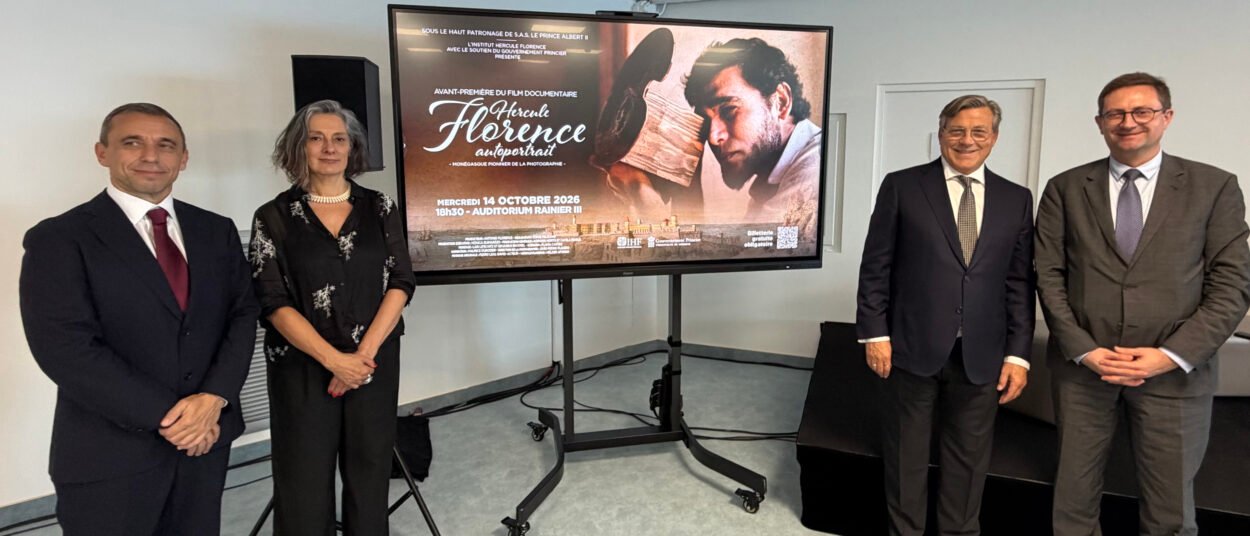
At a press conference ahead of the Monaco preview screening of Hercule Florence, autorretrato 1804–1879, I asked Antonio Florence, the inventor’s descendant and head of the Hercule Florence Institute in Brazil, whether any secrets about his ancestor might still be waiting to be uncovered. Perhaps, I suggested, in Russia?
It was not an entirely mischievous question. Florence had travelled through Brazil as an artist on a scientific expedition financed by the Russian Empire. Antonio’s response pointed towards St Petersburg, where material from that remarkable journey survives.
The Kunstkamera, it turns out, has a place in the story of a man who tried to make pictures with light.
History rarely respects national boundaries, however diligently we draw them.
The inventor who missed his moment
Hercule Florence was born in Nice in 1804, grew up in Monaco and made his life in Brazil. A gifted draughtsman with an apparently inexhaustible curiosity, he joined the expedition of Georg Heinrich von Langsdorff, a naturalist and diplomat in Russian service, and spent years recording the extraordinary world around him.
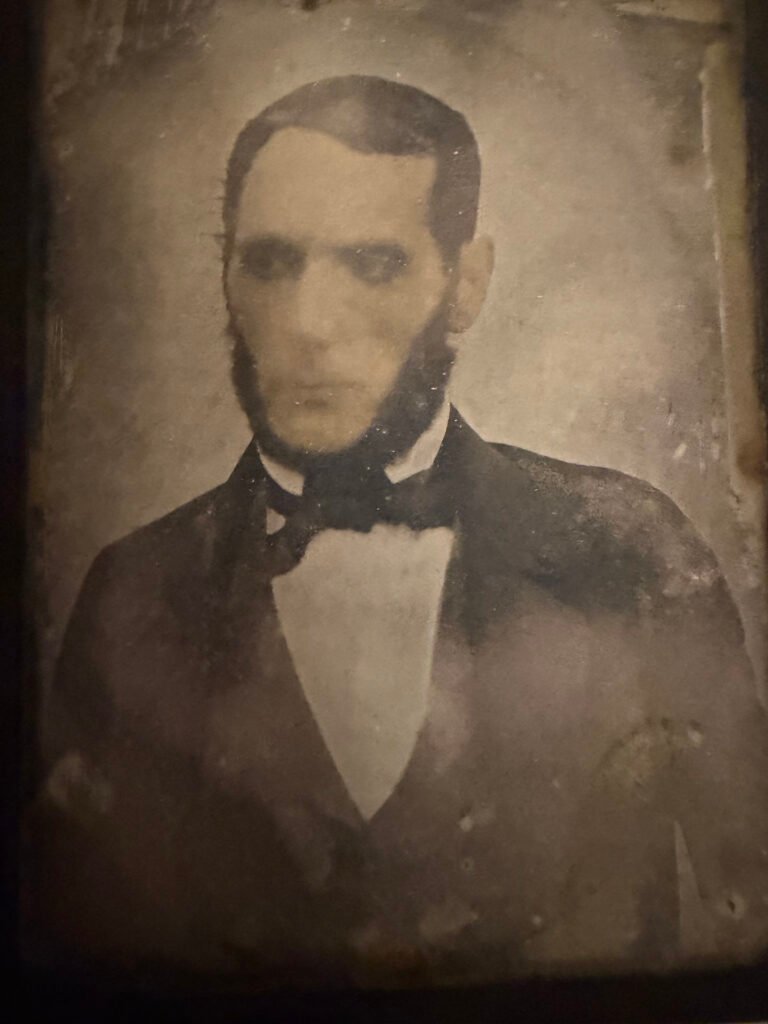
Collection: Cyrillo Hercules Florence / Instituto Moreira Salles, Rio de Janeiro.
Source: Fig. 15, archival photograph reproduced in the publication.
The expedition was no genteel botanical outing. It involved exhausting journeys through the Brazilian interior, illness and considerable danger. Florence emerged with drawings, observations and an appetite for invention that seems to have been almost impossible to satisfy.
Among his more eccentric — and rather touching — projects was an attempt to write down birdsong. In an age before sound recording, he devised graphic marks to represent the pitch and duration of calls heard in the forest.
It is the sort of detail that makes the new documentary, directed by Jorge Pelicano and written by Flávia Castro, worth watching. Florence was not content merely to observe the world. He wanted to keep it.
Then came photography.
In January 1833, he described exposing light-sensitive paper inside a camera obscura for four hours. The result was a negative image. He also experimented with reproducing drawings and inscriptions through direct contact with treated paper.
Six years later, in 1839, the world celebrated Daguerre.
Florence was not the only inventor to discover that history has a rather brutal way of allocating credit. The difference is that he had been working in Brazil, far from the European institutions capable of turning an experiment into an international sensation.
To suggest that Florence simply invented photography before Daguerre would be too neat. Daguerre developed a practical process that could be demonstrated and adopted. Florence’s work followed a different path and remained little known.
But it is precisely this untidy history that makes him interesting.
Monaco remembers its wandering son
The Monaco presentation brought together people who have approached Florence from very different directions: family history, archival research, filmmaking and scientific investigation.
Thomas Fouilleron, Director of the Archives and Library of the Prince’s Palace of Monaco, offered an important corrective to the romantic notion of Florence as a young man fleeing his homeland. His departure belonged to an age fascinated by exploration, travel and scientific discovery.
Florence, in other words, was not running away from Monaco so much as running towards the world.
And he never entirely left the principality behind.
His letters home form an intimate thread through the documentary. In 1826, writing from Brazil, he sent his family accounts of his travels and drawings of what he had seen. His brother later told him that the letter had been read in households across Monaco.
It is an appealing image: a young adventurer reporting from the other side of the Atlantic, while the people back home followed his exploits almost as a serial.
When Florence returned to Monaco in 1855, he wrote of recognising its familiar streets and stones.
The new film is another sort of homecoming, although this time the traveller has taken rather longer to arrive.
What the laboratory found
There is a danger with stories of forgotten inventors that they become exercises in historical grievance: the misunderstood genius, the stolen glory, the familiar complaint that somebody else got there first.
The Getty Conservation Institute’s research offers something more substantial.
Scientists have examined three surviving photographic objects associated with Florence: a design for a Masonic diploma and two pharmacy-label images. Their investigations identified silver in the diploma design and gold in the pharmacy-label images — findings of particular interest because Florence’s notebooks describe experiments with light-sensitive substances involving both metals.
Art Kaplan of the Getty Conservation Institute brought the discussion down from the grand question of priority to the rather more useful question of evidence.
What substances did Florence use? How did they react to light? And how have some of these fragile images survived for nearly two centuries?
These are not merely technical footnotes. They are the questions that allow researchers to distinguish a remarkable historical claim from a demonstrable achievement.
It is one thing to find a nineteenth-century inventor describing a photographic experiment. It is quite another to place surviving objects under modern instruments and discover what they are made of.
Florence, one suspects, would have enjoyed the laboratory immensely.
A very modern nineteenth-century man
Flávia Castro’s screenplay is careful not to reduce Florence to a disappointed rival of Daguerre.
He was a prolific inventor, certainly, but also a husband and father, a correspondent, an observer of nature and a man who experienced his share of grief and frustration.
His curiosity extended to printing, transport, education and the possibilities of recording the natural world. His second wife, Caroline, helped establish a school for girls.
Castro’s portrait is of someone rooted in the nineteenth century yet preoccupied with questions that still feel contemporary: how to preserve information, share knowledge and overcome distance.
Not every idea succeeded. Some never came close. But there is something endearing about a man who, having tried to capture birdsong on paper, turned his attention to fixing images with light.
He appears to have regarded the impossible less as a prohibition than as a suggestion.
The Russian files
Which brings us back to Russia.
The Langsdorff expedition was not merely an adventure with a vaguely imperial connection. In June 1821, Alexander I authorised funding for the journey, including 40,000 roubles for equipment and an annual allowance of 10,000 roubles. Florence subsequently joined the expedition as an artist.
The results of that Russian-backed enterprise are still scattered across St Petersburg.
Florence’s expedition manuscript is held by the St Petersburg Branch of the Archive of the Russian Academy of Sciences, where it has a precise archival reference: fond 63, inventory 1, file 8. The Kunstkamera, meanwhile, preserves ethnographic objects collected during the journey, including material from Indigenous communities in Brazil.
These are distinct collections, and the distinction matters. The archive preserves Florence’s documentary record; the museum holds objects gathered during the wider expedition.
There is a particularly intriguing detail. Much of the expedition’s documentary archive fell into obscurity and was rediscovered in 1930. According to the Russian Academy of Sciences, not all the material brought back from Brazil has been accounted for.
So when I asked Antonio Florence whether Russia might still hold secrets about his ancestor, the question was not quite as fanciful as it sounded.
It would be rash to suggest that a missing photographic masterpiece is waiting in a St Petersburg cupboard. Florence conducted his photographic experiments later, in Brazil, and the Russian government did not fund them.
But the archive has already surprised historians once. There is no obvious reason to assume it has finished doing so.
The Russian connection also complicates the familiar geography of photographic history. We tend to think of its beginnings in terms of French and British inventors, laboratories and announcements. Florence’s story takes us instead from Monaco to Brazil, through an expedition supported by the Russian Empire.
The history of an invention is rarely as tidy as the history of its publicity.
The art of being remembered
Antonio Florence and the Hercule Florence Institute have spent years working to preserve the inventor’s legacy. The new documentary brings that work to a broader audience, while the scientific research provides fresh evidence of the seriousness of his experiments.
Together, they offer something better than a campaign to rewrite a famous date in a textbook.
They give us a man.
A young artist leaves Monaco, crosses the Atlantic, travels through Brazil on a Russian-backed expedition, attempts to record the sounds of the forest and begins experimenting with light-sensitive images. The world celebrates another inventor. His own work slips into relative obscurity.
Almost two centuries later, his descendants, historians, filmmakers and scientists are putting the pieces together.
For a man who devoted so much energy to finding ways of preserving the fleeting, there is a certain irony in how long it has taken the world to recover his own story.