Monaco and the Future of Global Philanthropy
Fifteen years in the making, the Principality’s inaugural Summit on Philanthropy marks a new chapter in Monaco’s commitment to international cooperation, bringing together leading philanthropists to consider the responsibilities, opportunities and future of private giving.
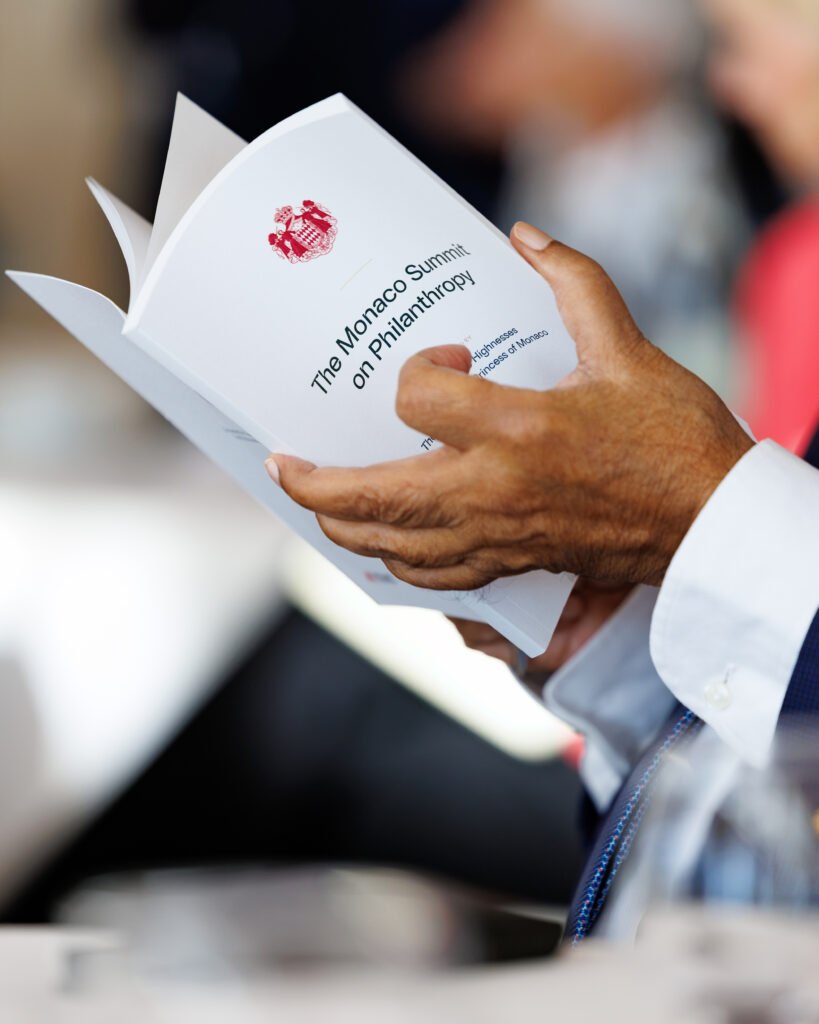
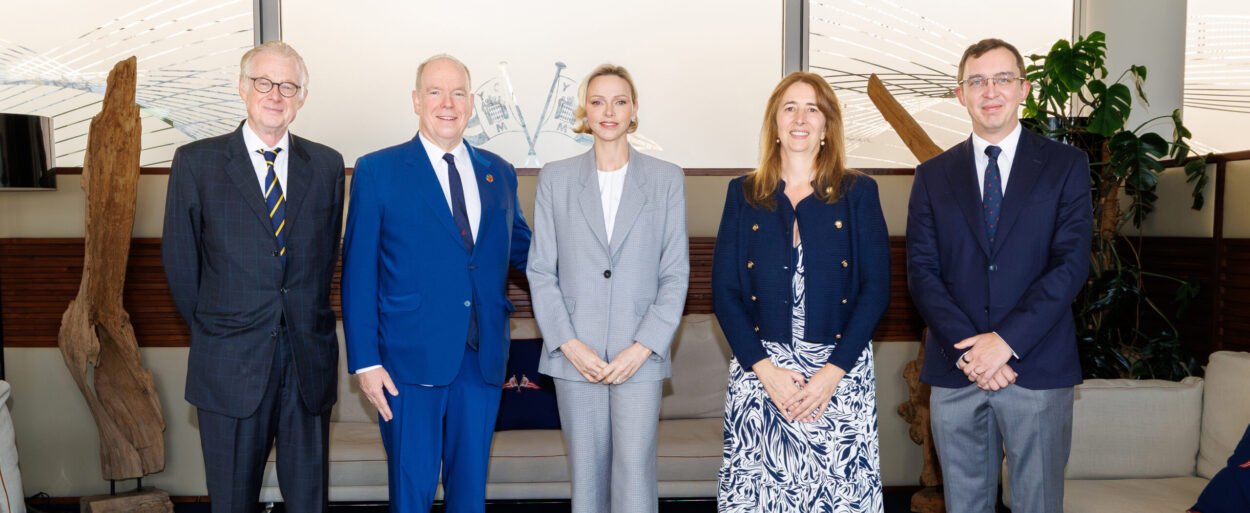
Fifteen years ago, a philanthropic dialogue began to take shape in Monaco. On October 12th, that long-standing initiative entered a new chapter as Prince Albert II and Princess Charlene welcomed around 100 leading philanthropists and decision-makers to the inaugural Monaco Summit on Philanthropy.
Representing more than 20 countries across five continents, the gathering brought together foundation founders, family philanthropists, representatives of royal and sovereign-linked institutions, and leaders of major international foundations. According to the organisers, those attending represented an estimated €150bn in combined wealth.
The figure offered a measure of the gathering’s reach. Its purpose, however, was not to announce a collective fundraising target, but to examine how philanthropy might respond to a world in which public resources are increasingly constrained and long-term challenges demand sustained attention.
Convened by Their Serene Highnesses Prince Albert II and Princess Charlene, the summit was organised by their respective foundations, with the support of the Tocqueville Foundation. Conceived as an annual international forum, it builds on Monaco’s established tradition of bringing together individuals and institutions around environmental protection, humanitarian action and the wider public good.
Fifteen years of dialogue, a new international chapter
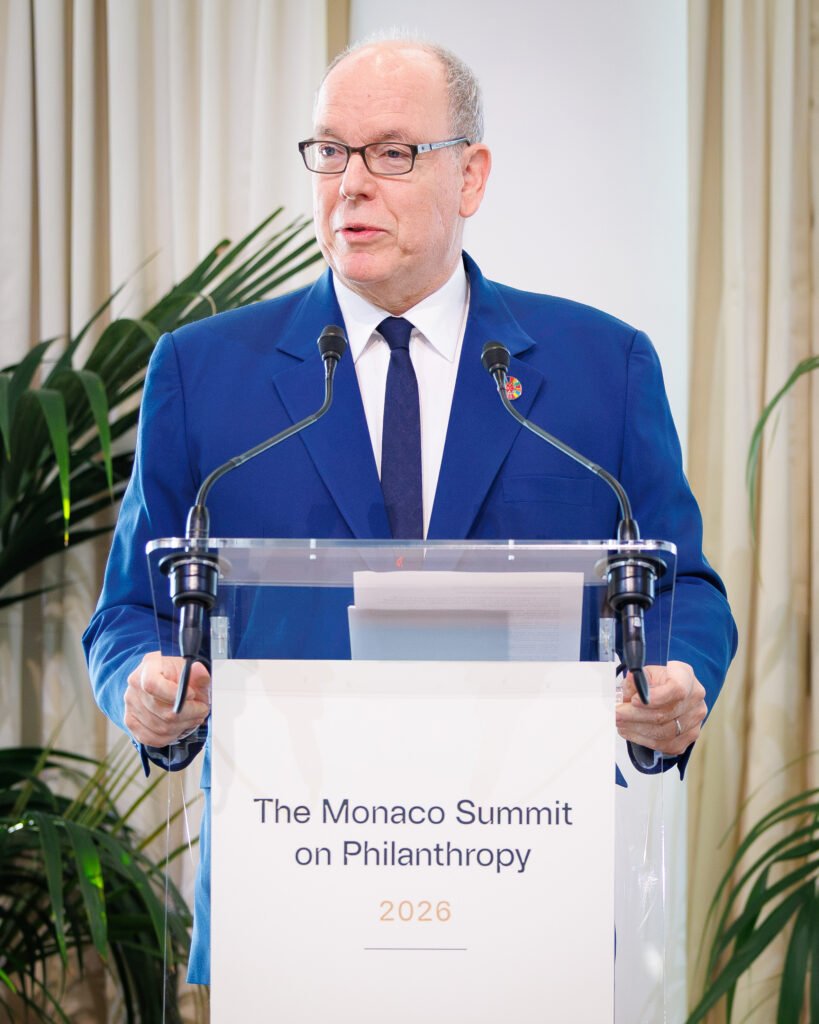
The origins of the summit lie in a collaboration that Prince Albert II recalled in his opening address. Paying tribute to Jean-Guillaume de Tocqueville, he described how, over fifteen years, they had developed the project from a philanthropic roundtable into the international gathering inaugurated this October.
That history matters. The summit is not an isolated addition to Monaco’s international calendar, but the latest stage in a sustained effort to encourage dialogue among those engaged in philanthropy.
The Prince linked its evolution to the changing global situation. Governments, he observed, are reconsidering their priorities amid growing uncertainty, while international funding faces increasing pressure. Urgent demands can displace essential long-term commitments.
The consequences are particularly evident in areas central to his own engagement: ocean conservation, biodiversity, climate change, health, women’s and children’s rights, and poverty reduction.
For philanthropy, such circumstances present both an opportunity and a responsibility. Private foundations can sustain work across political cycles, support emerging ideas and pursue objectives whose benefits may take years to become apparent.
As Prince Albert II said, “Where Governments often think in years, philanthropy can think in generations.”
It was a succinct expression of the philosophy underpinning the summit: philanthropy’s distinctive value lies not simply in the resources it commands, but in the freedom to pursue long-term commitments.
The challenges of scale, succession and technology
Prince Albert II identified three challenges that will shape the future of philanthropic action.
The first is scale. Meeting global needs requires broader and more diverse sources of support, yet the expansion of philanthropy must not concentrate responsibility in the hands of a small number of private actors. The issues at stake, the Prince emphasised, concern humanity as a whole.
His answer was cooperation: among public authorities, international institutions, civil society and the private sector. Rather than competing for influence, these different actors can contribute complementary capabilities.
The second challenge is transmission. As substantial wealth passes to younger generations, the question is not merely how assets will be inherited, but whether a commitment to giving will accompany them.
The Prince called for younger philanthropists to become involved now, encouraging their ideas and helping to cultivate a lasting sense of responsibility. This concern was reflected in the summit’s Next Generation Circle, which gave a platform to successors within philanthropic families.
The third challenge is technology, particularly artificial intelligence.
Prince Albert II acknowledged its potential to identify needs, assess impact, monitor ecosystems and recognise solutions capable of being applied on a greater scale. Yet he drew a clear distinction between the assistance technology can provide and the judgement that must remain human.
“I sincerely hope that an algorithm will never decide for us what is worth supporting,” he said.
Together, the three challenges offered a coherent agenda for the summit: expanding the reach of philanthropy, ensuring its continuity and adapting its methods without losing sight of its purpose.
Princess Charlene: placing people at the heart of philanthropy
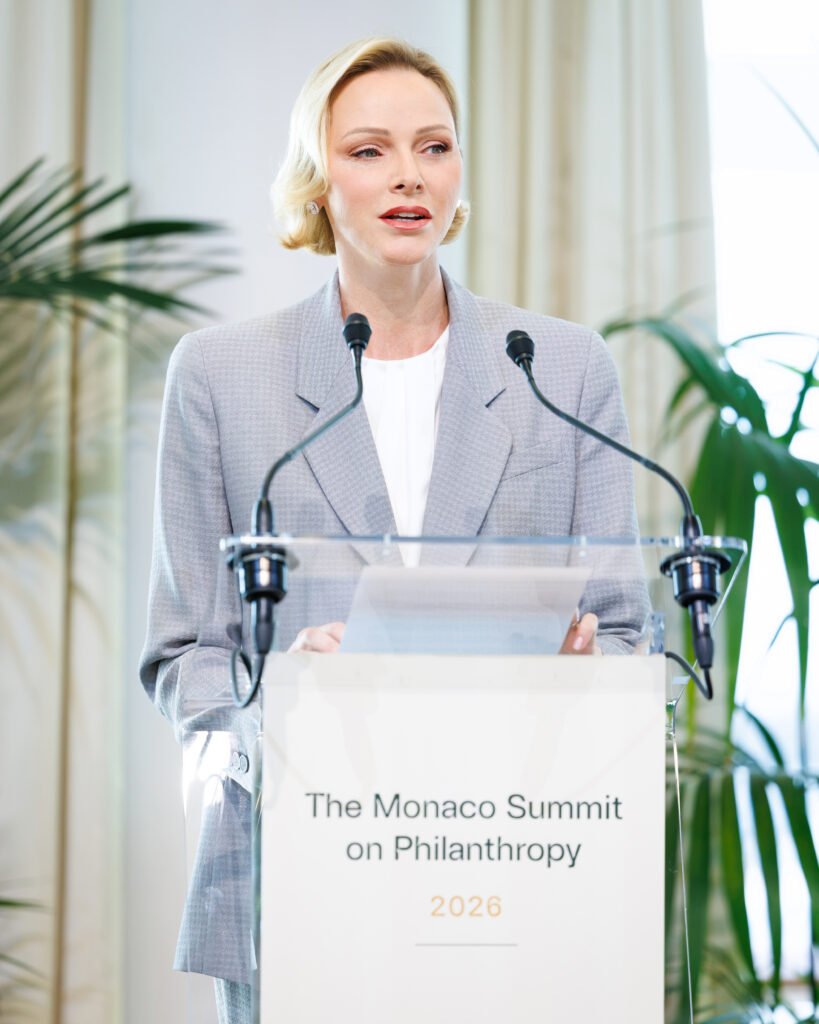
Where Prince Albert II addressed the institutional and strategic challenges of philanthropy, Princess Charlene placed particular emphasis on the people at its heart.
Welcoming participants from different countries, foundations, families and generations, she described a shared ambition to turn generosity into meaningful and lasting change.
Her address also invited reflection. Philanthropic institutions, she suggested, must be prepared to discuss not only their achievements, but also their uncertainties, difficulties and lessons learned.
“For me, philanthropy begins with a willingness to care—and the humility to listen,” the Princess observed.
She went further, stressing that the people whom philanthropic initiatives seek to support must have a voice in the decisions affecting their lives. Their knowledge, aspirations and dignity, she argued, should guide the work undertaken on their behalf.
This understanding of philanthropy is reflected in the mission of the Princess Charlene of Monaco Foundation. Established in 2012, it works internationally to prevent drowning, improve water safety and promote education and personal development through sport.
Since its creation, the Foundation has supported 808 projects in 45 countries, reaching more than 2.82 million beneficiaries, approximately 90% of them children, according to figures provided by the organisers.
Its work demonstrates the importance of combining a clearly defined humanitarian mission with sustained educational programmes and local partnerships.
Princess Charlene also invited participants to consider what philanthropy might look like 25 years from now, and how artificial intelligence might help meet human needs without diminishing the human connection on which effective charitable work depends.
The question was forward-looking, but its underlying principle was enduring: philanthropy ultimately concerns people, not institutions alone.
The inaugural summit draws on a substantial body of work undertaken by Monaco’s princely foundations.
Monaco’s philanthropic ambitions rest on more than good intentions. The Prince Albert II of Monaco Foundation, established in 2006 and celebrating its twentieth anniversary this year, has supported over 850 projects tackling climate change, biodiversity loss and water conservation. Its work stretches from the Mediterranean to the polar regions and some of the world’s least developed countries.
The Foundation has also sought to bring science and finance into the conversation. Initiatives such as the ReOcean Fund, the Ocean Innovators Platform and the Blue Economy and Finance Forum aim to turn environmental ambition into practical investment and cooperation.
The Princess Charlene of Monaco Foundation brings a more personal dimension, focusing on drowning prevention, water safety and children’s development through sport. Different missions, certainly, but a shared belief that lasting change requires more than writing cheques.
The Tocqueville Foundation, which helped organise the summit, adds a further perspective on civil society and strategic giving. Its involvement builds on the fifteen-year collaboration recalled by Prince Albert II in his opening address.
Together, these efforts help explain why Monaco is well placed to host such a gathering. The Principality offers not only a meeting place, but a platform where experience, ideas and resources can cross borders.
A gathering with a global outlook
The summit tackled questions that increasingly occupy the philanthropic world: how private giving can complement public policy, how foundations can plan for an uncertain future and what artificial intelligence might bring to the table.
Generational change was another theme. Passing on a fortune is one thing; passing on the desire to put it to good use is quite another. The summit’s Next Generation Circle offered younger philanthropists a voice in that conversation.
The gathering also looked beyond Monaco to recognise philanthropic achievement. The Prince’s Prize for Innovative Philanthropy went to Mohammed bin Rashid Al Maktoum Global Initiatives (MBRGI), the Dubai-based organisation working across humanitarian relief, healthcare, education and community development.
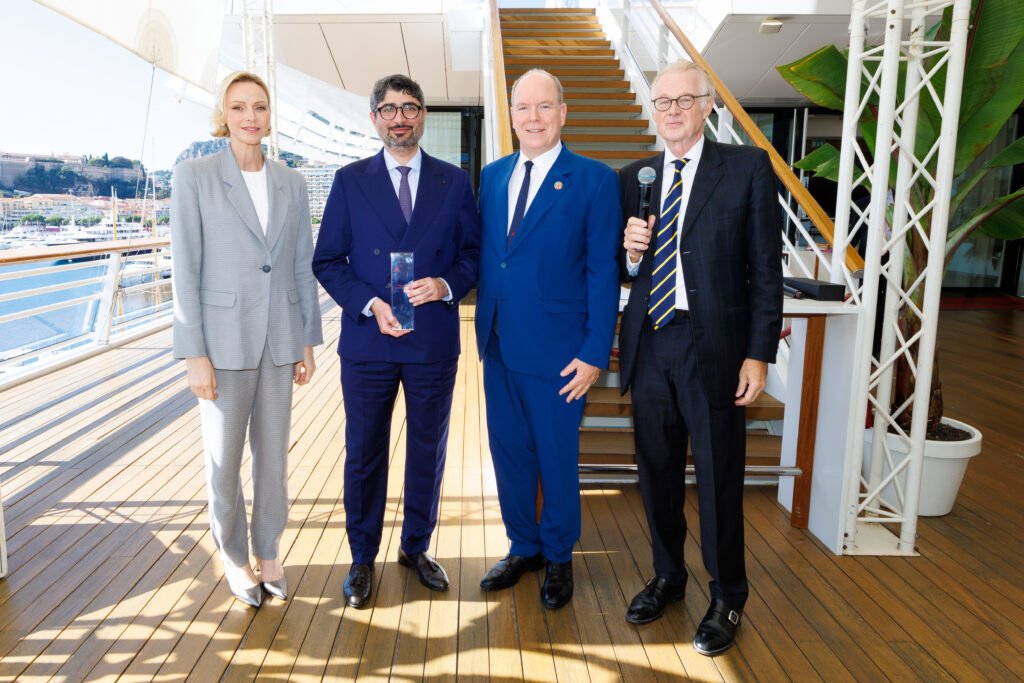
Prince Albert II presented the award to Ibrahim Al Balooshi, MBRGI’s Director of Sustainability and Partnerships. It was a fitting recognition for a summit built around a simple idea: good philanthropy has much to gain from looking beyond its own borders.
A new chapter for Monaco
The inaugural Monaco Summit on Philanthropy is intended to become an annual fixture, bringing together those with the means—and the ambition—to make a difference.
The first gathering tackled some of philanthropy’s most pressing questions: how to work more effectively with governments, engage the next generation and harness artificial intelligence without losing the human touch.
Whether the conversations lead to lasting partnerships remains to be seen. But the summit already represents something significant. What began as a philanthropic roundtable fifteen years ago has grown into a gathering spanning five continents.
For Monaco, it is a natural extension of a long-standing commitment to environmental and humanitarian causes. And for the wider philanthropic world, it offers something increasingly valuable: a place to think beyond the next funding cycle. As Prince Albert II reminded his audience, philanthropy has the freedom to think in generations.