International Day of the Girl: Young Voices Take the Floor at Monaco’s National Council
As Monaco marked the International Day of the Girl, the National Council opened its parliamentary chamber to a new generation of voices. Through lively debates on equality, artificial intelligence and freedom of expression, young people were invited not simply to discuss democracy, but to experience it first-hand.
Would separating girls and boys during swimming lessons make teenagers feel more comfortable, or would it simply leave the real problem of judgement and stereotypes unresolved?
It was one of the questions that sparked an especially animated exchange inside Monaco’s National Council, where students challenged one another, defended their convictions and occasionally brought laughter to the parliamentary chamber.
For an evening, the familiar setting of political debate belonged to a different generation.
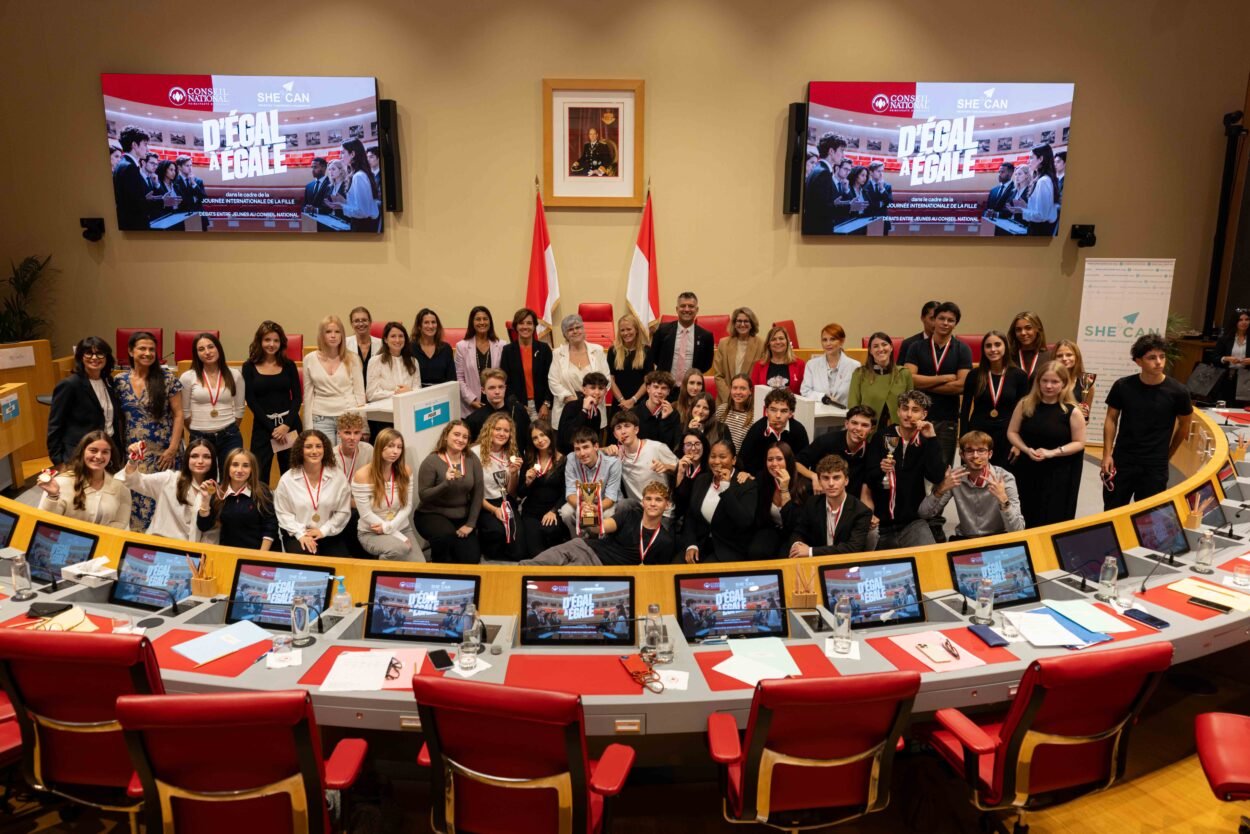
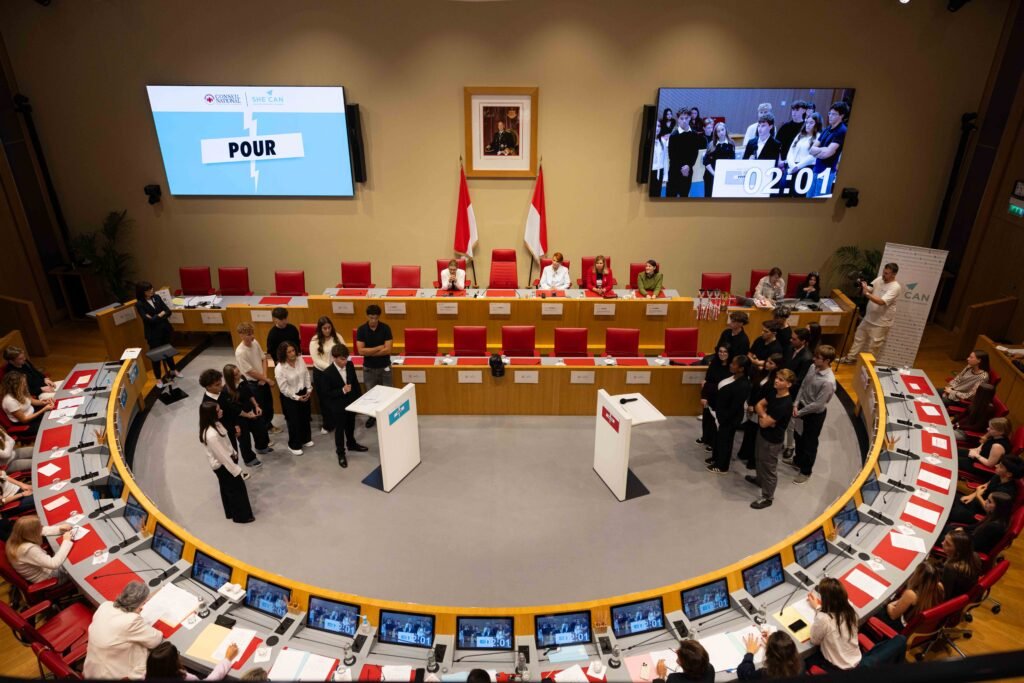
Ahead of the International Day of the Girl, celebrated worldwide on 11 October, Monaco’s National Council, in partnership with the association SheCanHeCan, welcomed students from Lycée Albert Ier for the second edition of the “D’égal à égale” debating competition.
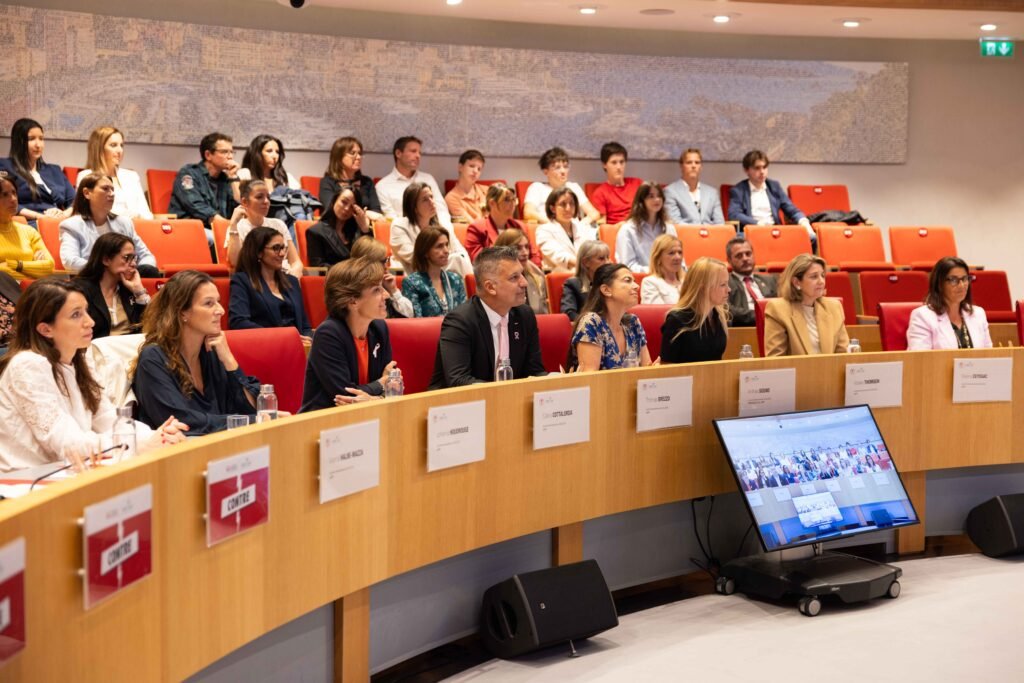
The event formed part of a decade-long collaboration between the National Council and SheCanHeCan, reflecting a shared commitment to equal opportunities and dialogue between generations.
Yet what made the evening particularly compelling was not only its symbolic setting, but the discussions themselves.
Artificial Intelligence: Freedom or Protection?
The first debate tackled one of the defining challenges of the digital age: deepfakes and the limits of artificial intelligence.
One team advocated stronger legislation to protect individuals, particularly minors, from manipulated images and videos used for harassment, humiliation or blackmail.
The students raised concerns about the speed at which harmful content can circulate online, calling for tougher penalties, faster removal procedures and greater responsibility from digital platforms.
Their opponents approached the issue from another perspective: could excessive regulation threaten freedom of expression and artistic creativity?
They pointed to legitimate uses of artificial intelligence in cinema and audiovisual production, arguing that education, transparency and clear identification of AI-generated content could provide more balanced solutions than sweeping prohibitions.
What made the exchange particularly interesting was that neither side had an easy answer. The students clearly understood the risks of artificial intelligence, but they also recognised its creative possibilities. Listening to their arguments, it was easy to see why drawing the line between protection and freedom is so difficult.
When Equality Becomes a Personal Question
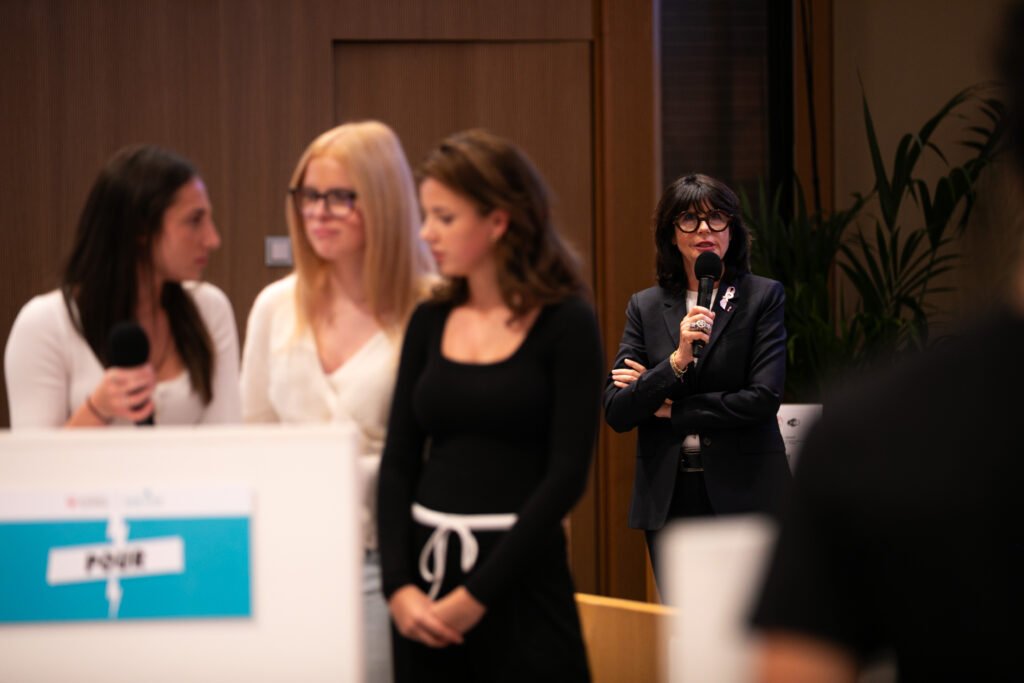
The second debate, exploring whether certain school subjects should be taught separately to girls and boys, proved particularly lively.
Supporters of single-sex classes argued that some adolescents might feel more confident discussing sensitive subjects or participating in activities such as swimming, physical education and sexual health lessons without the presence of the opposite sex.
Their opponents questioned whether separation would genuinely address the underlying problem.
If schools prepare young people for life in society, should they not also teach girls and boys to communicate, cooperate and respect one another?
One particularly engaging exchange centred on body image and the fear of criticism.
Students defending mixed education argued that teasing and judgement can come from classmates of either sex. Separating students, they suggested, does not necessarily eliminate the attitudes responsible for discomfort.
The arguments became increasingly spontaneous. Participants challenged each other directly, drew on everyday experiences and occasionally struggled to find the perfect response.
Some remarks prompted laughter, but the atmosphere remained one of enthusiastic engagement.
It was precisely these unscripted moments that gave the debate its authenticity.
Rather than delivering polished political statements, the teenagers were discovering what it means to defend an opinion while remaining open to another.
Social Media and the Limits of Free Speech
The final debate turned to the growing influence of misogynistic and masculinist content on social media, alongside the impact of unrealistic beauty standards.
One team called for stronger legal measures to address online discrimination and the repeated circulation of messages that reinforce harmful stereotypes about women.
The opposing team raised an equally important question: who should decide where freedom of expression ends and unacceptable content begins?
How can legislation distinguish between discriminatory messages, satire, artistic representation and legitimate criticism?
The discussion touched on the dangers of excessive censorship, the responsibilities of content creators and digital platforms, and the importance of developing critical thinking among younger users.
These were not abstract questions. They reflected the digital environment in which today’s teenagers are growing up and the competing values they will increasingly be called upon to reconcile.
Thomas Brezzo: Democracy Is the Freedom to Disagree
The significance of holding these debates within Monaco’s parliamentary chamber was emphasised by Thomas Brezzo, President of the National Council.
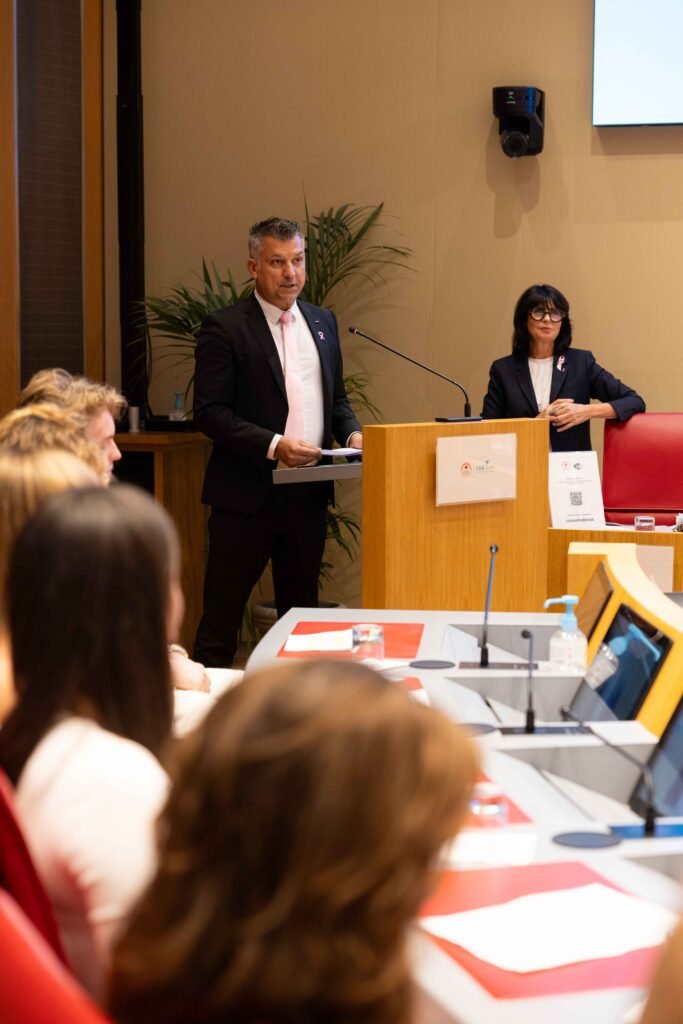
Addressing the students, he reminded them that the same room regularly hosts discussions on legislation, budgets and decisions shaping the Principality’s future.
Disagreement, he explained, is not a failure of democracy but an essential part of it.
“Having different positions, provided they are sincere, well-argued and coherent, is not a problem for democracy. It is democracy itself.”
Drawing on his experience as a lawyer, Brezzo highlighted the importance of listening to opposing arguments before attempting to challenge them.
He also underlined Monaco’s ability to maintain a close relationship between its institutions and younger generations — a connection that gives particular meaning to initiatives of this kind.
For the National Council’s President, the competition represented an opportunity not merely to speak about equality, but to put it into practice.
Béatrice Fresko-Rolfo: The Courage to Speak
For Béatrice Fresko-Rolfo, President of the National Council’s Commission for Women, Equality and the Family, the evening carried another essential message: the importance of finding the courage to speak.
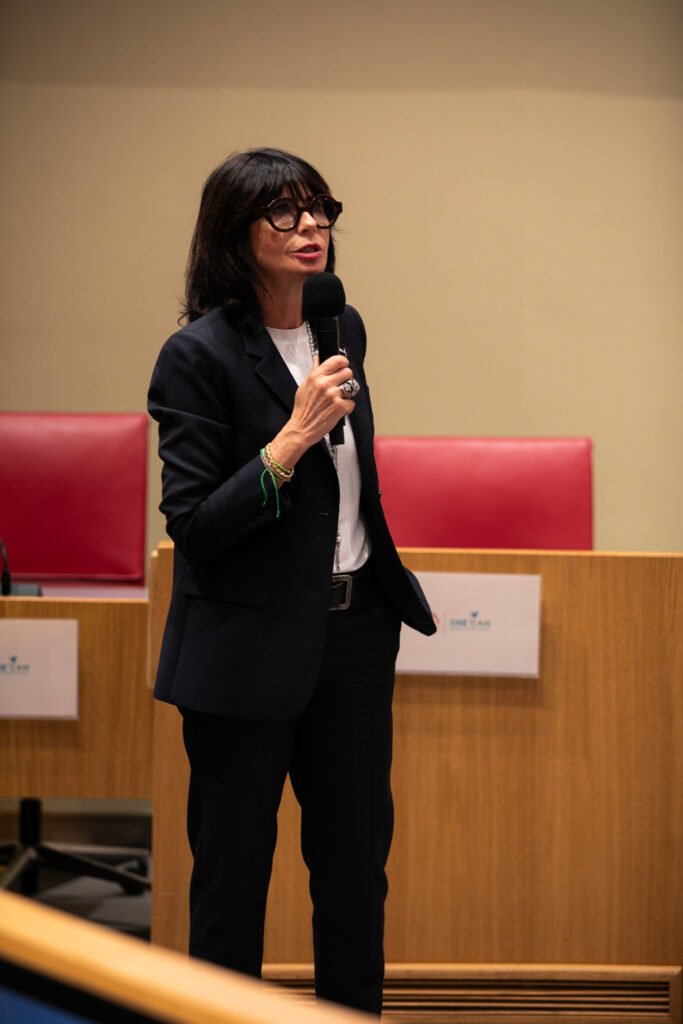
In her opening remarks, she reflected on the hesitation many people experience before expressing an opinion, fearing mistakes, criticism or disagreement.
“A voice that never speaks out never makes a mistake. But it never convinces anyone, either.”
The students were encouraged not only to defend arguments, but also to listen carefully, challenge assumptions and accept that changing one’s mind can be a sign of intellectual maturity rather than weakness.
The ability to disagree respectfully, she reminded them, is itself a form of mutual respect.
Vibeke Thomsen: Equality Is a Shared Responsibility
Vibeke Thomsen, President of SheCanHeCan, brought a complementary perspective to the discussion.
She emphasised that the challenges facing girls and boys are different, yet deeply interconnected.
While girls continue to encounter stereotypes surrounding ambition, confidence and leadership, boys are often confronted with restrictive expectations of masculinity that discourage emotional expression and vulnerability.
“Equality is certainly not a battle between girls and boys. It must be a project in which boys have a full role to play.”
This philosophy guides SheCanHeCan’s wider educational and awareness initiatives, including school workshops, mentoring programmes and campaigns addressing gender stereotypes and discrimination.
For Thomsen, legislative progress remains essential, but meaningful change also depends on transforming attitudes.
It is a responsibility shared by institutions, educators, families and, increasingly, young people themselves.
A Parliament That Listens to the Next Generation
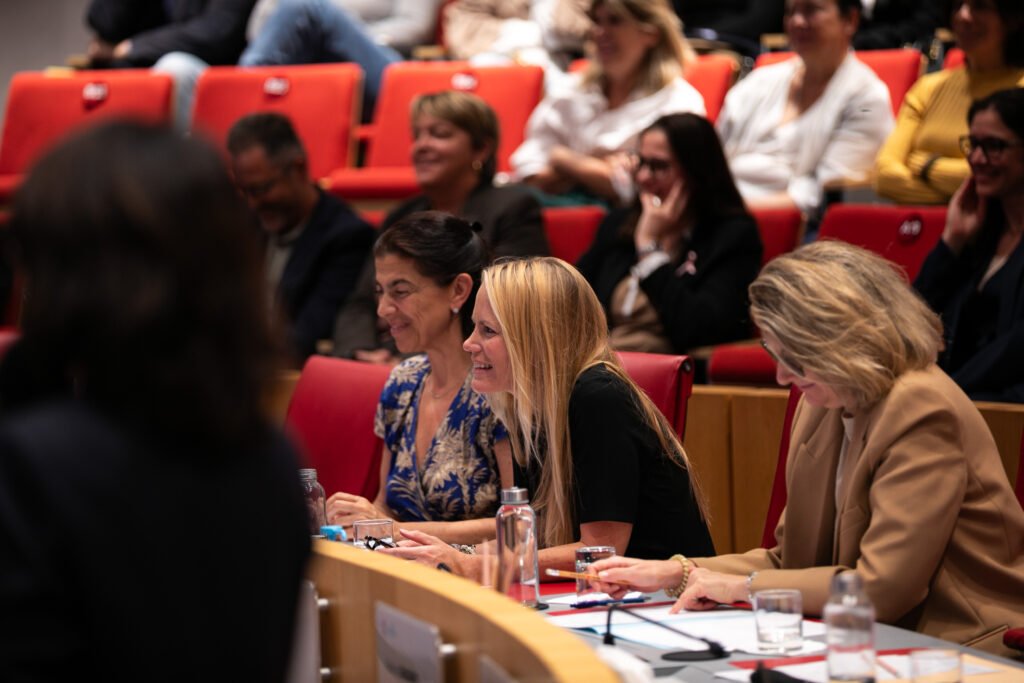
Throughout the competition, the jury looked beyond the arguments themselves, considering how clearly the students expressed their ideas, how well they listened and how respectfully they responded to their opponents. The audience had a say too, voting for the teams they found most convincing.
Some of the most memorable moments were the spontaneous ones: a question that caught someone off guard, a quick response, an unexpected remark that brought laughter to the chamber. Not every argument was perfectly delivered, but that was part of the charm. The students were confident, sometimes hesitant, occasionally provocative, and above all, genuinely engaged.
Watching these exchanges unfold in a room normally reserved for Monaco’s elected representatives made the occasion all the more special. For a few hours, the young participants experienced what it means to defend an idea, face disagreement and be taken seriously.
Perhaps some will return to this chamber one day as elected representatives or leaders in their chosen fields. For now, what mattered was that they had been given the opportunity to speak, to challenge one another and, just as importantly, to be heard.
By opening its parliamentary chamber to the younger generation, Monaco’s National Council offered something beyond a symbolic celebration: a genuine opportunity for young people to take part in the democratic conversation.
On International Day of the Girl, Monaco’s National Council did more than talk about equality. It gave the next generation the floor — and they made their voices heard.