From Rivalry to Cooperation: Dr. Henry Wang Huiyao on China, AI and the Next Global Order
In an interview with Ad Astra Journal at the Paris Peace Forum 2026, the founder of the Center for China and Globalization discusses critical minerals, technological competition, Europe’s relationship with China and why smaller countries may have an important diplomatic role.
As competition over critical minerals, artificial intelligence and advanced technologies intensifies, economic interdependence is increasingly being treated as a strategic vulnerability.
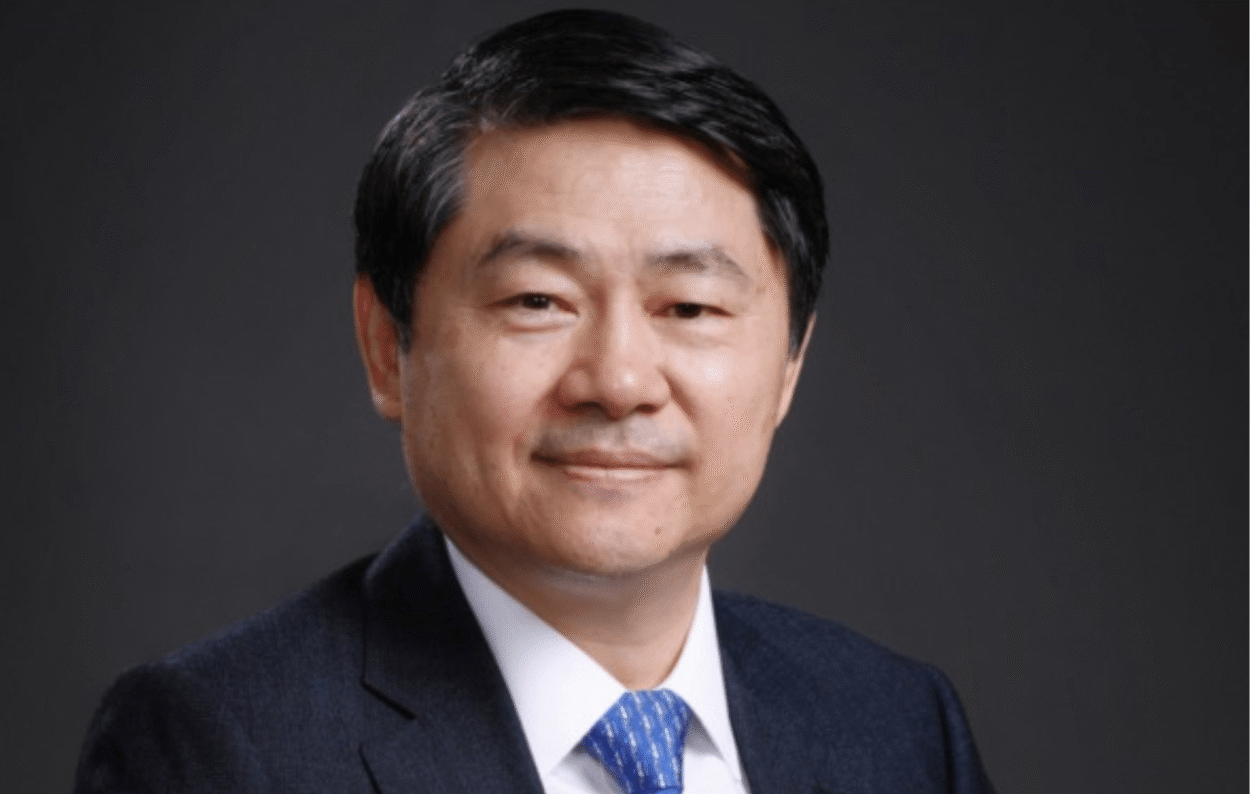
For Dr. Henry Wang Huiyao, founder and president of the Center for China and Globalization (CCG), this approach risks deepening the very divisions that international cooperation was designed to overcome.
Speaking with Ad Astra Journal on the sidelines of the Paris Peace Forum 2026, Wang argued for rebuilding trust between major powers, opening new channels for technological cooperation and giving smaller internationally connected countries a stronger voice.
The conversation ranged from China’s industrial transformation and the future of artificial intelligence to the possibility of a new global order.
Critical minerals: moving beyond rivalry
Ad Astra Journal: You spoke today about critical minerals. How can countries cooperate to ensure sustainable supply chains?
Dr. Henry Wang Huiyao: The world has become fragmented because of the geopolitical situation and a mentality of rivalry. We need to return to the basics and work together to safeguard supplies of critical minerals and other essential resources.
First, we need to move away from treating one another as rivals. Otherwise, everything can become a weapon. We do not need to weaponise technology, semiconductors or rare earths.
We need to rebuild trust.
China has developed considerable capabilities in mineral development, and that knowledge, expertise and know-how can be shared with developing countries around the world.
Major economies should cooperate rather than impose restrictions on access to chips, semiconductor manufacturing equipment and other advanced technologies.
If products and technologies are weaponised, countries will respond with defensive measures. A return to economic cooperation and globalisation would be a better path forward.
What Europe can learn from China
Ad Astra Journal: China’s economic transformation offers many potential lessons. What could Europe learn from China’s experience?
Dr. Henry Wang Huiyao: There is a great deal that China and Europe can learn from each other.
China learned from Europe through access to technology, industrial management and investment. When China opened its economy, it welcomed European companies, encouraged joint ventures and offered attractive policies.
Today, China has developed its own expertise in electric vehicles, solar technology and other industries associated with the energy transition.
I believe it is time for European countries to learn from China’s experience, just as China learned from Europe.
Chinese companies seeking to invest in Europe should be welcomed in the same spirit that European companies were welcomed in China two or three decades ago.
The relationship should be reciprocal. Both sides have something to contribute.
Artificial intelligence: two competing models
Ad Astra Journal: How can international cooperation help ensure that artificial intelligence benefits humanity?
Dr. Henry Wang Huiyao: Artificial intelligence is becoming central to economic and technological development.
China and the United States are pursuing different approaches.
The United States is investing enormous amounts in frontier AI models. China, in my view, is placing greater emphasis on practical applications across industry, healthcare, education and robotics.
I believe that China’s approach demonstrates how AI can be integrated into a broad range of economic activities.
There is also an important question of commercial viability. AI investment needs to generate tangible economic benefits rather than become a financial burden.
It is in the interests of both China and the United States, as well as their technology companies, to cooperate.
I also believe that China’s approach to AI offers opportunities for developing countries, particularly across the Global South.
But perhaps the most important principle is that we should not weaponise artificial intelligence.
The greatest danger is the use of AI for destructive purposes. We should focus on civilian and industrial applications and encourage dialogue between China and the United States about how these technologies are developed and used.
Why small countries matter
Ad Astra Journal: Ad Astra Journal is based in Monaco. What role can small, internationally connected countries such as Monaco play in a world dominated by major powers?
Dr. Henry Wang Huiyao: Small countries can play a very important role.
They can offer more objective perspectives because they are not always as deeply involved in the rivalries of major powers.
They may be able to see situations more clearly and raise questions that larger countries, with their competing strategic interests, find difficult to address.
That gives countries such as Monaco an opportunity to contribute to international dialogue and help mediate relations between larger powers.
Size does not necessarily determine diplomatic influence.
From mutual disruption to cooperation
Ad Astra Journal: What gives you the greatest optimism about the future of international relations?
Dr. Henry Wang Huiyao: I think the world has reached a new kind of equilibrium.
We have reached a situation of what I call “mutually assured disruption.”
Countries increasingly recognise that confrontation can produce consequences that no side can fully control.
If we understand that no one can truly win through confrontation, then we have to collaborate.
My hope is that mutually assured disruption will eventually lead to “mutually assured construction.”
There are limits to what military power and geopolitical pressure can achieve. Those limits can encourage countries to return to cooperation.
That is one reason I remain optimistic.
Building bridges between China and the world
Ad Astra Journal: What do you consider the most important achievements of your work at the Center for China and Globalization?
Dr. Henry Wang Huiyao: We do a great deal of convening and public discussion. We organise events, publish books and contribute policy recommendations to governments and international organisations.
One of our recent publications addresses China and the next global order.
But I think the best way to describe our work is as a bridge.
We are a public platform connecting China with the outside world — both a think tank and an organisation that seeks to turn ideas into practical engagement.
We have been doing this work for almost 18 years, and there is still much to accomplish.
We remain optimistic.
A message to the next generation
Ad Astra Journal: Finally, what message would you like to share with the next generation of global leaders?
Dr. Henry Wang Huiyao: The next generation of leaders must learn to think not only from a national perspective, but from a global one.
Previous generations were often primarily concerned with the interests and circumstances of their own countries.
Today, the world is instantly connected. People communicate, travel and exchange ideas across borders. Events in one part of the world can have immediate consequences elsewhere.
Future leaders need to understand not only their own countries, but also the wider international environment.
They need to understand the world as a whole.
Because ultimately, we share one planet and a common future.
Interview conducted by Ad Astra Journal at the Paris Peace Forum 2026.