Monaco Invests for the Next Decade
The Principality is pairing substantial public investment with a growing emphasis on efficiency, long-term planning and international standards.
Few states face Monaco’s particular economic equation. Its territory is exceptionally constrained, expectations for public services are high and the Government must continually reconcile development with the preservation of the Principality’s distinctive social and economic model.
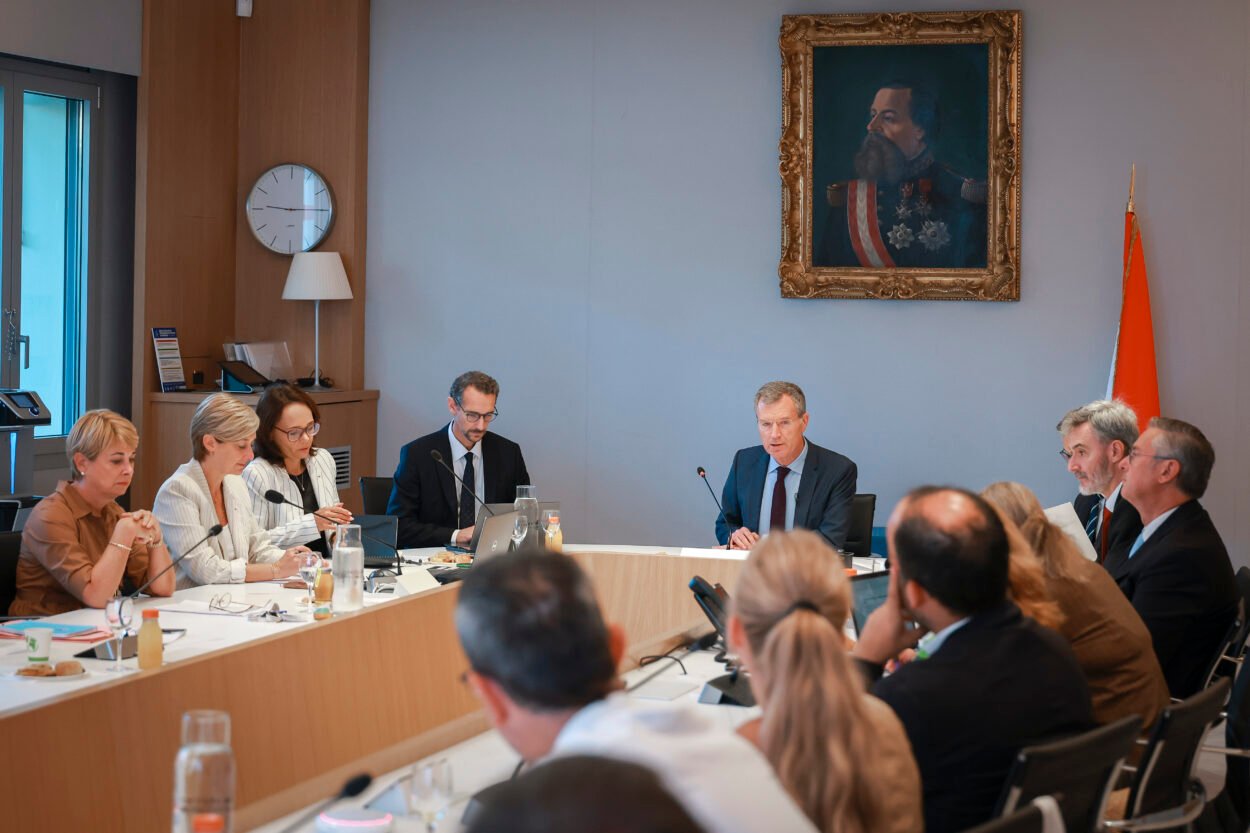
At his September 17th press conference, Christophe Mirmand, the Minister of State, presented an agenda focused increasingly on execution. Housing, healthcare, infrastructure, security and financial regulation are all being approached with the same objective: measurable results.
Housing remains the foremost commitment. Around €280m is expected to be devoted to it in 2027. The national housing programme is now estimated at €2.11bn for approximately 990 homes—figures that reflect the exceptional cost and complexity of building in one of the world’s most land-constrained states.
The Government is also concentrating on better use of the existing stock. Monaco has 4,380 state-owned homes, representing around one-fifth of the Principality’s housing. Faster allocation procedures and a €3m renovation programme could return approximately 200 additional apartments to use.
This investment is being accompanied by closer attention to fiscal sustainability. For 2027, projected revenues amount to €2.193bn and expenditure to €2.158bn. The Government also intends to assess major capital programmes over horizons of up to ten years, with greater emphasis on their full cost.
Several major projects are entering important phases. The Princess Grace Hospital is expected to begin receiving patients in the first quarter of 2027 and to be fully occupied by May. The redevelopment of the Fontvieille shopping centre has reached what Mr Mirmand described as a “decisive” stage of negotiations. Meanwhile, a future waste-treatment complex is designed to combine waste processing, water reuse, energy production and preparation for further urban development.
Monaco is also reinforcing the foundations of its international attractiveness. The Government has continued its work to meet international financial standards and hopes that progress recognised during the recent FATF evaluation process will ultimately allow the Principality to leave the grey list.
Social legislation is evolving as well. A proposed Civil Union for same-sex couples, accompanied by reforms concerning family law, is expected to be submitted to the National Council before the end of 2026. Mr Mirmand presented the initiative as part of an effort to combine Monaco’s traditions and identity with the evolution of its legal framework.
What emerges is a picture of a small state managing unusually large ambitions within unusually narrow physical limits. Monaco’s advantage is not simply its financial resources, but its capacity to plan infrastructure and public services over long horizons.
The challenge for 2027 will be to turn that capacity into results. In a country where every square metre matters, efficient investment is not merely good economics. It is central to preserving the quality, stability and attractiveness that distinguish the Principality.