Craig VanGrasstek: What Can the WTO Do When Trade Becomes Geopolitics?
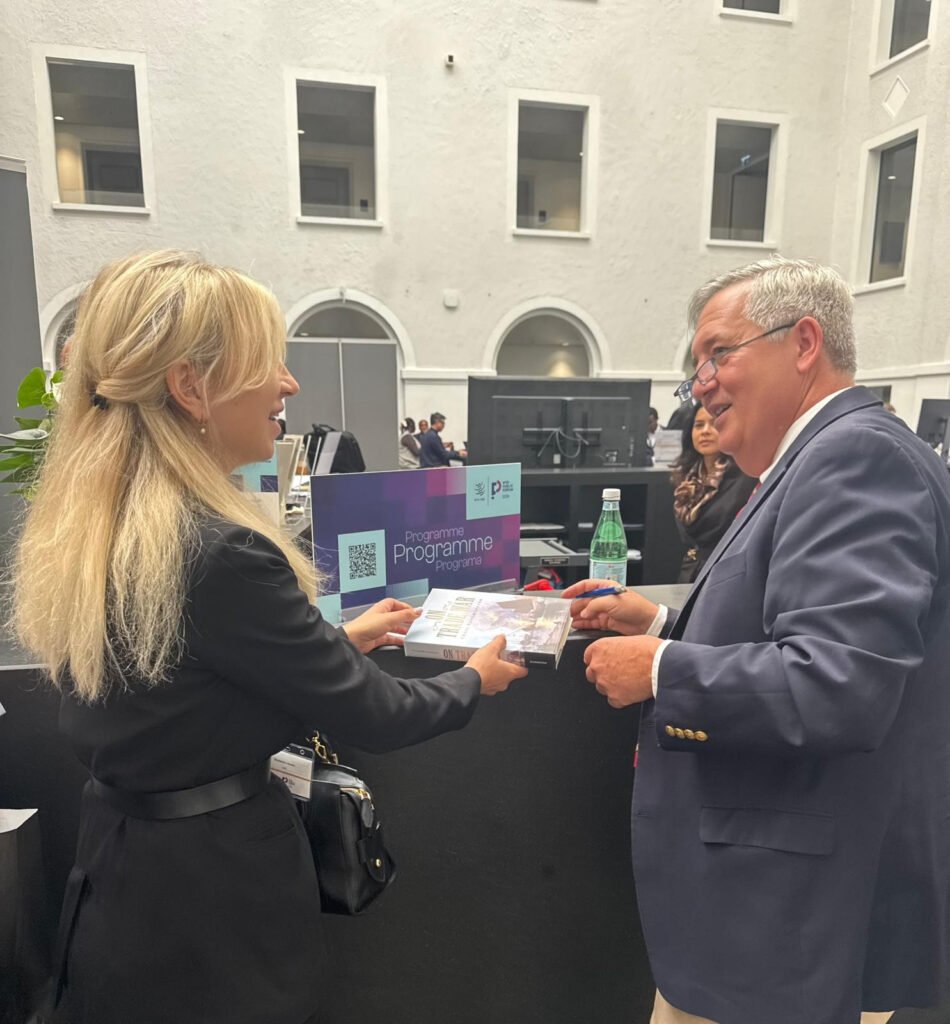
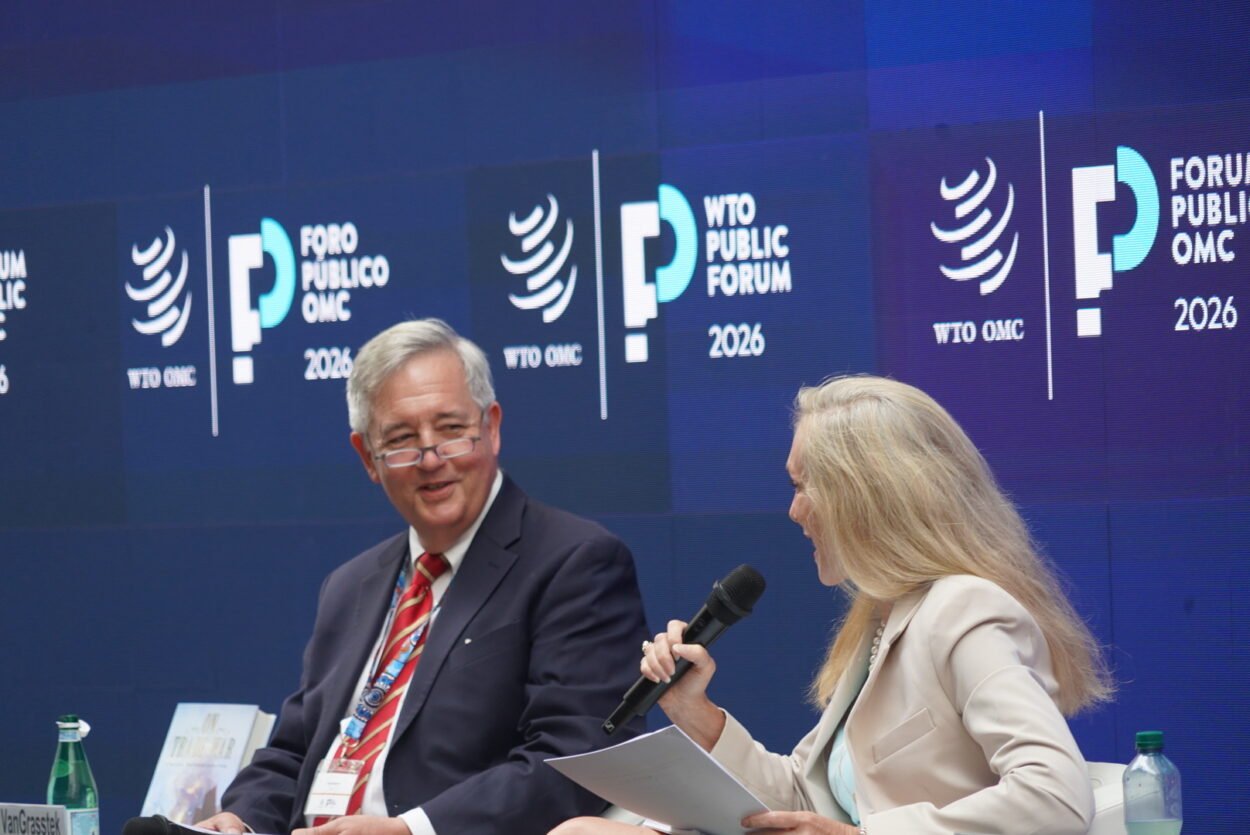
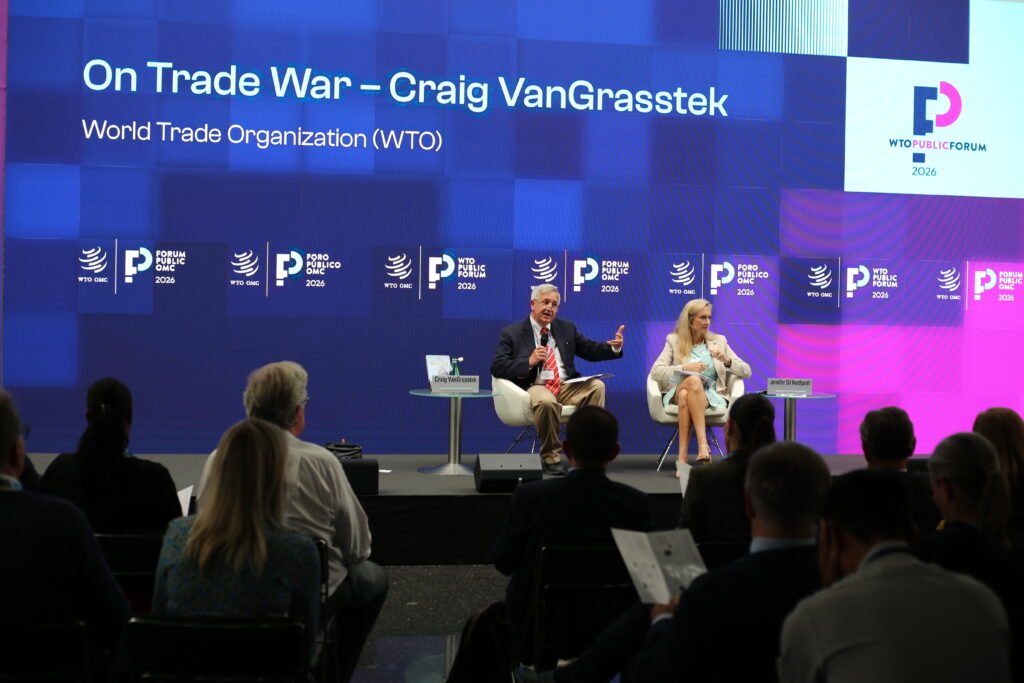
One of the unexpected discoveries of the WTO Public Forum 2026 was meeting Craig VanGrasstek, author of On Trade War. His historical view of trade conflict added a different dimension to a question that had already followed me through the Forum: what happens to the multilateral system when economic interdependence becomes increasingly entangled with political power?
I arrived in Geneva thinking largely about the future of the WTO itself. How does an institution built around established categories adapt to digital trade and artificial intelligence? What happens to the old distinction between goods and services? And can a multilateral system move at anything close to the speed of the economy it is meant to govern?
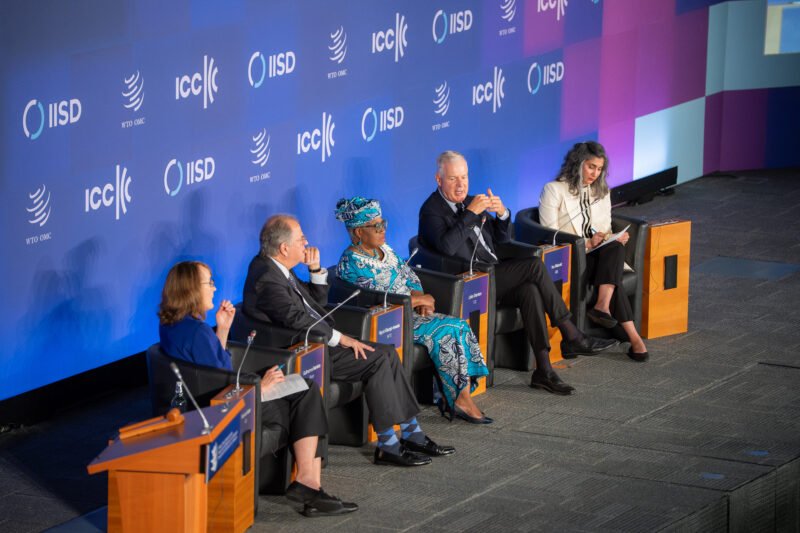
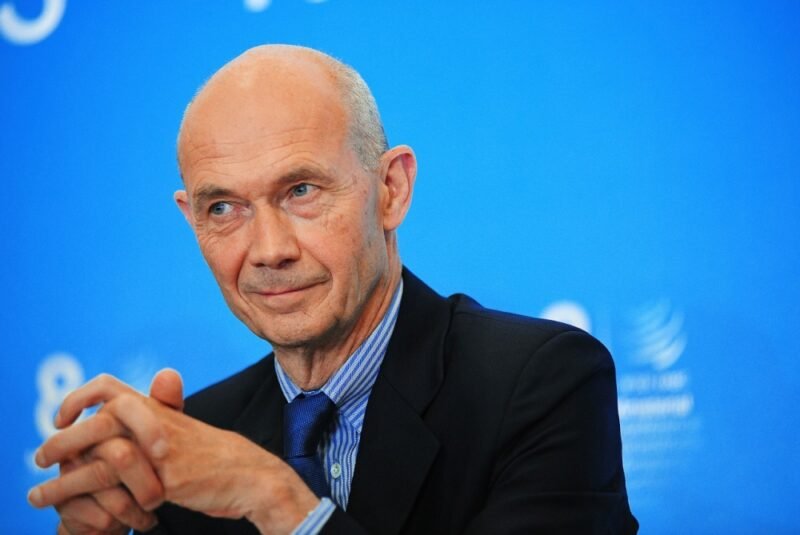
These questions were already on my mind during the Forum’s opening panel. A conversation with former WTO Director-General Pascal Lamy in Paris had made me think about how the WTO can adapt without losing the common rules that hold multilateralism together. Craig VanGrasstek pushed the question further: what happens when trade itself becomes part of strategic rivalry between states?
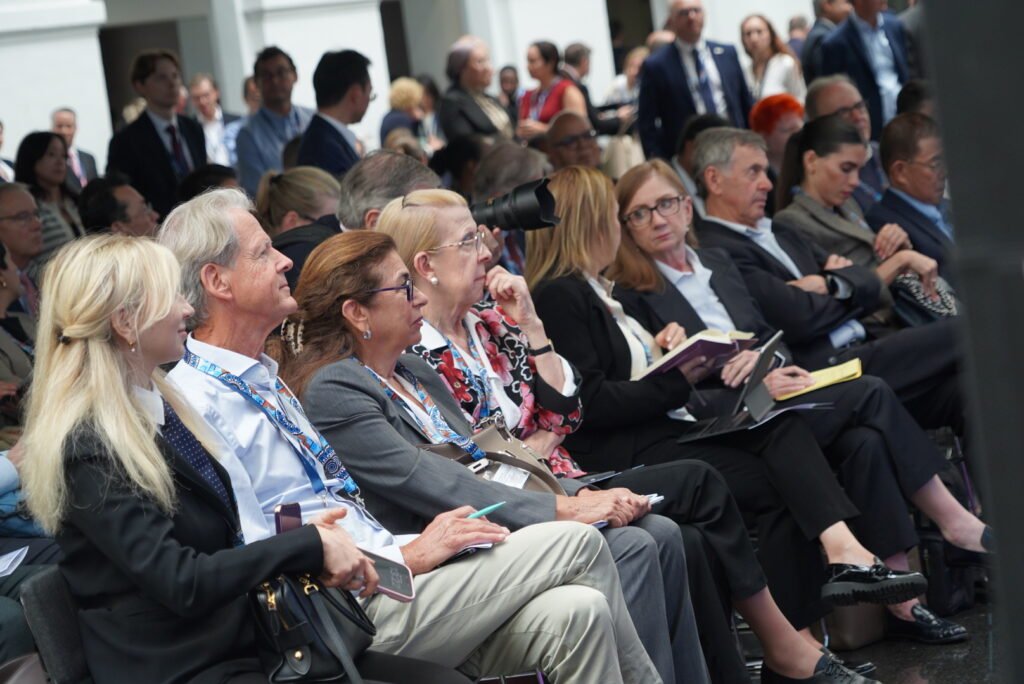
VanGrasstek brings an unusual perspective to that question. He teaches the political economy of trade policy at Harvard Kennedy School and has spent decades working directly on trade issues, including advising governments on WTO and GATT accessions. Several of his former students were in the room in Geneva — a reminder of how closely his academic work is tied to the trade-policy world itself.
That is the central theme of On Trade War. Published by Cambridge University Press in July 2026, the book moves from ancient rivalries to British and American hegemony and, finally, to the US-China relationship. VanGrasstek describes the present as a “post-post-Cold War” period — one in which trade, wealth and political power are once again difficult to separate.
He was clear about one thing from the start:
“This is not a book about Donald Trump.”
Trump has made the subject more immediate, but VanGrasstek sees the US-China conflict as structural rather than tied to a single presidency.
The market as a source of power
VanGrasstek builds his argument around two ideas: market power and market exposure. Market power is the ability to use access to a large domestic market as leverage — by offering preferential access or restricting it. He captured the logic in one memorable line:
“Preferences are sanctions turned upside down.”
The two may look like opposites, but in VanGrasstek’s framework they come from the same source of power: control over access to a market. In On Trade War, he connects this idea to Albert Hirschman and the possibility that trade itself can be used “in the pursuit of power.” The other side of the equation is market exposure — how vulnerable an economy becomes when it depends heavily on foreign markets.
This is where the contrast between the US and China becomes especially revealing. The United States has long benefited from a vast domestic market and relatively low export dependence, while China has spent years reducing its own exposure. VanGrasstek told the audience that between 2007 and 2024 China doubled its market power while cutting its market exposure in half. In his view, that has made Beijing far better able to absorb prolonged economic pressure from Washington. The result is a rivalry between two powers with enormous markets and enough resilience that neither has much incentive to back down quickly.
And this is where a discussion about On Trade War becomes a discussion about the WTO itself.
What can the WTO do in such a system?
VanGrasstek is under no illusion that the WTO can somehow settle the strategic rivalry between Washington and Beijing. But neither does he see that as evidence that the institution has lost its purpose.
In Geneva, he looked back to the years when Pascal Lamy was Director-General. Once it became clear that the Doha Round was not going to deliver a quick breakthrough, the WTO could still do something useful: provide what VanGrasstek described as public goods — better information, more reliable trade data and greater transparency about what governments were actually doing.
That may sound less dramatic than negotiating a major new agreement, but it raises a more fundamental question: what should an international institution preserve when agreement itself becomes difficult?
VanGrasstek places that dilemma in a much older debate. In On Trade War, he returns to Robert Keohane’s famous question:
“How can cooperation take place in world politics in the absence of hegemony?”
Asked in 1984, it sounds remarkably contemporary in Geneva. If major powers increasingly view their economic relations through the lens of strategic competition, what remains of the space for common rules and collective action?
VanGrasstek joked that if the WTO became primarily an organisation for observing and reporting events, it risked becoming rather like the World Meteorological Organization: everyone talks about the weather, but no one does anything about it.
Trade policy reviews still matter. So does transparency. Maintaining compliance with existing commitments matters, as does dispute settlement where it remains possible.
But perhaps the most interesting part of his answer was less ambitious — and more practical.
The WTO, he argued, must remain “on hand” and “on standby”: ready to serve as the place where governments can negotiate when political conditions again become conducive to getting to yes.
It may be a narrower role than the WTO once imagined for itself, but that does not make it trivial. The organisation may not be able to stop a trade war between great powers. What it can do is keep enough of the system intact — the rules, the information, the institutional memory and, crucially, the habit of negotiation — for countries to return to it when politics permits.
That is a rather different way of thinking about institutional relevance. Success need not always be measured by the number of new agreements signed in Geneva.
VanGrasstek is similarly wary of another comforting assumption of the globalisation era: that trade, by drawing countries closer together, necessarily makes them more peaceful.
For years, he told the audience, he would ask his students whether open markets made the world a more peaceful place. Most thought they did. But over time he noticed that some of the most sceptical answers came from students from Ukraine and Russia — and this was before 2014. Looking back, he came to see those responses as an early warning that the relationship between commerce and political stability was far less straightforward than many had assumed.
The academic literature, he added, offers little comfort to anyone looking for a simple rule. There is evidence that trade can raise the cost of conflict and encourage cooperation. There are also cases in which commercial ties become a source of pressure, a complement to confrontation or part of the conflict itself.
His conclusion was characteristically unsentimental:
“It depends a great deal on the conditions of the relationship.”
That brought me back to something Ngozi Okonjo-Iweala had said during the Forum’s opening discussion: the distinction between interdependence and overdependence. The two are not the same. Economic ties can spread risk, but they can also concentrate it.
VanGrasstek comes at the problem from a different intellectual tradition, yet the questions meet at much the same point. It is not enough to know that two countries trade heavily with one another. What matters is the shape of that relationship: who depends on whom, who can absorb disruption and who has more room to apply pressure.
For much of the post-Cold War period, globalisation came with an appealing story. More trade would mean deeper interdependence; deeper interdependence would make conflict more expensive; international institutions would gradually lock in that logic.
VanGrasstek’s history is less tidy.
Governments notice the benefits of openness, but they notice their vulnerabilities too. A large domestic market can be a source of political leverage. Dependence on foreign demand can become a weakness. Trade policy, in turn, can serve purposes that have little to do with trade itself.
That is what makes On Trade War more interesting than its title initially suggests. It is not really a book about tariffs. It is a book about power — and about the place commerce occupies when powerful states begin to treat economic relations as part of a wider strategic contest.
At the end of the session, VanGrasstek was asked whether he felt optimistic about the future of international trade. He paused, then said he wished he could be.
For much of his career, he explained, he had been the political scientist in rooms dominated by economists and lawyers, insisting that questions of power had never really disappeared from trade. For years, that could make him sound overly bleak. Now the world looks rather closer to the one he had been describing all along — and, as he put it, he would have preferred to be wrong.
Still, I did not leave the discussion feeling entirely pessimistic.
If trade is once again being used as an instrument of political pressure, then the purpose of a multilateral system cannot be judged only by how much new liberalisation it delivers. There is value, too, in keeping a common framework alive: rules that are still recognised, information that remains shared, and a place where countries can continue to talk even when they are no longer ready to agree.
That may be a less triumphant vision of the WTO than the one associated with the high point of globalisation. It is also, perhaps, a more useful one for the world we have now.
The WTO cannot remove rivalry between great powers. What it can do is help prevent that rivalry from becoming the only organising principle of global trade.