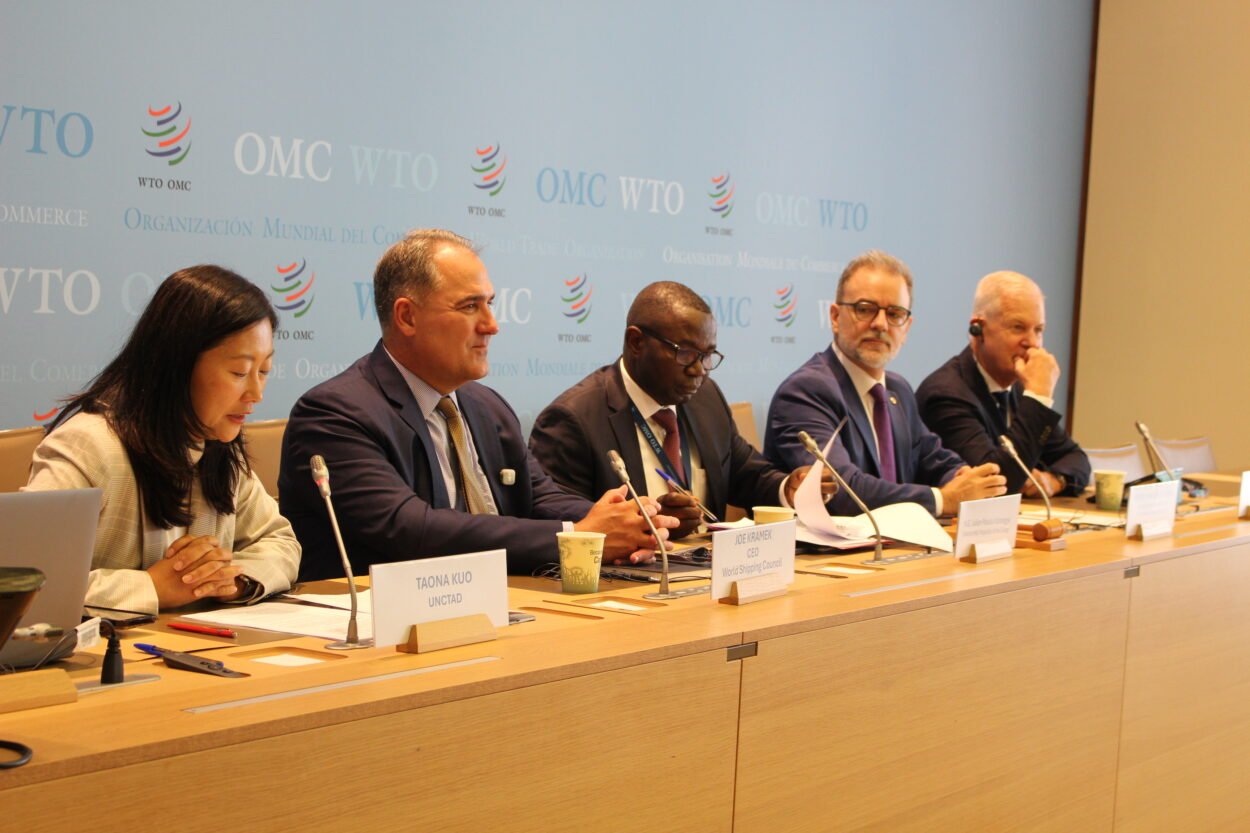
WTO Public Forum 2026: Hormuz and the New Geography of Trade Risk
At the WTO Public Forum 2026, a discussion on the Strait of Hormuz showed how quickly a disruption at sea can move through energy, fertiliser and food markets — and why the costs fall hardest on economies least able to absorb them.
Much of this year’s WTO Public Forum has looked towards artificial intelligence, digitally delivered services and the changing architecture of global commerce. A session on the Strait of Hormuz offered a useful corrective. However digital trade becomes, much of the world economy still depends on ships moving safely through a handful of narrow waterways.
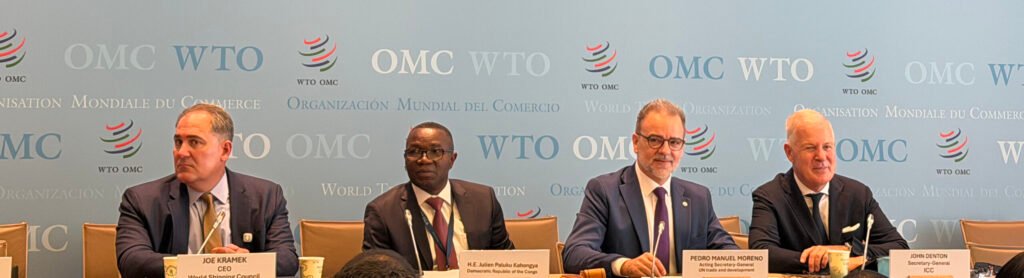
Pedro Moreno, Acting Secretary-General of UN Trade and Development, brought the discussion back to a more basic reality:
“This public forum actually is about the new trade, more digital, more service-driven. But this year reminded us that trade is still stubbornly physical.”
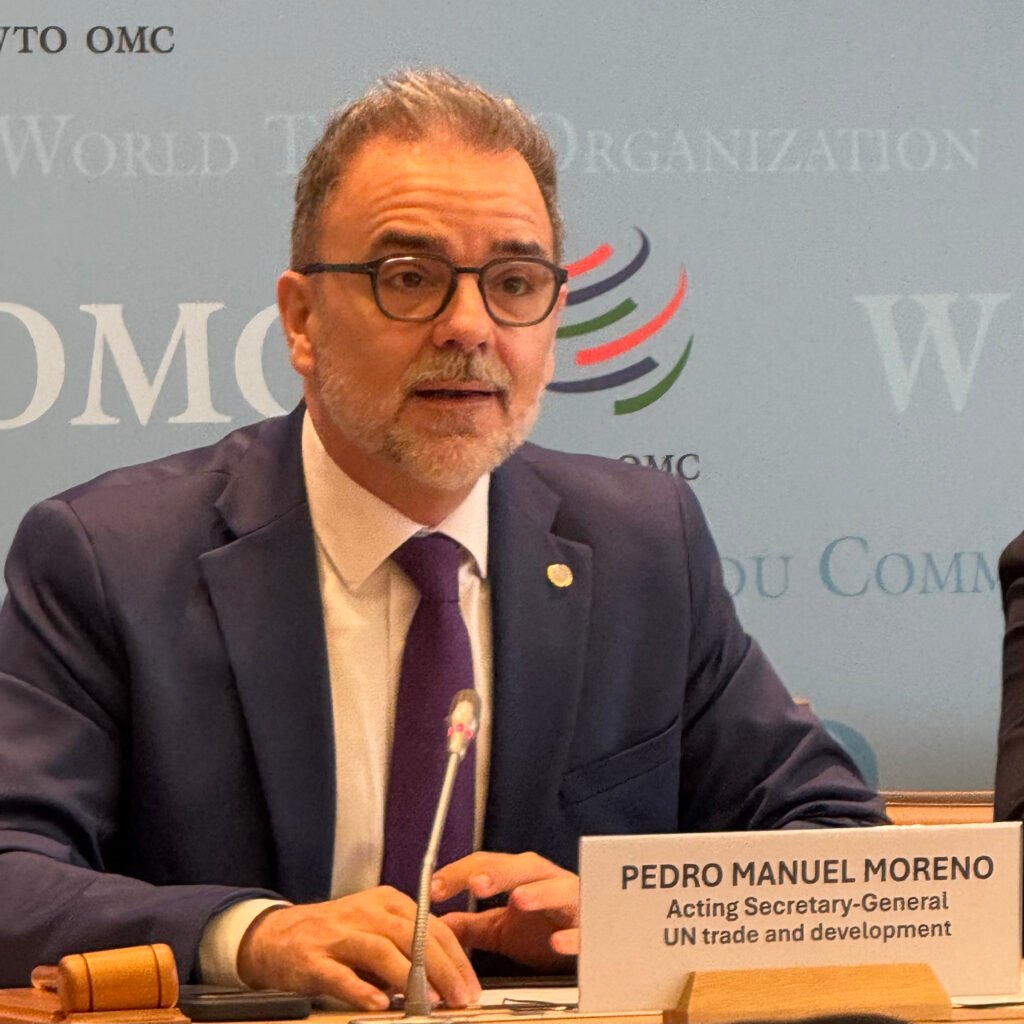
Food, fuel, fertiliser and other essentials continue to move through maritime routes on which countries far beyond the Gulf depend.
Hormuz makes that dependence unusually visible. Figures presented during the session suggested that the Strait carries around 11 per cent of global maritime trade and roughly a third of seaborne oil exports. When ship traffic fell sharply, the shock did not remain at sea. Within days it had moved into energy prices, then fertiliser and transport costs, and from there into food prices and financing pressures.
Moreno expressed the point more sharply:
“Shocks travel quickly, but they leave slowly.”
An oil price can fall again in a day. A farmer cannot recover the higher price already paid for fertiliser. Governments cannot instantly restore fiscal space spent cushioning an energy shock, and households cannot reclaim months of income lost to higher food bills.
That lag matters because Hormuz is easily understood as an energy crisis. John Denton, Secretary General of the International Chamber of Commerce, argued that the less visible danger lies further down the chain.
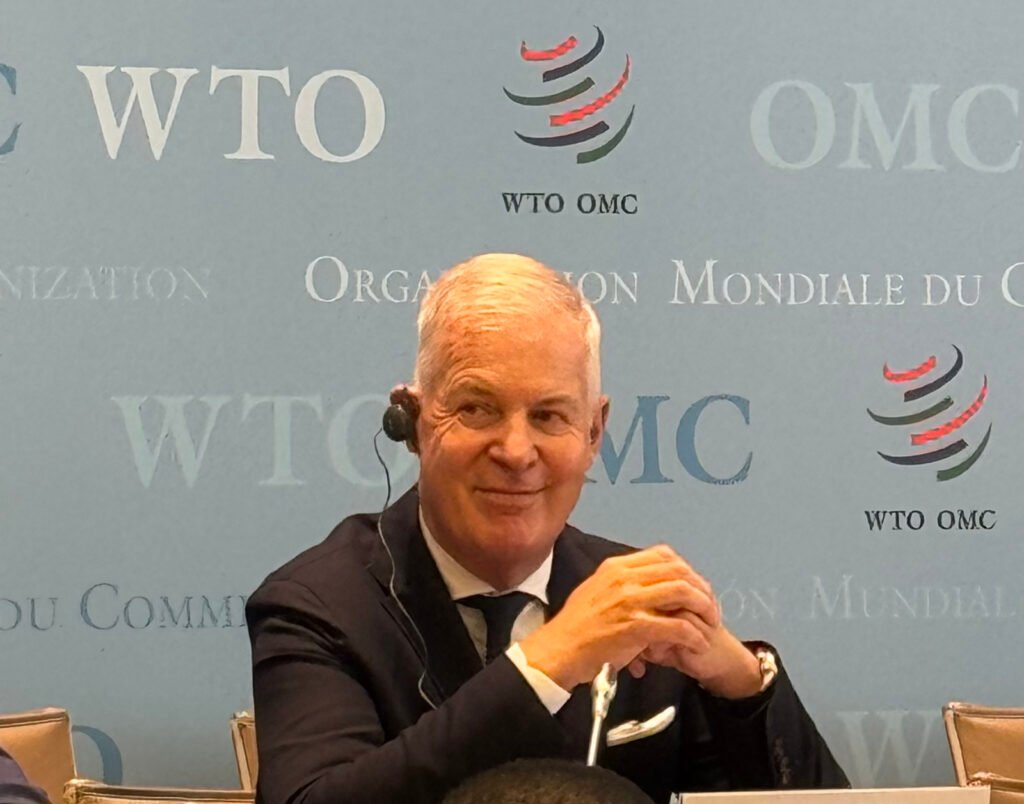
He described the crisis through three “prisms”: the conflict itself, the energy shock and the pressure on fertiliser and food systems. The third, he argued, has received less attention precisely because its effects are delayed. Fertiliser shortages do not immediately empty supermarket shelves. They affect the next planting season, then yields, and only later food prices and food security.
Denton called fertiliser “the sleeper issue.”
Almost a third of fertiliser flows through the Strait, he told the audience. When supply becomes uncertain, farmers respond by using less fertiliser, planting less or changing what they grow. The consequences can take months to appear, but by then they are harder to reverse.
Seen this way, Hormuz is not merely a question of whether tankers can pass. It is an example of how a disruption in one narrow corridor can move through shipping, insurance, energy and agriculture before reaching households thousands of kilometres away.
The costs are also distributed unevenly.
Minister of International trade of the Democratic Republic of the Congo, H.E. Julien Paluku Kahongya, brought that point into the discussion from the perspective of developing economies. His intervention stressed the need to diversify energy supply, including through investment in emerging African producers, and raised the possibility of stronger international cooperation to deal with fertiliser shocks.
Denton later returned to the proposal, calling a dedicated mechanism for fertiliser a “very worthy ambition”, even while acknowledging how difficult a global agreement would be.
Resilience also depends on who can afford it. Wealthier governments can soften a shock with subsidies, reserves and emergency spending; many developing economies have far less room to manoeuvre. For them, resilience depends not only on alternative supply routes, but on access to finance when disruption strikes.
The limits of resilience become clear in practice. Reserves are temporary, diversification is expensive and the reopening of a trade route does not by itself restore the confidence needed for commerce to resume.
A shipping lane can be open and still commercially unusable. Trade returns only when shipowners, insurers and port operators have enough confidence to use it. The proposed UN-backed mechanism is designed to restore that confidence through deconfliction, oversight and insurance.
That distinction is important. Declaring a strait open is one thing. Convincing businesses to send ships through it is another.
The CEO of the World Shipping Council, Joe Kramek, approached the problem from a different direction, describing freedom of navigation and transit passage as part of the “invisible infrastructure” of global trade. Ports, vessels and containers are the visible machinery of commerce. Beneath them sits an expectation that maritime routes will remain open. When that expectation weakens, shipping can divert — but at greater cost and with less capacity.
The intervention from Oman then shifted the discussion from logistics to diplomacy.
Idris bin Abdul Rahman Alkhanjari, Oman’s Permanent Representative to the United Nations in Geneva, brought a regional perspective to the discussion. He stressed that stability in the Strait matters far beyond the Gulf, particularly for import-dependent economies with limited capacity to absorb higher transport, insurance and energy costs.
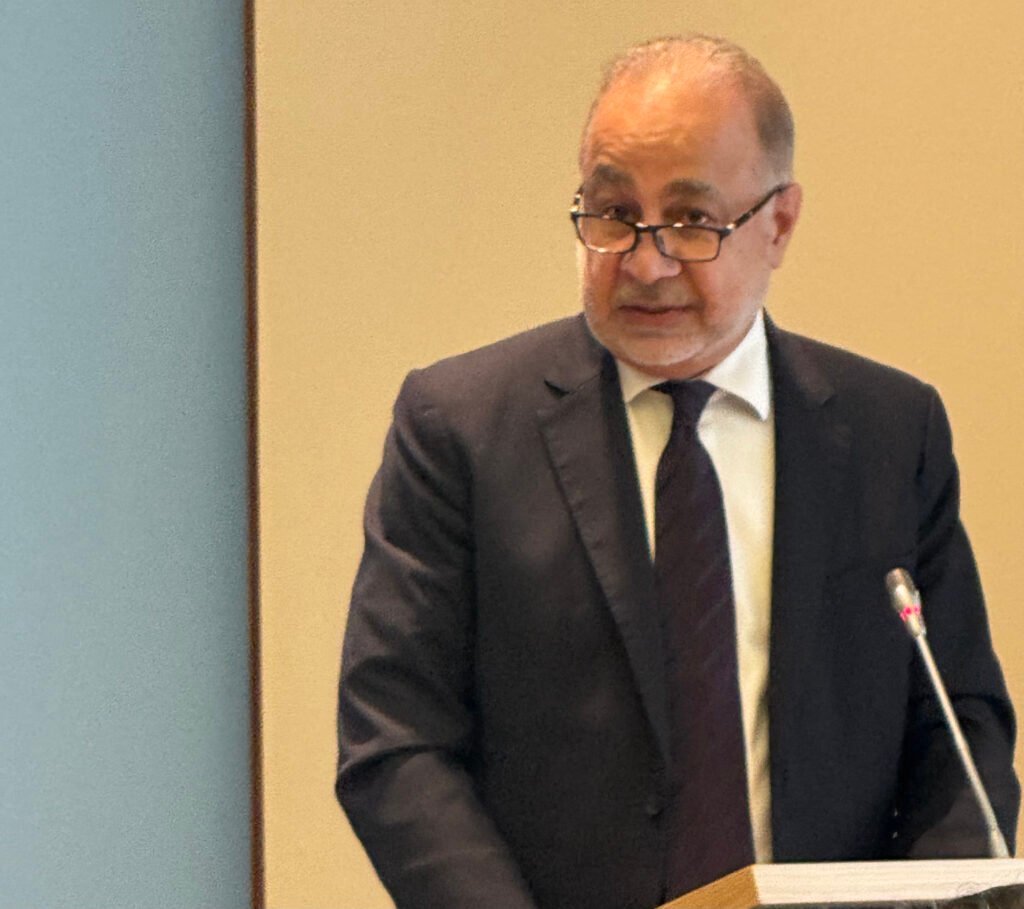
“Maintaining channels of communications help build trust, reduce misunderstandings, and create the conditions for peaceful solutions.”
A regional meeting of GCC states, Iran and Iraq had been scheduled in Oman but was postponed as consultations continued. The episode underscored the limits of technical fixes: finance, insurance and alternative routes can ease disruption, but they cannot replace the political conditions needed for safe commercial navigation.
Those conditions, in turn, rest on a wider set of rules. Moreno described maritime rules as a “global public good”: a chokepoint may be geographically narrow, but the consequences of its disruption are not. Keeping trade routes open requires international law, commercial confidence and cooperation among states whose interests may otherwise diverge.
The same logic extends to the WTO. It cannot remove geopolitical risk or resolve a regional conflict, but it can help prevent a physical disruption from being compounded by policy responses. Greater transparency around export restrictions, for example, can make government action more predictable and reduce the damage caused when countries respond unilaterally.
The digital economy promises to make trade less constrained by distance, yet Hormuz reveals the limits of that promise. Geography has not disappeared; rather, it has become easier to overlook — until disruption makes its importance impossible to ignore.