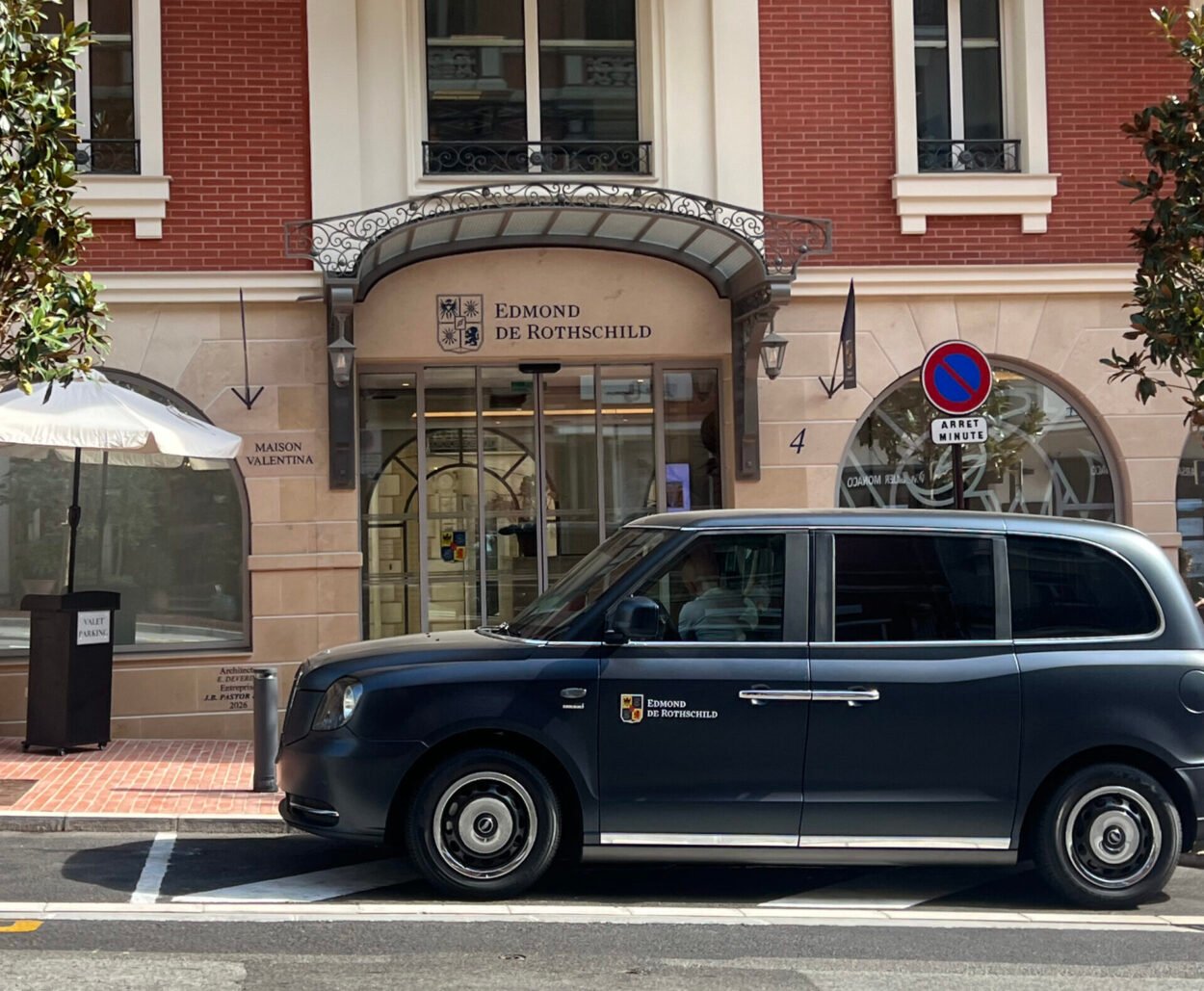
Beyond Banking: Inside Edmond de Rothschild’s New Monaco House
Perfume, private capital, vineyards and a yacht designed to fly: a morning inside Edmond de Rothschild’s new Monaco home reveals a family business rather more interested in what comes next than in standing still.
There are many ways to enter a bank. Perfume is not the most obvious introduction.Yet this is how my morning at Edmond de Rothschild’s new home in Monaco began — with perfume. Finance, it turned out, could wait a little.
Caron, the historic French perfume house acquired by the Edmond de Rothschild family in 2018, has opened its first Monaco address inside the bank’s new home in la Condamine. Inside, a six-metre perfume fountain rises through the boutique, a contemporary interpretation of the fountains Caron once created with Baccarat. Today it has a rather more practical purpose: clients can return to refill their bottles.
At first, perfume seemed an elegant detour. It soon became clear that it was part of the story.
The building may be a bank headquarters, but the world assembled around it is rather broader: perfume, wine, art, sailing, technology and the accumulated passions of a family over generations.
The interesting part is not that all these things coexist. It is how naturally one seems to lead to the next.
Forty Years, and a New View
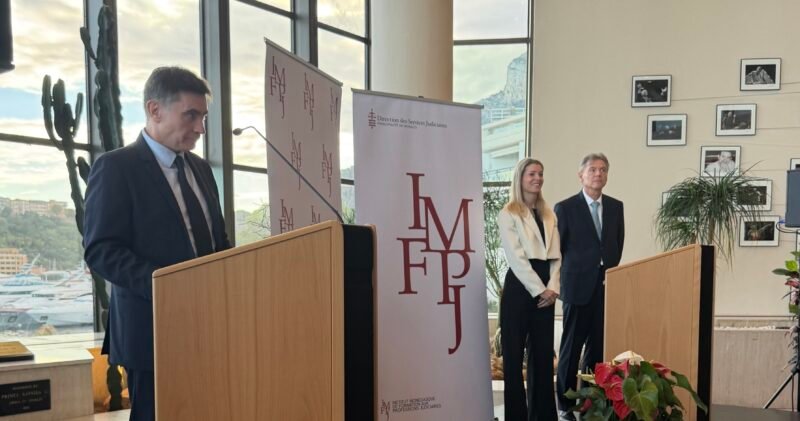
Edmond de Rothschild has been in Monaco for forty years. The new headquarters is not an arrival, then, but a new home.
During the morning, after meeting the bank’s CEO Gérard Ohresser and members of the Monaco team, I was taken onto the terrace.
Monaco is not exactly short of remarkable views. Estate agents here have perfected the art of attaching considerable monetary value to even a modest glimpse of blue.
This one earns the attention.
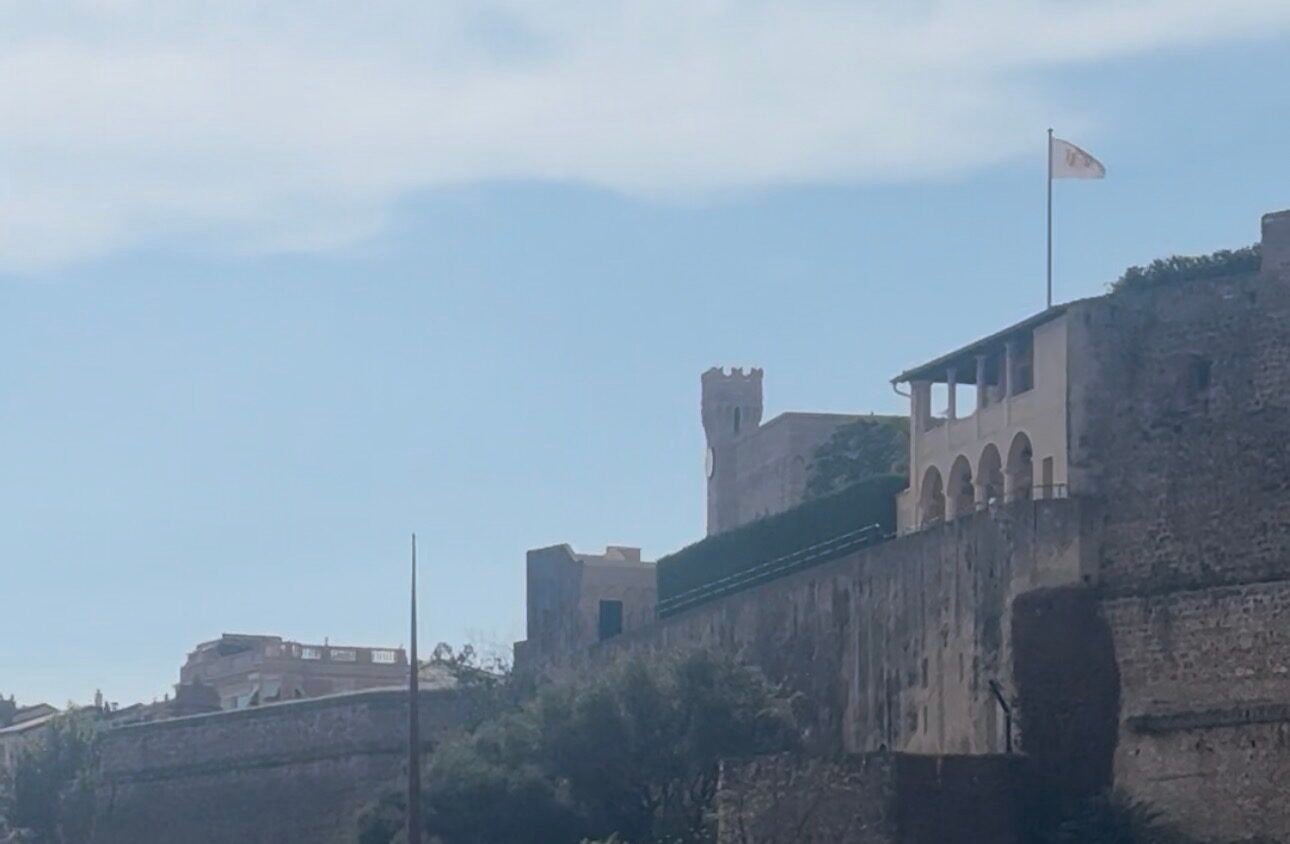
The harbour, the Prince’s Palace and the mountains unfold in a single panorama.

As Gérard Ohresser remarked that the new building had effectively created a view that had not existed before.
I liked the idea. A new building can give an old institution a different vantage point.And as I moved through the new house, it became clear that the building is concerned not only with where Edmond de Rothschild is going, but with what it intends to carry with it.The first answer was waiting downstairs, in a perfume bottle.
The Business of Inheritance
Caron offered the first clue. Founded in 1904 and acquired by the family more than a century later, the perfume house is now being shaped by another generation, with Olivia de Rothschild as artistic director. Old houses have a particular difficulty: history is an asset until one becomes afraid to touch it. Preserve everything and you have a museum. Change everything and there is little left to inherit. A private bank understands a version of the problem rather well. Its business is, after all, built around questions of transmission: what passes from one generation to another, what changes along the way and what is worth preserving. Here, those questions do not remain confined to portfolios. From perfume, we moved rather naturally to wine.
Naturally, There Is a Wine Club
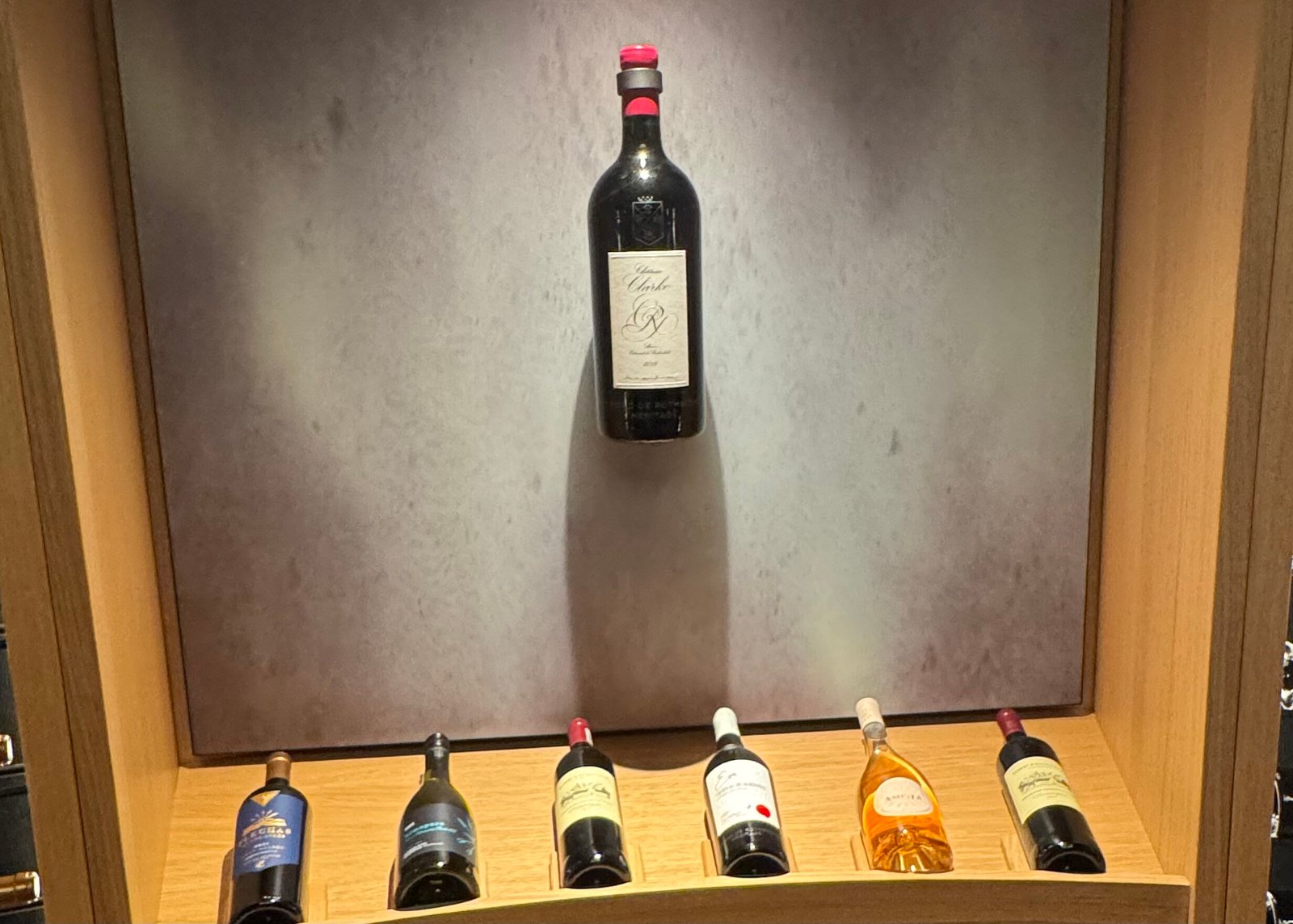
By this point in the morning, discovering a Wine Club inside the headquarters felt less surprising than it probably should have. Clients can access wines from the wider Edmond de Rothschild world throughout the year and, as we were told during the visit, purchases can be arranged through their relationship manager.
Which rather expands the job description of a private banker.
The relationship between banker and client may begin with finance. Here, however, the banker can also become a point of entry into a broader family world — its vineyards, craftsmanship, history and experiences. And that matters. Financial products can be copied. Technology can make advice faster and cheaper. Access is harder to reproduce; history harder still. A Wine Club alone will not win a client.A century and a half of family history is rather more difficult for a competitor to arrange.And if you want to understand what 150 years can look like in this family, wine is not actually the best place to start. For that, you need a boat.
A Woman, a Steam Boat and a Taste for Speed
To understand why boat matters, you have to meet Julie de Rothschild. Some 150 years ago, on Lake Geneva, Julie commissioned steam-powered boats. Her first was built in England, transported in pieces and reconstructed by the lake. She called it Gitana. And she raced it. Julie established speed records and commissioned another vessel. During our presentation, we were also told of her fascination with music and with the independent female figure at the heart of Bizet’s Carmen, an influence in the story behind the Gitana name.The name survived. Edmond de Rothschild later revived Gitana for sailing yachts. Benjamin de Rothschild took the fascination with speed further, turning towards multihulls and establishing Gitana Team in 2000 around an approach compared during our presentation to Formula One: engineers and specialists surrounding the sailor so that performance could be pushed further.Then came foiling. From 2017, Gitana pursued offshore boats capable of rising above the water on foils. Gitana 17 became a laboratory at sea — experimentation conducted at full scale rather than safely confined to a drawing board.And now there is Gitana 18. I encountered it through virtual reality, at which point the morning began to feel faintly like the Rothschild metaverse.
The explanation was pleasingly simple: the boat flies.
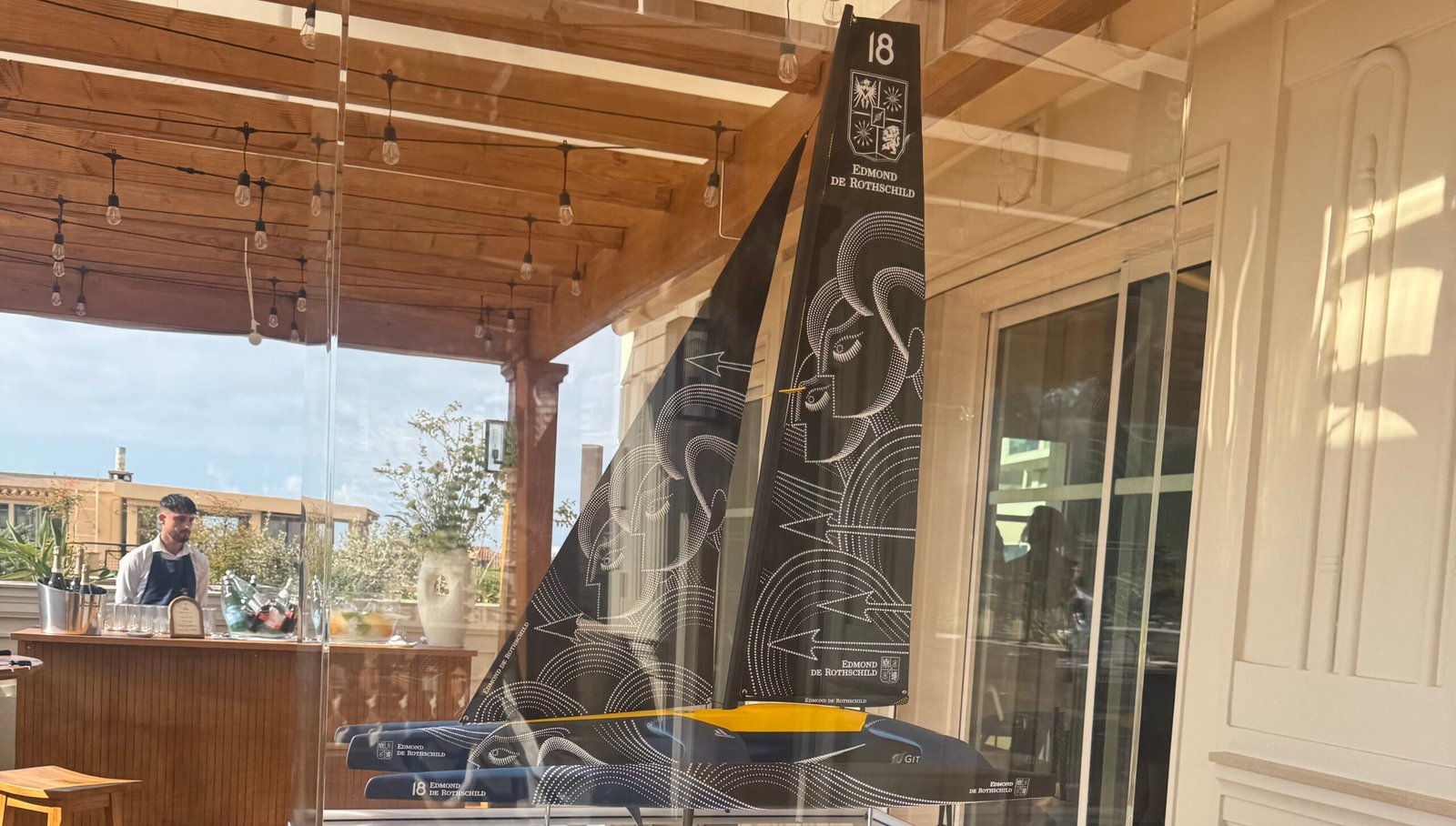
But before leaving Gitana, there was one detail on the hull worth looking at more closely.
Five Women on a Flying Boat
Gitana 18 is also an artwork. During the presentation, we were shown the female faces incorporated into its visual identity: four representing Ariane de Rothschild’s daughters, with Ariane herself appearing on the hull. The symmetry is difficult to miss.A story begun by Julie de Rothschild on Lake Geneva is now carried, 150 years later, by another generation of women on a boat designed to fly. Inheritance rarely travels in a straight line. Passions disappear and return. A private pastime becomes a sporting project; a sporting project becomes an engineering laboratory. An old family name ends up attached to technology its original owner could hardly have imagined. Gitana has lasted because Gitana kept changing. Perhaps the same is true of most things worth inheriting. Later that morning, the same question reappeared in a rather different setting. This time, we were no longer talking about what flies above the water, but about the land beneath our feet.
Legacy, or Something More Difficult
The conversation had turned to the environmental footprint of the family’s activities and to Regen, a project involving Alice de Rothschild.What interested me was how quickly the language moved away from the polished vocabulary that so often surrounds sustainability and towards very physical things: land, properties, water consumption and soil.The ambition, as it was explained to me, is to leave the land and terroir in the best possible condition for the generations that follow. For a moment, we searched for the right English word.
“Legacy,” I suggested.
“Exactly.”
Except I am not sure legacy is quite the word. Legacy is what arrives from the past.
Stewardship is what you do with it before passing it on.
By then, that distinction seemed to be everywhere around us: in Caron, in the vineyards, in Gitana — and, inevitably, in the bank itself. Which brings us back to where the morning began.
What Is a Private Bank Becoming?
For all the perfume, vineyards and flying boats, there is, of course, a bank behind all this. And in Monaco, it has grown considerably. Edmond de Rothschild Monaco now manages around €18 billion, compared with roughly €4 billion a decade ago. Its 270 employees, once spread across different offices, are now together under one roof at the new headquarters.
Seen in that light, the new headquarters feels less like a change of address than the consequence of what has happened to the business around it.
Private banking has traditionally preferred to keep itself out of sight: discreet entrances, quiet rooms, very little need to explain itself. The New House does something slightly different. It puts the bank at the centre of a much wider family world — one that includes wine, perfume, sailing, art and technology. It also reflects something difficult to manufacture: continuity. Financial products can be replicated. Investment strategies can be imitated. Family history is less obliging.
None of which makes performance any less important. A client is unlikely to forgive a disappointing portfolio because the Bordeaux was excellent.
But numbers explain only part of private banking. The rest is built on relationships, discretion and, ultimately, trust — the sort that takes rather longer to establish than a new investment strategy. The new headquarters give that idea a physical form.
And Eventually, Breakfast
Eventually, there was breakfast. Someone poured the coffee. Monaco stretched out beyond the windows, and the conversation moved on.I found myself thinking about Julie de Rothschild’s boat. One hundred and fifty years later, it still carries the same name.Only now, it flies.