Can You Bank a Wetland? The OECD’s Bet on Nature as Infrastructure
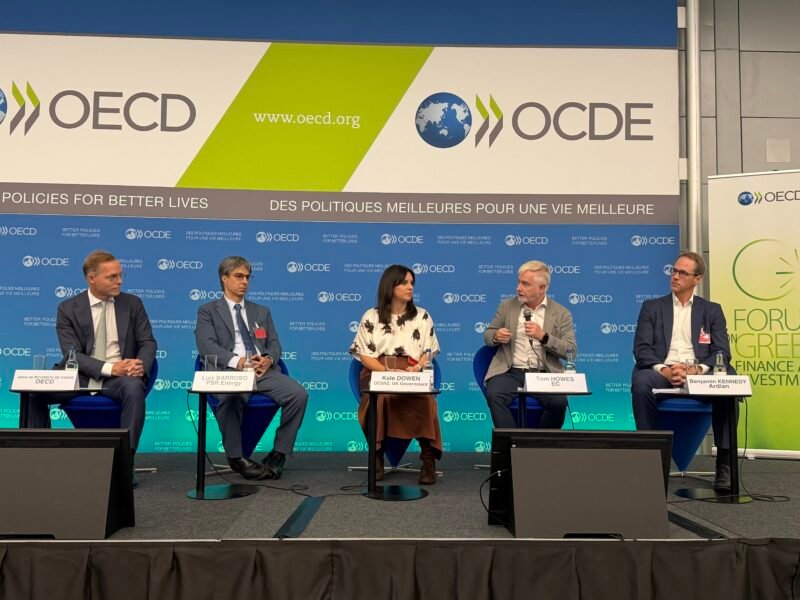
At the OECD Forum on Green Finance and Investment in Paris, one question kept returning in different forms: if rivers, wetlands and reefs protect the assets we already finance, why are they still so difficult to invest in?
Finance likes things it can count.
A motorway has tolls. A power station sells electricity. A port charges ships. A wetland, rather inconveniently, may prevent a flood, clean water, shelter wildlife and protect nearby property without sending anyone an invoice.
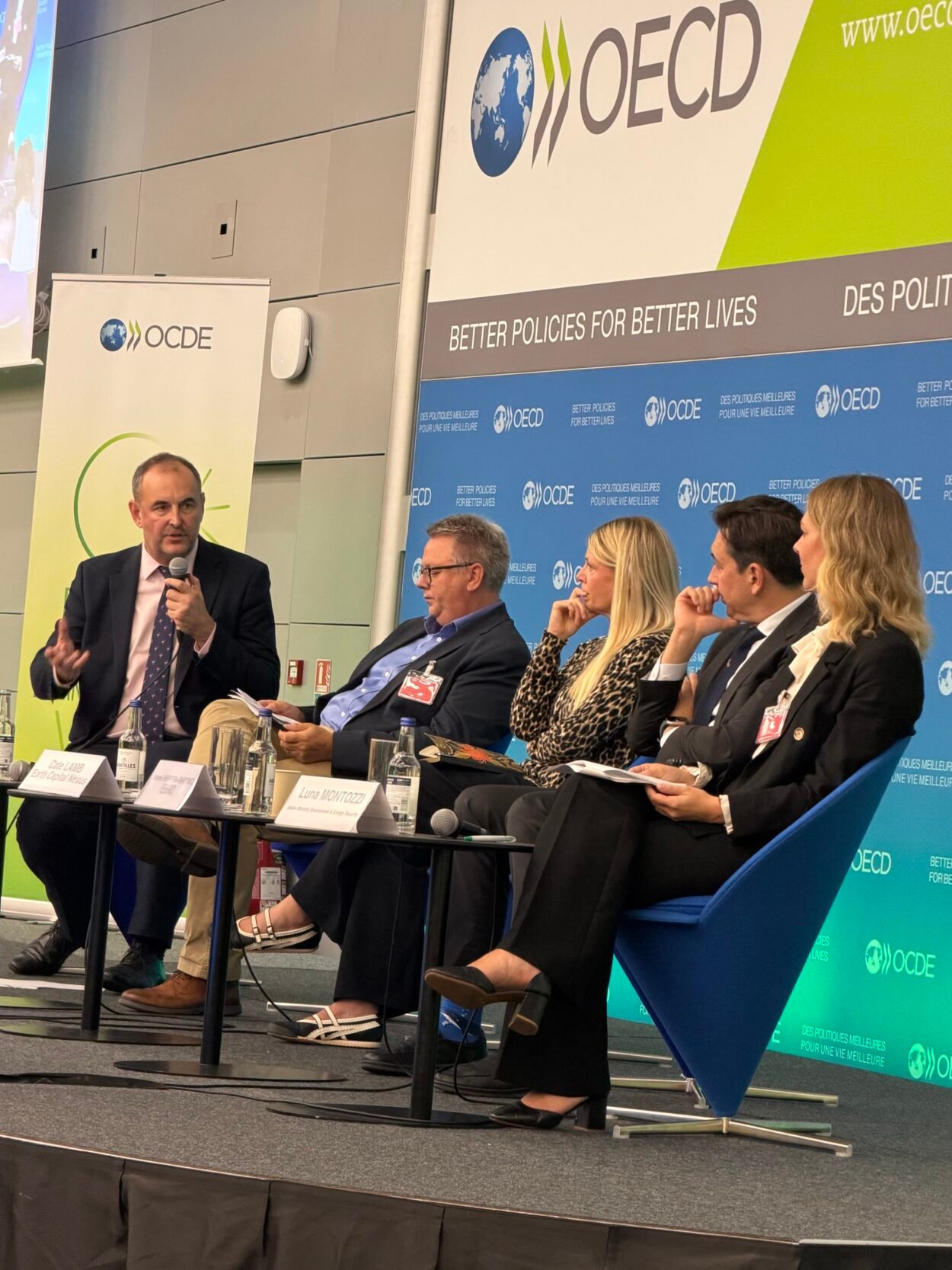
That was the problem at the heart of a discussion moderated by Matthew Griffiths of the OECD, with James Dalton of IUCN, Cate Lamb of Earth Capital Nexus, Adonai Herrera-Martinez of the EBRD and Luna Montozzi of Italy’s Ministry of Environment and Energy Security.
Nobody needed convincing that nature has economic value.
The harder question was how to make that value financeable.
Start with the thing being protected
James Dalton, IUCN’s Global Director for Water and Wetlands, argued that nature-based solutions do not always need a financial universe of their own.
Utilities, hydropower companies, agricultural investors and municipalities already have customers, tariffs and revenues. If a healthy watershed secures water supply, reduces sediment or protects an asset, the natural system can sometimes be built into the economics of infrastructure that is already being financed.
The questions are refreshingly practical: who benefits, who can pay and through what mechanism?
It sounds obvious. Finance has a considerable talent for making obvious things complicated.
The wrong clock
Cate Lamb, Distinguished Policy Fellow at Earth Capital Nexus, offered a sharper explanation for why the money still does not flow.
“We all know it’s cheaper to do it. We all know it’s better for us to do it. But nobody is really quite adequately incentivised to do anything about it.”
The problem, she argued, is no longer awareness. It is incentives.
Nature operates on the wrong clock. A business may benefit from degrading a natural asset within a few quarters; the consequences may take decades to appear.
The payer is often wrong, too. A river may be restored locally while the benefits are enjoyed by factories, farms, households and businesses much further downstream.
Then there is diversification, one of finance’s favourite reassurances.
Lamb pointed to low water levels on the Rhine, which can disrupt energy supply, chemicals and trade at the same time.
“You can’t diversify.”
A river, unlike a badly chosen share, cannot simply be sold and replaced with another one.
Too big to fail — but wetter
Lamb’s more provocative idea came from banking.
Regulators classify certain lenders as globally systemically important because their failure could threaten the wider economy. Why not think similarly about ecosystems?
“Our belief is that there are natural ecosystems that have the same type of impact.”
If a natural system is genuinely systemic, she suggested, perhaps it should be treated with some of the same seriousness: resilience standards, stress tests and long-term investment plans.
That would move nature out of what Lamb called the “peripheral, possibly philanthropic, nice-to-have ESG space” and into the machinery of financial risk management itself.
A reef in front of a resort is not merely attractive if it absorbs waves.
The trouble begins when the banker asks for the cash flow.
A reef does not pay interest
According to Adonai Herrera-Martinez, Director of Environment and Sustainability at the EBRD :
“Nature is the infrastructure of life.”
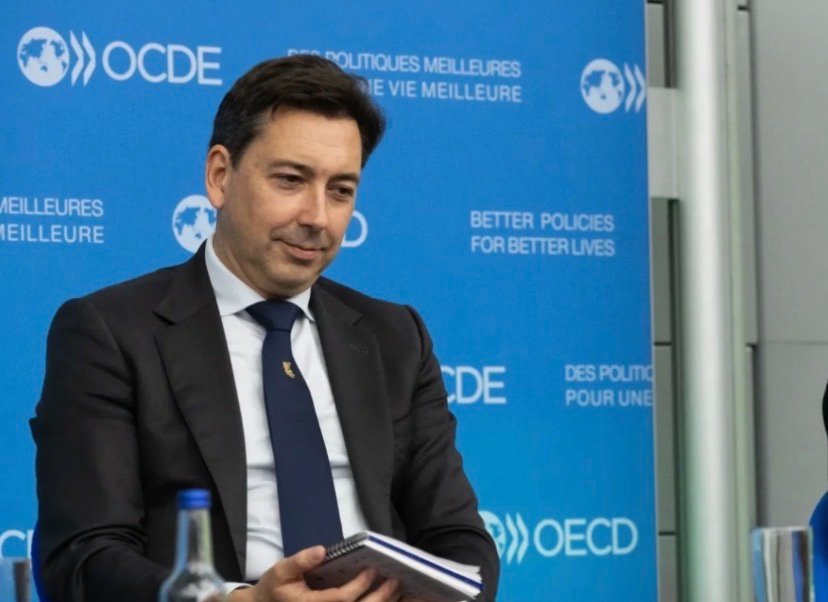
A banker may agree completely.
He will still want to know who repays the loan.
Herrera-Martinez noted that investments in nature generally do not produce the cash flows needed to make a transaction bankable.
That is the central irritation of nature finance.
A mangrove can reduce flood damage. A forest can stabilise water supplies. A coral reef can protect a coastline. Their economic contribution may be substantial.
Much of it, however, appears as a bill that never arrives.
Banks are better at financing revenues than disasters which did not happen.
Herrera-Martinez cited a tourism development in Jordan where investment in reef restoration and a coral nursery increased the value of the surrounding asset. There, the beneficiary was identifiable and the commercial logic relatively clear.
Most ecosystems are less obliging.
The EBRD has therefore been experimenting with natural-capital valuation, including through its Green Cities Programme, so municipalities can consider nature alongside more conventional infrastructure when making investment decisions.
The difficulty is not proving that a river has value.
It is persuading Excel.
Put nature inside something bankable
One answer is not to ask nature to stand alone.
Herrera-Martinez described how existing infrastructure can become an entry point for ecological recovery. Wastewater investment around the Baltic Sea, for example, was linked to improvements in the marine environment. He also pointed to the BlueMed partnership as part of efforts to extend similar thinking to other marine ecosystems.
For coastal economies, the logic is appealing.
A port already has revenues. So does a hotel, an energy project or a water utility. Build natural resilience into the project and the financing problem may become less exotic.
Herrera-Martinez compared the challenge with renewable energy 20 years ago.
“Isn’t that what we achieved 20 years ago with renewables? … We should strive to do exactly the same with investments in nature.”
The analogy has limits. Electricity has the useful quality of being something people can buy.
Nature provides many services to many beneficiaries, often without charging any of them.
Its problem may not be that it creates too little value.
It creates value rather indiscriminately.
Italy looks for proof
Luna Montozzi, Climate Finance Advisor at Italy’s Ministry of Environment and Energy Security, described one attempt to make the idea more practical.
Italy, together with the OECD and UNEP, has launched a five-year Nature-Based Solutions Innovation Accelerator. Its projects are designed to integrate nature into existing or planned infrastructure, with public and private actors working together and co-financing built into the model.
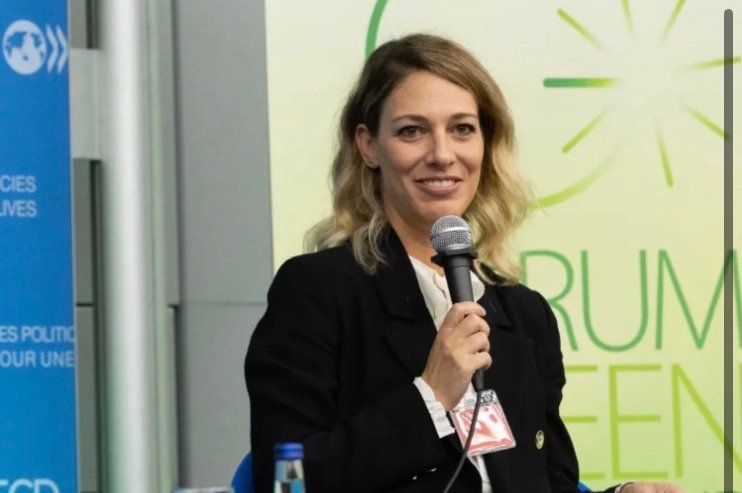
The purpose is to create examples investors can examine.
Successful pilots, Montozzi said, should become a “proof of concept” that can be “replicated, expanded, and hopefully scaled up”.
That may sound less impressive than another trillion-dollar financing pledge.
It may also be more useful.
Investors like precedents almost as much as policymakers like pilots.
The Monaco question
At the end of the session, Ad Astra Journal Monaco asked Montozzi how political cooperation could be translated into financeable nature-based infrastructure at scale.
“It’s not an easy question,” she replied.
Quite.
Her answer was that political agreement is only the beginning. What matters next is building “an ecosystem and a platform” around projects — connecting developers and consortia with public bodies, banks and private investors able to provide the capital needed to scale.
For Monaco and the wider Mediterranean, the challenge is especially clear. The region is not short of declarations on oceans, biodiversity and resilience. It is short of projects that can survive an investment committee.
That means answering the questions finance always asks: who pays, who benefits, who takes the risk and where the cash flow comes from.
A wetland may never look much like a motorway on a balance sheet. But if it keeps the motorway above water, that distinction begins to look rather less important.