The $70 Trillion Question: What the OECD Forum Revealed About Financing Electrification
The world does not appear to be short of money for the energy transition. Nor is it short of technology. What it lacks is a sufficient supply of projects that investors can actually finance.
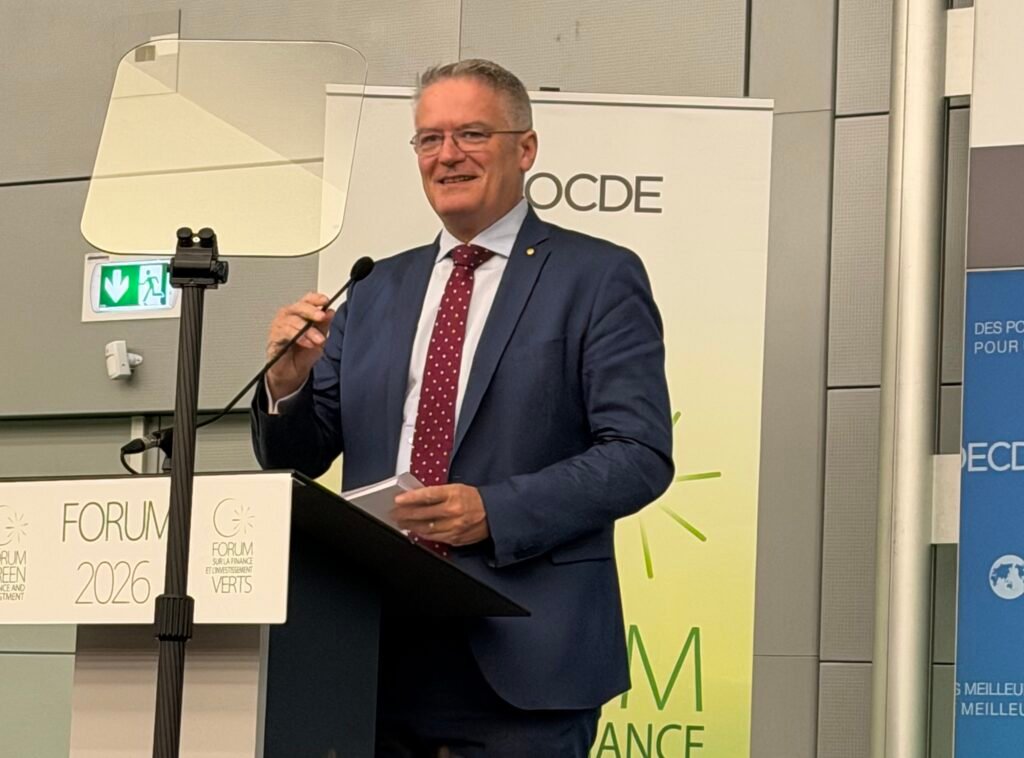
“Capital does not finance ambition, it finances projects.”
Mathias Cormann, the OECD’s secretary-general, could hardly have put the problem more economically.
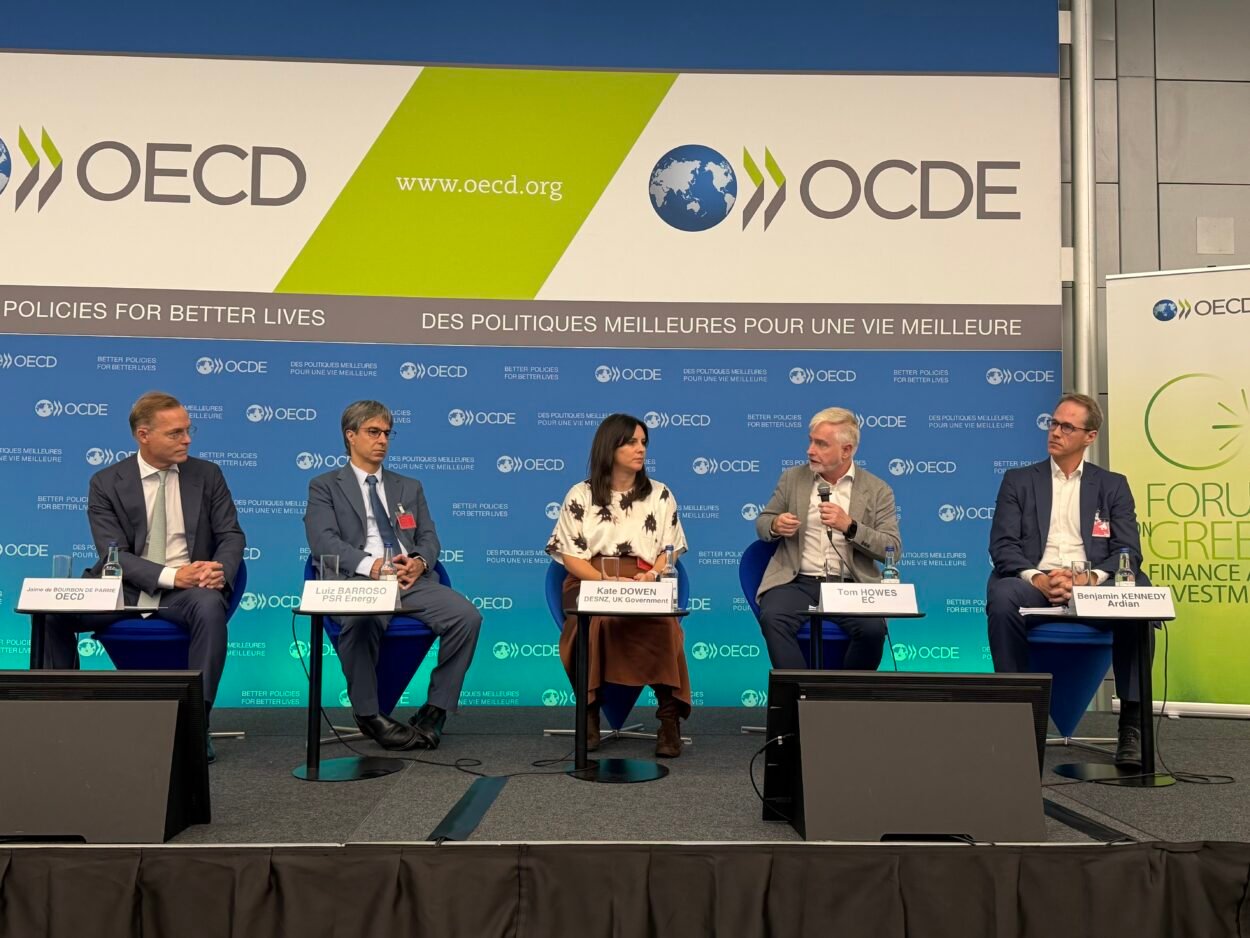
At the OECD Forum on Green Finance and Investment in Paris, much of the familiar language of climate finance was still present: trillions of dollars of investment, rapidly rising electricity demand and the need to mobilise private capital. But beneath it lay a more interesting argument.
Perhaps the central problem is no longer a shortage of money. It is investability.
Clean-energy investment is already running at extraordinary levels. Yet grids, storage, industrial electrification and new generation will require far more. Governments cannot fund the lot, and institutional investors cannot simply be instructed to fill the gap.
For private capital, good intentions are not an asset class.
Projects require predictable revenues, workable business models and risks that somebody is willing — and able — to bear. That was the logic behind Cormann’s insistence that investment needs must first be converted into investable opportunities.
The importance of policy stability is similarly prosaic. An OECD survey presented at the Forum found that 89% of financial institutions and companies said policy uncertainty reduced their willingness or ability to finance transition activities.
A government may announce a target for 2040. An infrastructure investor must decide whether the rules underpinning it will survive 2040.
That difference matters.
From virtue to security
The political case for electrification is also changing.
For much of the past two decades, clean energy was sold chiefly as a climate policy. That case has not disappeared. But it is increasingly being supplemented by something more muscular: energy security, industrial competitiveness and sovereignty.
Vera Songwe, chair and founder of the Liquidity and Sustainability Facility, argued that the distinction between energy security and the energy transition has largely collapsed.
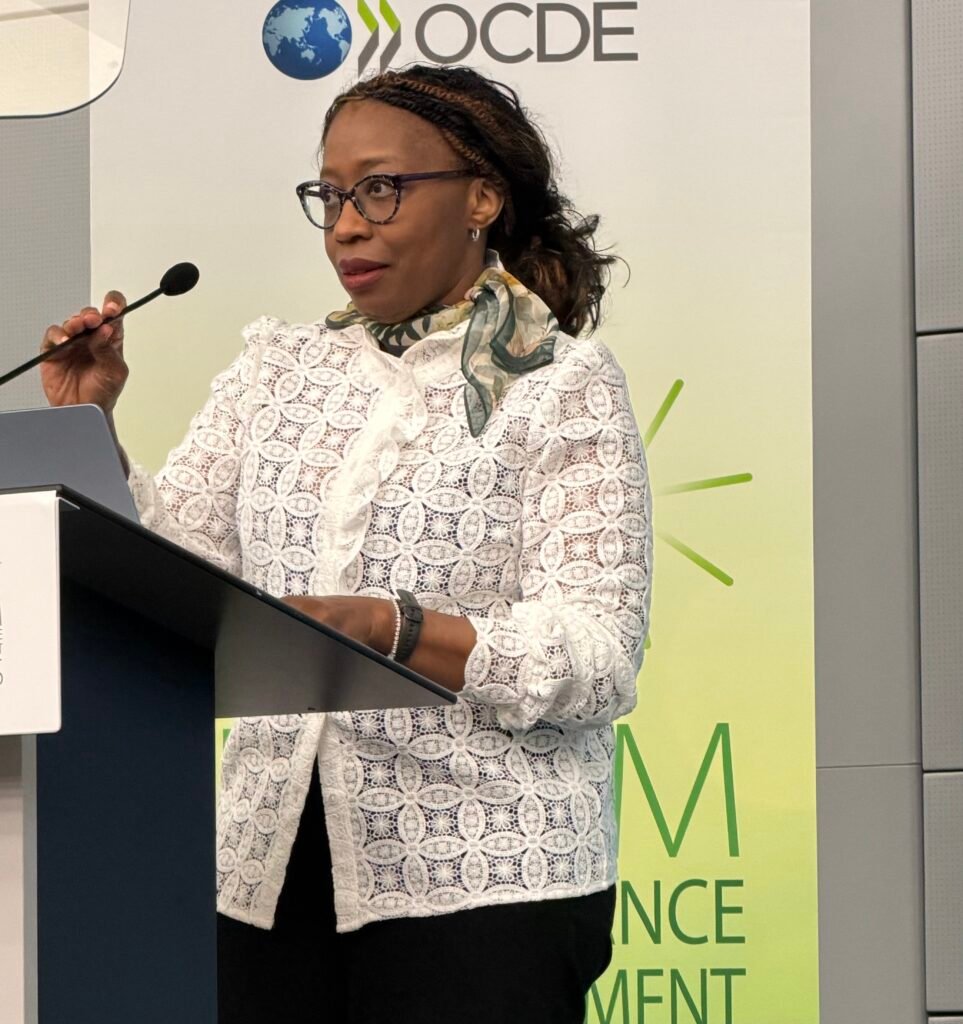
Her formulation was telling: “For 20 years the case for clean energy was made on climate. In 2026, it’s been made on sovereignty and growth.”
Seventy trillion dollars, mostly elsewhere
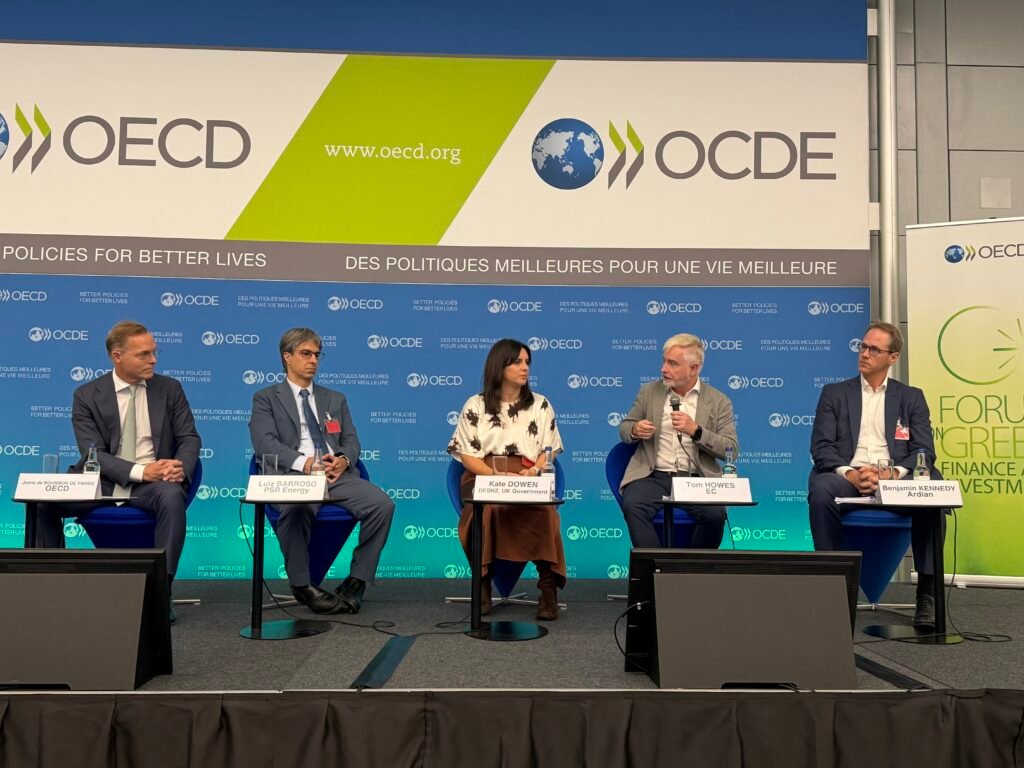
The most arresting number of the day came from Jaime de Bourbon de Parme, the OECD’s Environment Director.
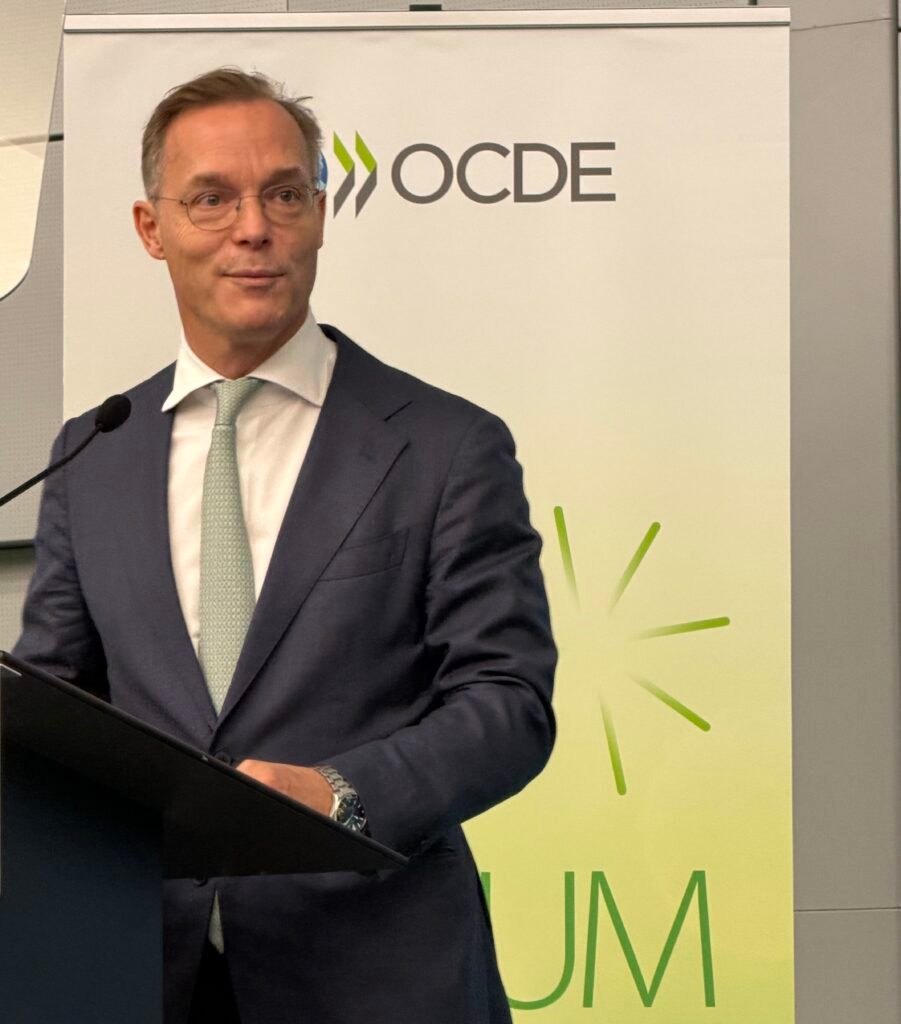
Pension funds in OECD countries collectively manage around $70 trillion. Only a small fraction, he noted, is invested in infrastructure, and a still smaller fraction in green infrastructure.
“How do we unlock that capital and get it flowing into electrification at scale?” he asked.
The temptation is to see $70 trillion and conclude that the financing problem ought to be easily solved.
It is the wrong conclusion.
A pension fund is not a sovereign wealth fund with a mandate to pursue public policy. Its first obligation is to its beneficiaries. An asset manager acting for insurers or pension schemes cannot substitute political enthusiasm for cash-flow visibility.
The interesting question is therefore not why $70 trillion has failed to rush into green infrastructure.
It is what would persuade even a small additional share to do so.
Technology, at least, is making the argument easier.
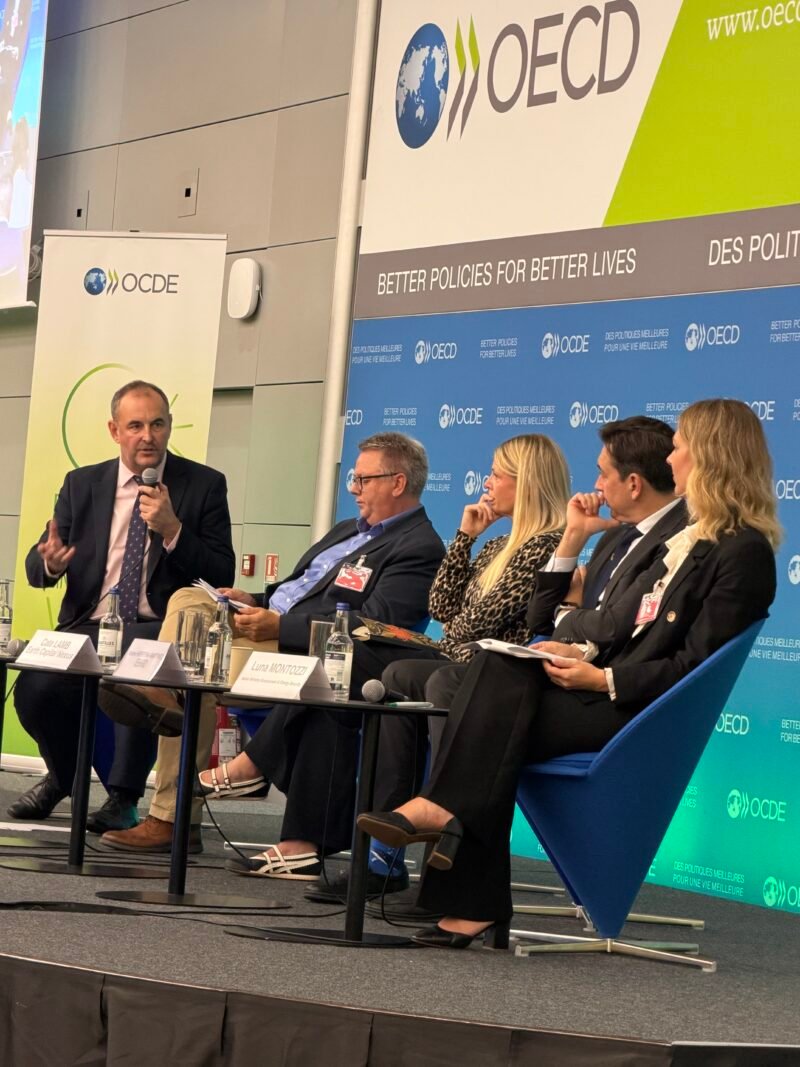
Brian Motherway of the International Energy Agency provided part of the answer from the technology side.
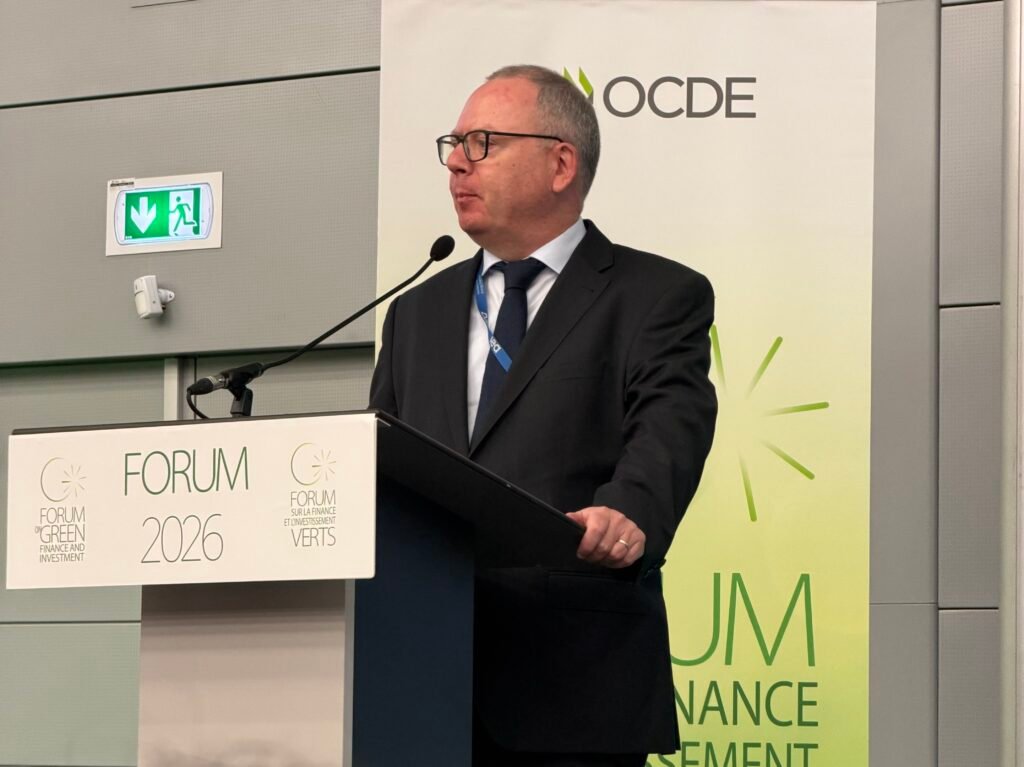
He described the cost of roughly one gigawatt of solar capacity as falling from around $3bn a decade ago to about $700m today.
He also outlined a pathway in which electricity reaches 35% of global final-energy consumption by 2035, supported by electrification in transport and heating as well as improvements in efficiency.
Europe knows where it is going. Investors want to know how
Tom Howes of the European Commission’s DG Energy offered one of the sharper lines of the session:
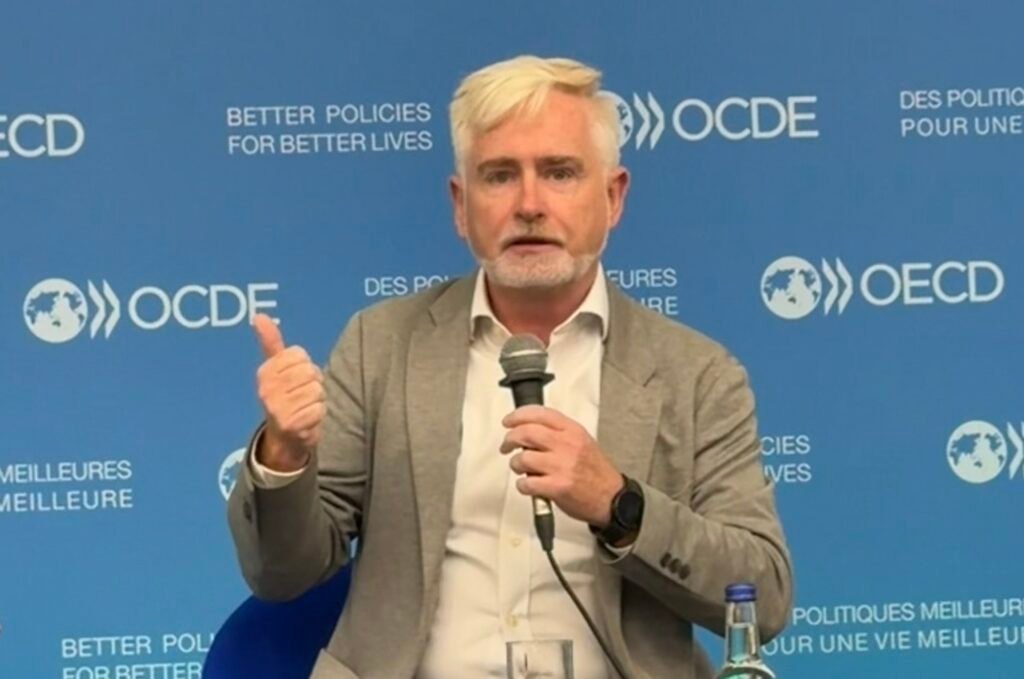
“We’re not going to go back to a world of cheap fossil fuels. That’s just not on the cards.”
The EU is aiming for an electrification rate of roughly 46% by 2040, compared with about 23% over the previous decade, according to the discussion.
The difficulty is that strategic direction does not itself produce attractive investments.
Electricity taxation matters. So do grid tariffs. Permitting regimes, market design and storage capacity all affect whether a project offers a return commensurate with its risk.
Howes argued that a more efficient electricity system would also be a more investable one: better tariff structures, improved flexibility and sufficient storage can lower system costs and make capital deployment easier.
This is where the energy transition becomes less glamorous.
Building the low-carbon economy is partly about solar panels and batteries. It is also about connection queues, tariff methodology and planning permission.
The latter rarely feature in campaign slogans. They feature prominently in investment committees.
Follow the cash flow
Benjamin Kennedy of Ardian supplied the private investor’s version of the story.
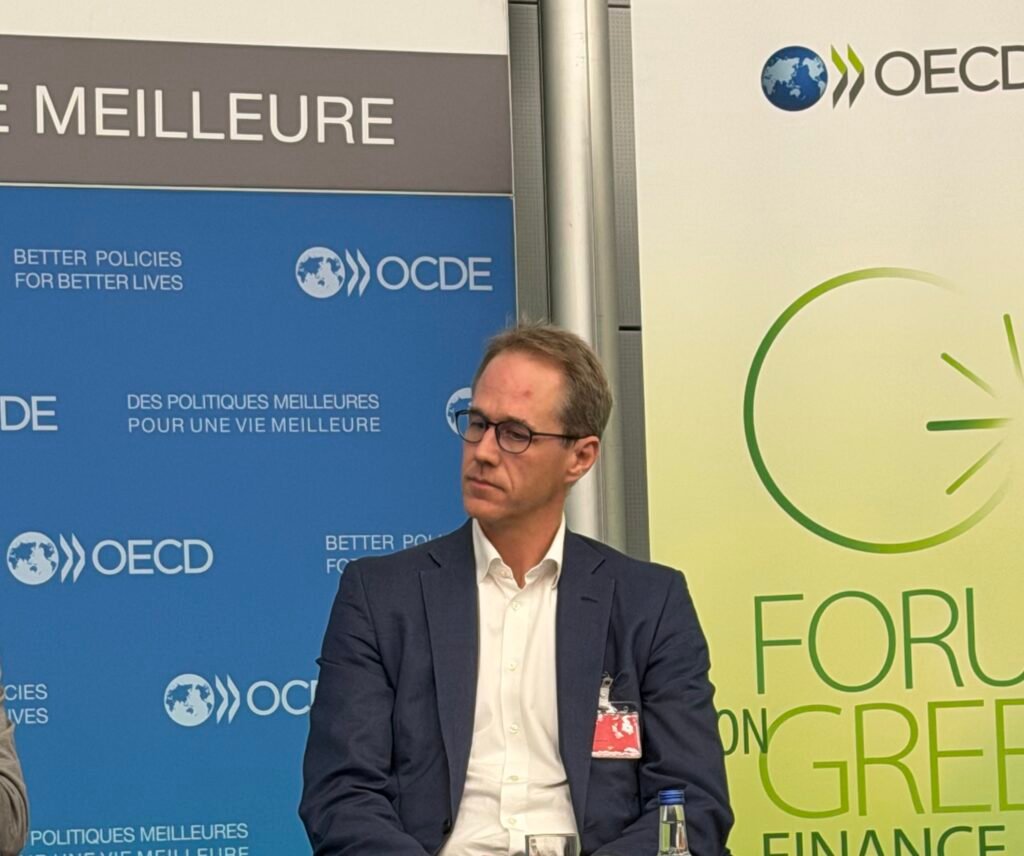
The power system is becoming more complex and volatile, he observed. That presents a difficulty because “infrastructure investing is premised on a degree of cash flow stability”.
At project level, investors must still answer rather mundane questions. Is there a secure grid connection? Are the permits in place? Can construction costs be controlled? Who is buying the power? How predictable are revenues?
Kennedy later highlighted grid interconnection, permitting and revenue visibility as among the main characteristics determining whether a project is investable.
Ardian is also adapting to the increasing complexity of the electricity market by looking at businesses that operate across several parts of the system rather than relying on the economics of a single asset class.
That is revealing.
Investors are not waiting for risk to disappear. They are trying to structure portfolios that can live with it.
But there are limits.
The ultimate providers of much infrastructure capital — pension funds and insurers — are themselves constrained by regulation, fiduciary duties and risk budgets.
A trillion-dollar opportunity can remain unfundable if its risk is packaged in the wrong way.
The awkward bit comes before the cheque
For emerging economies, the problem often arises even earlier.
Kate Dowen of Britain’s Department for Energy Security and Net Zero argued that international climate finance needs to move “from theoretical solution sets to real practical action”.
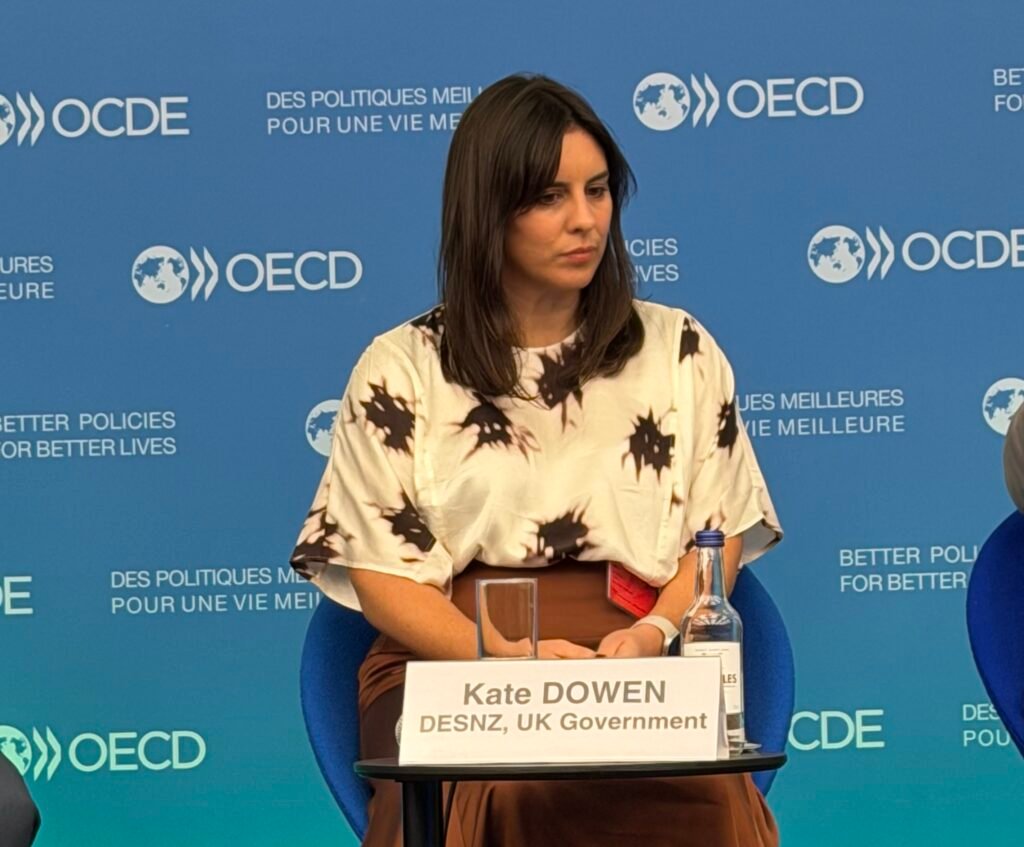
That means developing investment pipelines, paying for project preparation and turning promising ideas into something a bank or asset manager can evaluate.
This part of the process attracts less attention than announcing a new climate fund. It may matter more.
Before private capital arrives, someone has to finance feasibility studies, legal structures, permits and technical preparation. In countries with limited fiscal space and high borrowing costs, even reaching the point at which a project can be presented to investors can be difficult.
Public and concessional capital are therefore most useful when they do something private finance cannot easily do itself: absorb early-stage or political risks and create the conditions for commercial capital to follow.
Songwe made the same problem visible from another angle. She argued that projects in emerging economies can face substantially higher financing costs, with perceived risk and regulatory treatment contributing to the premium.
The danger is a familiar vicious circle.
High perceived risk raises the cost of capital. High capital costs make projects less viable. A shortage of viable projects then confirms the perception that the market is uninvestable.
Brazil’s useful heresy
Luiz Barroso, a member of Brazil’s National Council for Energy Policy and CEO of PSR Energy, offered a useful counterexample.
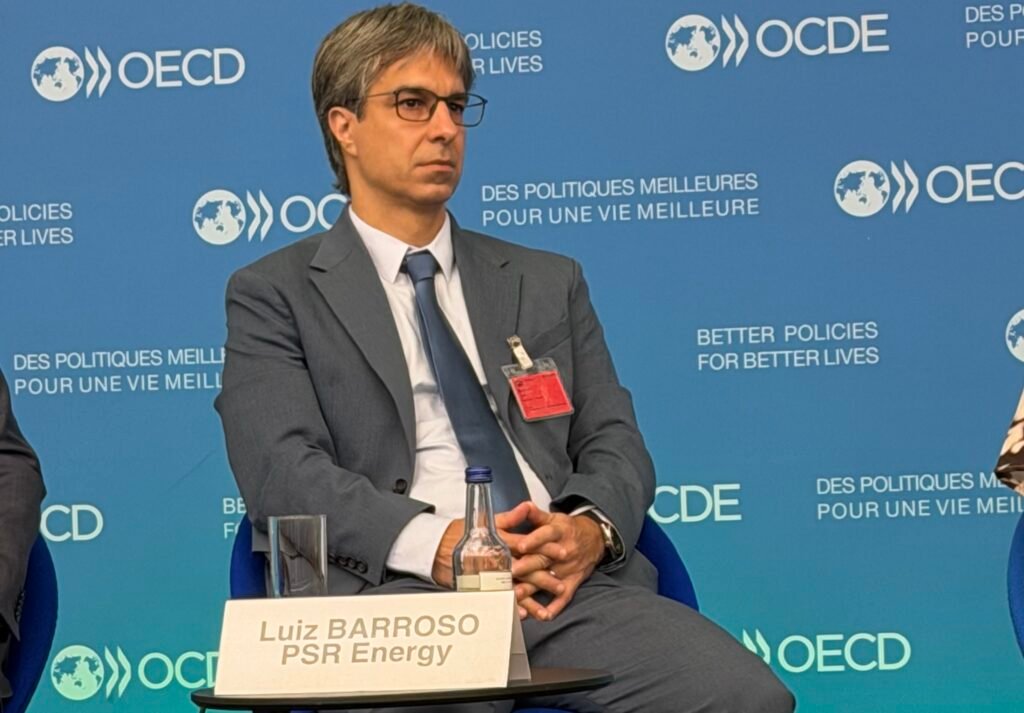
He described an electricity system in which the state provides long-term planning and contractual architecture while private capital competes to deliver infrastructure.
Over three decades Brazil has built roughly 100,000km of high-voltage transmission infrastructure under a model in which private investment plays a central role.
Planning can itself be a form of de-risking.
If investors know what infrastructure will be required, how revenues will be determined and whether contracts will be enforced, uncertainty falls. Required returns may fall with it.
Barroso described policy and markets as complementary rather than competing forces, with planning and competition working together.
Brazil’s model is neither laissez-faire nor old-fashioned state capitalism. It is closer to market design: government sets the rules clearly enough for private capital to compete with confidence.
That gets to the heart of the $70 trillion question. The money is there. What is often missing are projects that pension funds, insurers and infrastructure investors can actually finance.
Technology has to become a project. The project needs permits, predictable rules and revenues investors can trust.
That was perhaps the clearest lesson from the first day of the OECD Forum. Green finance is moving beyond the argument over whether climate investment matters. The harder task now is making enough of it investable.
The capital exists. The real shortage is bankable projects.