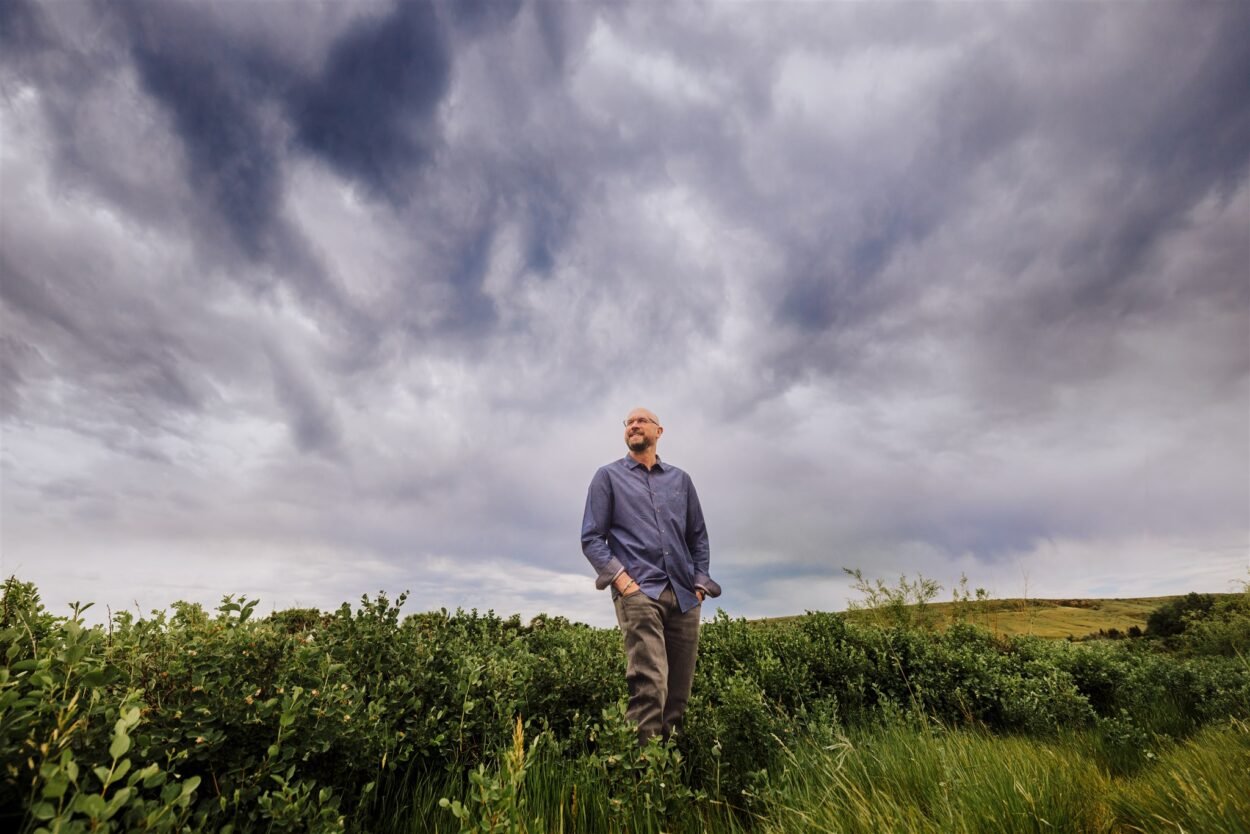
Bill Hilf: “If I Were Talking to a Billionaire in Monaco, I’d Say: Get Super Focused. Go Large Scale. Move the Needle.”
Bill Hilf has spent his career moving between worlds that rarely sit comfortably together: technology and conservation, artificial intelligence and philanthropy, investment and long-term public good.
After more than two decades in technology — including early work on Microsoft Azure — he went on to lead Vulcan, the organisation created by Microsoft co-founder Paul Allen, overseeing a world that stretched from investments to science, oceans and conservation.
Today, Hilf chairs both an AI science institute and a major conservation initiative, while advising technology entrepreneurs and ultra-high-net-worth individuals on how private capital can create measurable impact.
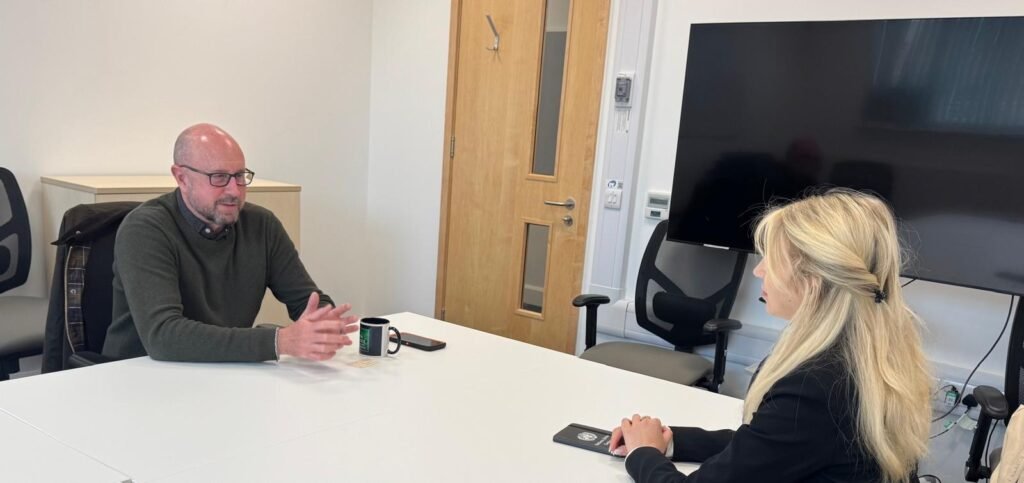
At the Oxford World Forum, Ad Astra Journal Monaco spoke with him about the power — and limits — of private wealth, why philanthropy needs scale, whether AI can become part of the climate solution, and the new generation of billionaires now being created by the technology revolution.
Anastasiia Lutcenko: You spent around 25 years building technology. What is harder: creating something technologically great, or creating meaningful change for the planet?
Bill Hilf: Helping the planet is much harder.
I spent probably 25 years in technology and built a variety of products around the world. Quite a few of them ended up becoming multi-billion-dollar products.
It is very hard to build technology that people use every day. But at least it is predictable.
When you try to create a sustainable planet, there are many more variables — politically, socially, culturally, even religiously at times.
So it is much harder.
Today I try to bridge both worlds. I chair two different boards: one is a conservation project and the other is an AI science institute. Those two things overlap a lot in my life now.
Anastasiia: AI itself requires enormous amounts of computing power, energy and infrastructure. Can it really be part of the climate solution?
Bill: I think you have to look at both sides.
There is the physical side: data centres, power, cooling, water, where those data centres are located.
And then there are the outcomes from using AI.
I believe the outcomes will ultimately be much greater than the cost of the data centres.
If we can use AI to develop new types of batteries, new materials or new ways of deploying clean energy, that could accelerate clean-energy adoption faster than anything we have seen to date.
AI is also very good at optimisation.
We can apply it to the efficiency of the electricity grid, transportation, transmission lines, the extraction of rare minerals, emissions and pollution.
AI is not a climate technology.
It is a general technology.
The question is what we point it at.
Anastasiia: When governments and large institutions cannot move quickly enough, what can private capital do differently?
Bill: The beautiful thing about private capital and philanthropy is speed.
You can move much quicker than a large government grant or some sort of multinational coalition.
When I was CEO of Vulcan, Paul Allen’s organisation, if there was a crisis in the world — like the Ebola outbreak — you could use private philanthropic capital to get resources directly to the problem within hours.
That is incredibly powerful.
But the challenge is coordination.
You do not want a whole bunch of very wealthy people all moving in different directions trying to solve something like climate change.
And a lot of it comes down to ego and hubris.
A fair amount of what I do now is helping people understand how they can work better together.
Anastasiia: Let me ask that from a Monaco perspective. If a billionaire came to you tomorrow and said, “I genuinely want my capital to matter. Where do I start?” — what would you tell them?
Bill: First, I would ask what they personally care about.
For some people it is healthcare. Maybe they lost a parent to heart disease or cancer. For someone else it might be the Earth, the environment or climate.
But if I were talking to an ultra-high-net-worth individual, I would say: only put your private capital into things that will actually move the needle in your lifetime.
There are lots and lots of non-profit organisations. You can spread money across hundreds or thousands of small efforts.
They are all good. I am not against any of them.
But pick projects where you can see a 10 or 15 percent change in your lifetime — or more.
Usually that means scale.
If I were talking to a billionaire in Monaco, I would say:
Get super focused. Go large scale. Move the needle.
Anastasiia: But does that money have to be philanthropy? A lot of people today want something that is also investable.
Bill: There are two schools of thought.
I work with some philanthropists who fundamentally believe they can grow their money faster through traditional investing and then take the profits and use them for philanthropy.
Then there are people who say: every investment I make should be connected to impact in some way.
My personal philosophy is to be thoughtful about your investments, but if you can grow your capital faster, you ultimately have more money to spend on impact.
Sometimes impact investing becomes emotional.
You invest in something because it makes you feel good, but it may not actually make you money.
At the end of the day, I would rather someone have more resources available to give to the planet and to good causes.
You can have more impact if you have more money.
That is direct, but when I talk to people like some of your readership, I try to be very direct.
Anastasiia: We are very good at putting a price on extracting value from nature. Why are we still so bad at putting a price on preserving it?
Bill: I think that is changing.
The ESG frameworks you see in a lot of Fortune 500 companies today can become nothing more than a board check mark.
The board wants to see certain criteria: are you behaving well as a company?
But they still want to see the stock price go up.
I think there is a new generation of leaders coming who will embed this thinking into how they run businesses.
They will not need a separate checkbox.
They might say: if I know there are bad practices in my supply chain, I am simply not going to invest in that supply chain.
They will see that as a business decision.
I see that in the younger generation, and I am optimistic about it.
But capitalism is very powerful.
Good intentions can disappear pretty quickly once the financial incentives change.
Anastasiia: Do younger entrepreneurs really think differently about wealth and responsibility?
Bill: I think many of them do.
The startups and younger founders I work with often want to feel that they are having a positive impact in the world.
They are also much more globally aware.
They have travelled more internationally. They have seen different communities. They have seen where their supply chains operate.
It is no longer a notional idea.
And now something very interesting is happening with AI.
A lot of the people shaping the future of AI are very young, and a whole bunch of them are going to become billionaires very quickly.
So these questions are not thirty years away.
They are asking them now.
What should I do?
Do I make money through conventional investing and then give it away?
Should every investment be an impact investment?
A lot of them have never had to think seriously about philanthropy before.
That is exciting.
It is also a little scary.
But there is going to be a lot of capital available for important projects.
The more we can bring that capital together and focus it on things that really move the needle, the better.
Anastasiia: Is that increasingly your role — bringing people and capital together?
Bill: Yes.
For example, someone might come to me and say, “Here are twenty climate projects,” or, “Here are twenty ocean projects I am interested in.”
And I might say: this one here is the one that is actually going to move the needle.
But only do it if these other people come in too.
Because then instead of having $40 million, we might have $100 million.
And now we can actually go and create a new marine protected area or a meaningful renewable energy project.
That orchestration is what I try to do behind the scenes.
Running a large family office taught me how much is possible in the private-capital world — and how quickly you can do good with that type of money.
But the number-one issue I keep finding is hubris. Ego.
You have to get people to say, “Yes, I will partner with that person. It does not have to have my name on it.”
A lot of what I do is almost counseling.
I did not plan on doing this kind of work at this point in my career! But I think it is important.
Anastasiia: You helped build the cloud era, and now you have a front-row seat to the AI era. Does this feel like another technology transition — or something fundamentally different?
Bill: It is definitely different.
My early technical background was in distributed computing — lots of computers working together to solve complex problems— and high-performance computing.
That evolved into the cloud era, and I did a lot of early work at Microsoft Azure building that business.
The same basic infrastructure is now inside the data centres running AI.
If you walked into a data centre ten years ago and walked into one now, they would look largely the same.
But what we are creating is completely different.
With cloud computing, the idea was: you do not have to buy your own computers anymore. You can rent them from Amazon or Microsoft and run your business applications there.
Now we are creating something capable of doing completely new things we have not thought about yet.
So the future with AI is less predictable than anything I have worked on before.
That is exciting and worrying and exhilarating.
Sometimes I cannot sleep.
Sometimes I am thrilled.
I did not feel all those emotions when I was building cloud computing.
Anastasiia: What makes you optimistic rather than frightened?
Bill: I am lucky because I get to see some of the positive side very directly.
We are working with cancer researchers and oncologists, for example.
And you can sit across the table from someone who tells you, “Bill, I can now get done in an hour what used to take me three months.”
And they think it could lead to breakthroughs in the cancer they are focused on.
Those are opportunities, not promises. But the possibilities are real.
But you hear that and think: we are going to live in an amazing time.
Then think about education.
What if every poor child in South Asia, East Africa or South America suddenly had an amazing personal tutor — the same tutor that a rich child in New York could have? We have never seen that. The potential is thrilling.
Of course there is the Terminator scenario always lingering about. That is often where people like to go. The doom and gloom.
But I also get to see the scientist who is almost crying because they are suddenly able to work so much faster and they know it could help save lives.
When you are around that, you become emotionally excited about what may be possible.
Anastasiia: We were talking earlier about the Vatican and the idea of “human flourishing”. Is that, ultimately, the real question AI presents us with?
Bill: Yes.
Where do we fit in a world of synthetic superintelligence?
What is our unique ability in a future where we have created another thing that is smarter than us?
In many ways I feel we may be about to enter a renaissance.
We might discover new ways of understanding who we are.
We might rediscover artistic and creative things in a way we did not really think about during industrialisation.
It could be a great renaissance and a great time of flourishing for humanity.
That is hopeful.
None of these are guarantees, though, and there will be significant problems and bumps along the way.
But in the long term I think it will be truly transformative.
Anastasiia: At least we have the chance to observe it.
Bill: We have a chance to shape it.
That is more important.
But we have a chance to shape it only for a period of time.
At some point, AI will become very sophisticated and begin rapidly improving and changing itself.
That is what scientists call recursive self-improvement.
So we have time to shape all this.
We have time to control it.
We have time to learn more about it.
But we do not have forever.
That is part of what creates the anxiety around AI.
Anastasiia: And personally, what has shaped the way you think about the future?
Bill: Science fiction, definitely.
Some of the books that got me into technology were Neal Stephenson’s Snow Crash and William Gibson’s Neuromancer.
Then writers like Robert Heinlein, Arthur C. Clarke, Ursula Le Guin, and Frank Herbert.
Those books made me wonder about the future and what was possible. They were part of what originally made me want to write code.
And now I write science fiction myself.
I published the first book of a trilogy this year under W. H. Hilf. It is about AI and quantum technologies. It’s called The Disruption.
I needed another outlet for the same thoughts I spend so much time in.
The book is somewhat dystopian because I wanted to explore what could happen — almost as a warning to the people building these systems today.
Of course, I love when people buy the book, but I actually know exactly who I want to read it.
I want the people building AI to read it.
I want them to think seriously about the scenarios that are possible in the future and about the responsibility they have.
Anastasiia: After everything you have seen — technology, private wealth, philanthropy, AI — are you still optimistic?
Bill: Very optimistic.
There will still be cyber attacks that use AI.
There will still be fake information and political problems from AI.
All of that will continue to exist.
But I think the long term is going to be pretty amazing.
It is an amazing time to be part of humanity.And right now, importantly, we still have a chance to shape it.