Hercule Florence: The Man Who Tried to Capture Light Before the World Was Ready
An exclusive interview with Antonio Florence, descendant of Hercule Florence, on the forgotten pioneer of photography, his Monegasque roots, the Russian expedition that shaped his genius, and the scientific discoveries bringing his legacy back into focus.
On 14 October 2026, Monaco welcomed the story of a man whose extraordinary life had connected the Principality with the vast landscapes of Brazil and one of the most ambitious scientific expeditions of the nineteenth century.
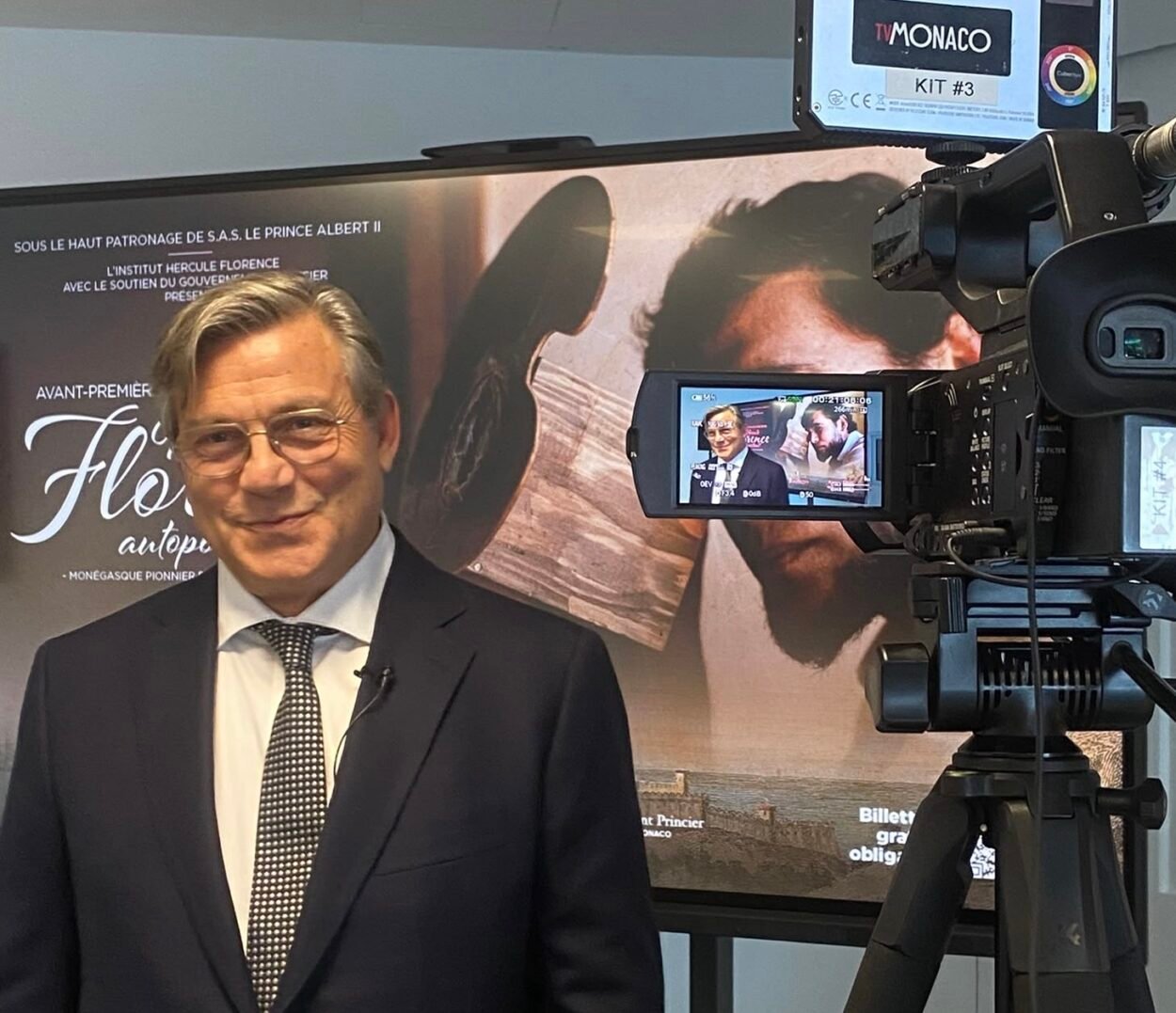
The screening of Hercule Florence, autorretrato 1804–1879, a documentary directed by Jorge Pelicano and written by Flávia Castro, took place at the Auditorium Rainier III under the High Patronage of H.S.H. Prince Albert II.
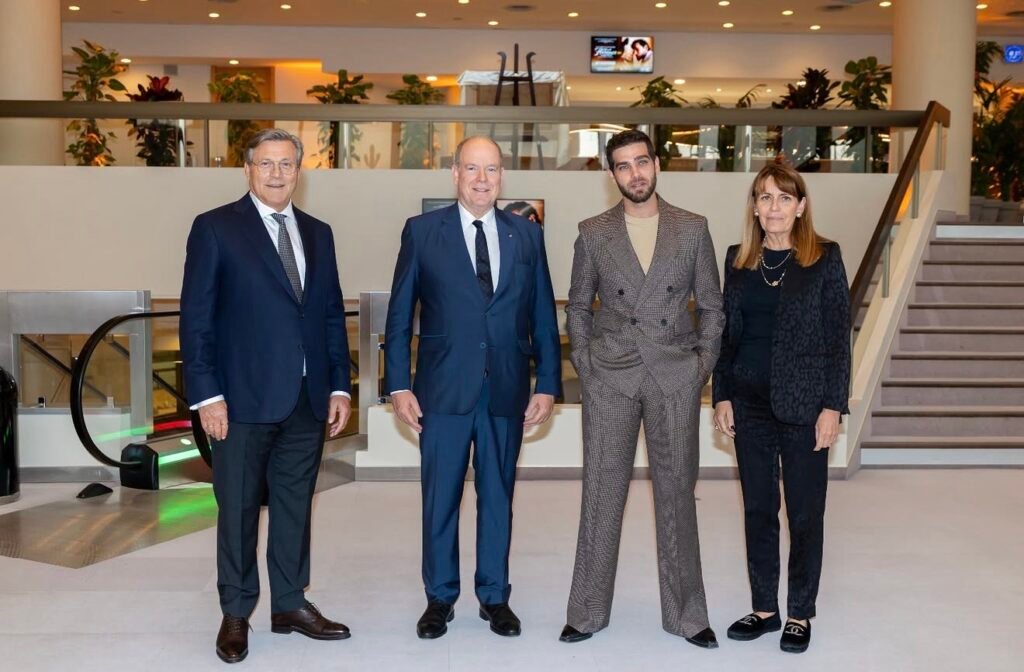
For Antonio Florence, the inventor’s descendant and the driving force behind the Instituto Hercule Florence in Brazil, the occasion represented something far more personal than a film premiere. It was the continuation of a journey he had begun more than two decades earlier: restoring his ancestor’s place in the history of Monaco, Brazil and photography.
Born in Nice in 1804 and raised in Monaco, Hercule Florence travelled to Brazil as a young man. There, he joined the Russian-sponsored Langsdorff Expedition, explored vast territories, documented landscapes and wildlife, developed a method for recording animal sounds, and eventually began experimenting with photographic images in the early 1830s — years before the public announcement of Daguerre’s process in 1839.
Yet the story of Hercule Florence is not simply one of an overlooked inventor. It is also a story of scientific curiosity, humanism, exile, family memory and a remarkable international heritage that remains divided between three countries.
In this exclusive interview for Ad Astra Journal Monaco, Antonio Florence reflects on the man behind the inventions, the scientific evidence emerging from recent research and the possibility of opening a new chapter of cooperation with Russian archives and researchers.
From family memory to a historical mission
Ad Astra Journal Monaco: You have devoted so much of your work to preserving Hercule Florence’s legacy. When did you first realise that your ancestor’s story was something the wider world needed to know?
Antonio Florence: The first realisation was not about the world; it was about me. When I was five or six, my parents took me to Porto Feliz, the river port from which the Langsdorff Expedition had set off, for the unveiling of a bust of Hercule Florence in the local museum, where a room was to bear his name. My father spoke on behalf of the family, and I looked around and understood that the room was full of relatives I had never met. That was the day I learned I descended from him.
The second came through the museums of São Paulo. In 1978 Pietro Maria Bardi gave the Langsdorff expedition an exhibition at MASP, built on the family’s own documents, and published Hercule’s Viagem Fluvial do Tietê ao Amazonasin the translation of Francisco Álvares Machado Florence, a cousin of my father’s generation. Ten years later the expedition’s watercolours left Leningrad for the first time and were shown at the MAC — seventy-five original sheets, Hercule’s among them — and I bought the three Alumbramento volumes, one for each of the expedition’s painters, that Salvador Monteiro and Leonel Kaz had produced with photographs by Claus Meyer and a text by Boris Komissarov, the Leningrad historian who had spent his life on the expedition’s archive. For the first time I saw Hercule through other people’s eyes: not a family figure, but an artist and a witness, with half his work held in Russia.
Then, at my uncle’s eightieth birthday in 2001, something struck me, and I decided to research his life properly. In 2004, for Hercule’s two hundredth birthday, I gathered a hundred and sixty relatives and Boris Kossoy, the historian of photography who in the 1970s with the help of Arnaldo Machado Florence had studied Hercule’s images and had them tested in Rochester. Out of that party came a family newspaper, Olhar Florence, which I ran with a journalist for three and a half years.
The step from the family to the world happened in 2005, when I went to Monaco and realised that Hercule’s roots, and his mother’s, were Monegasque, and that the Vignalis/Florences had played a real part in the Principality’s history. A man who belonged to Monaco, to a Russian expedition and to Brazil, and who had invented photography in a workshop in Campinas, could not remain a family story. He belonged to three countries at least.
The human being behind the inventor
What has surprised you most about Hercule Florence as a person, rather than as an inventor?
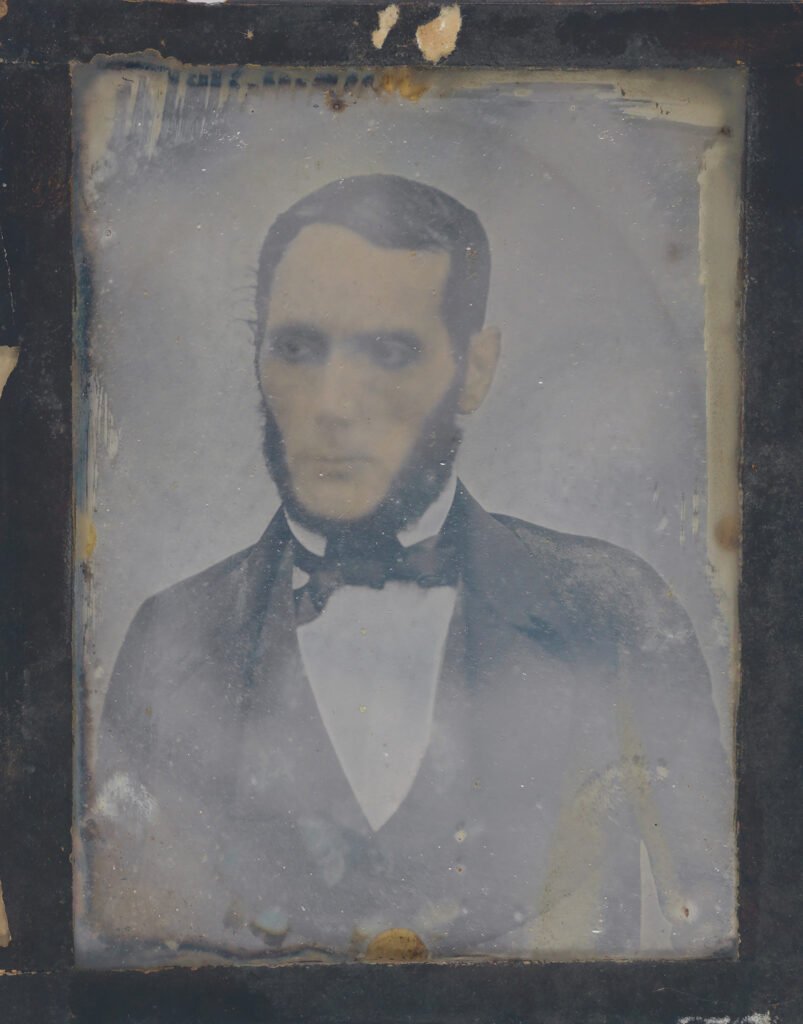
How little bitterness there was in him, and how much freedom and love. We tend to read Hercule as the inventor who was forgotten, and one would expect melancholy in his later notes. But the man in the manuscripts is above all curious, playful and generous. He offered to teach anyone who was interested both of his methods, polygraphy and photography — no secrecy, no patents guarded. He was reading Fourier and Volney on the frontier of the Empire of Brazil, dreaming of cooperation rather than conquest.
What surprised me most was the family man. The letters to Monaco are the most touching documents we hold: for forty years he wrote to his mother and his brothers and sisters, and the longing never fades — he went back only once, in 1855, and the distance was a wound he carried all his life. The same tenderness runs through the diaries and letters about his two wives and his many sons and daughters, a tone that is rare in a nineteenth-century inventor’s hand. He abhorred slavery, in a province built on it, and in his regard for women’s role he was well ahead of his time. That is why his real achievement was not a machine but a school: the Colégio Florence, which he founded with his second wife, Carolina Krug and for a quarter of a century educated the daughters of the coffee oligarchy in the spirit of enlighment and the Pestalozzi’s pedagogical method.
There was courage in him too. He lived under the shadow of the assassination of his friend Líbero Badaró in 1830, and in 1842 he printed the manifestos of the liberal revolt at Feijó’s side. I like to say that the chained Prometheus was freed by pedagogy, not by force.
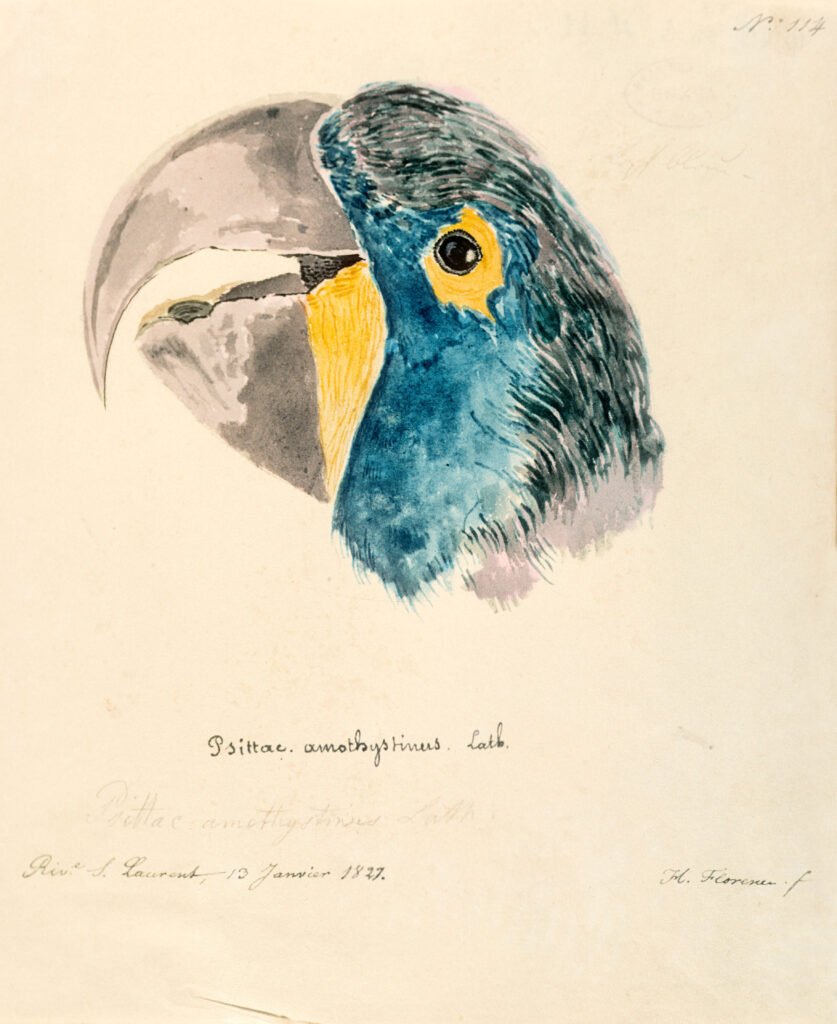
Hercule Florence was fascinated by everything from birdsong to photography. What do you think drove his extraordinary curiosity?
Curiosity was in his blood before it was in his circumstances. His father was an artist and an army surgeon, and left him both the pencil and the habit of looking closely. At sixteen Hercule sailed from Monaco to Antwerp to look for a position in the (we suppose for lack of details) Joseph Emmanuel Antoine Werbrueck-Pieters trading house; when that came to nothing he walked all the way back home for lack of money, selling drawings along the way, and then joined the French Navy, which brought him to Rio de Janeiro at twenty. A boy who does that is already a curious man.
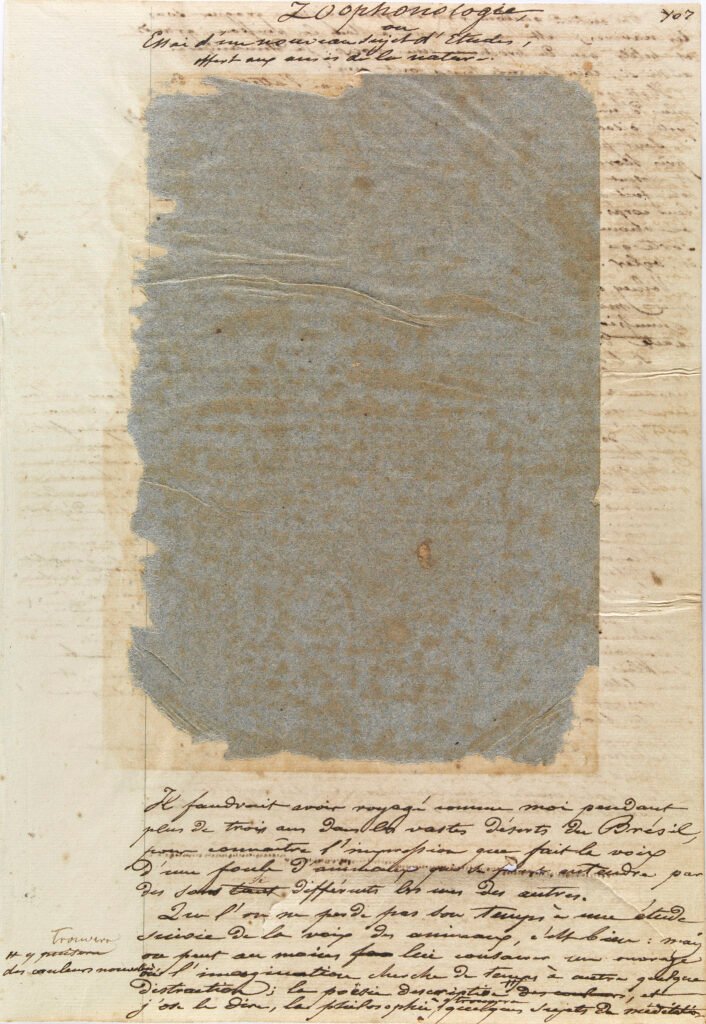
What Brazil did was give that curiosity a school. He joined the Langsdorff expedition at twenty-one and came back to Rio at twenty-five, in 1829. He was the youngest and the least educated member of that important scientific expedition: Langsdorff himself, the botanist Riedel, the astronomer Rubtsov, and Taunay, a painter of real gifts. He worked beside them for four years with the camera lucida and the camera obscura in his hands, learning what observation means to men of science. For a self-taught young man from Monaco it was an extraordinary adventure and an extraordinary education, and he never stopped being a pupil of it. Zoophonia, his notation of animal sounds, was born there — the forest sang to him and he wanted to write it down.
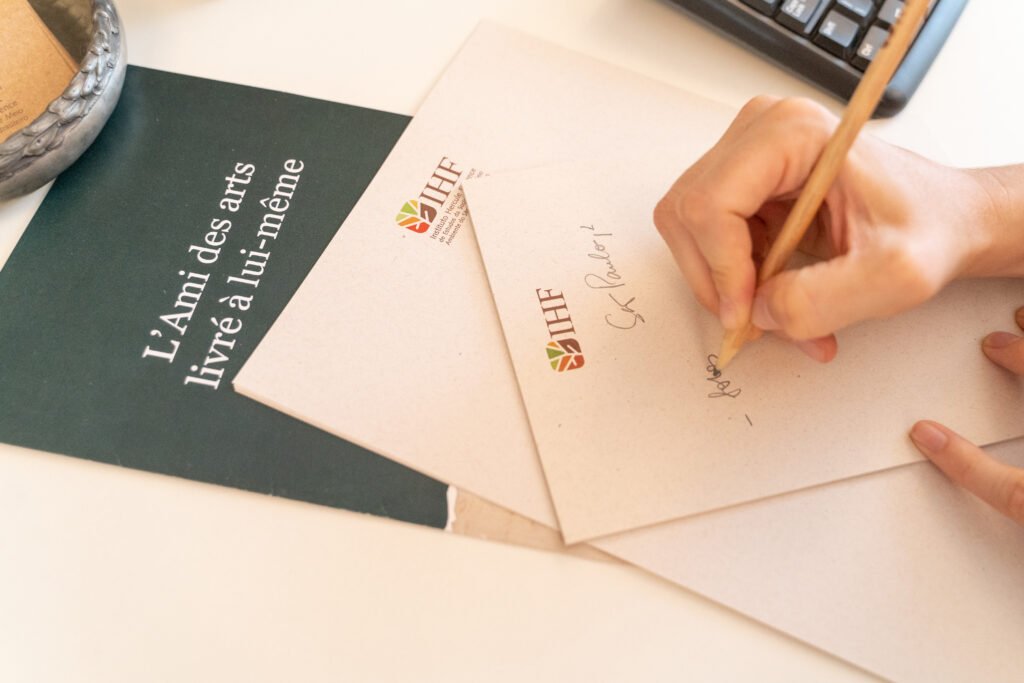
There is also a temperament, and it has a lineage. When he was inventing in Campinas, without the means to go further, he saw himself as le nouveau Robinson — it is the title he gave the draft of L’Ami des Arts — the castaway who has to make everything with what the island provides. Everything he touched — the inimitable paper, polygraphy, photography, the atlas of tropical skies — comes from that impulse: to find in a small workshop the means that Europe had in whole academies. But he was no accident. His mother was a Vignalis, and Thomas Fouilleron has shown, in a profound essay in the Annales Monégasques of 2009, that the Vignalis had been a family of remarkable men and women in the Principality since the sixteenth century — among them the painter Jean-Baptiste Vignali at the court of Honoré III. Hercule’s curiosity was an inheritance before it was an achievement.
Photography before 1839: What science now tells us
Hercule Florence experimented with photographic images before Daguerre’s announcement in 1839. Why did his achievements remain largely unknown internationally?
Let me first correct the premise: unknown abroad, never in Brazil. From the very beginning the Jornal do Commercio, the country’s main newspaper, presented Hercule as the man who had found the photographic process before anyone else — partly out of friendship, partly out of national pride, with a touch of xenophobia towards the French claim. He was a friend of the paper’s owners, having worked with its founder, Pierre Plancher, in Rio before the expedition. In Brazil he was recognised in his lifetime and never forgotten afterwards. The silence was European.
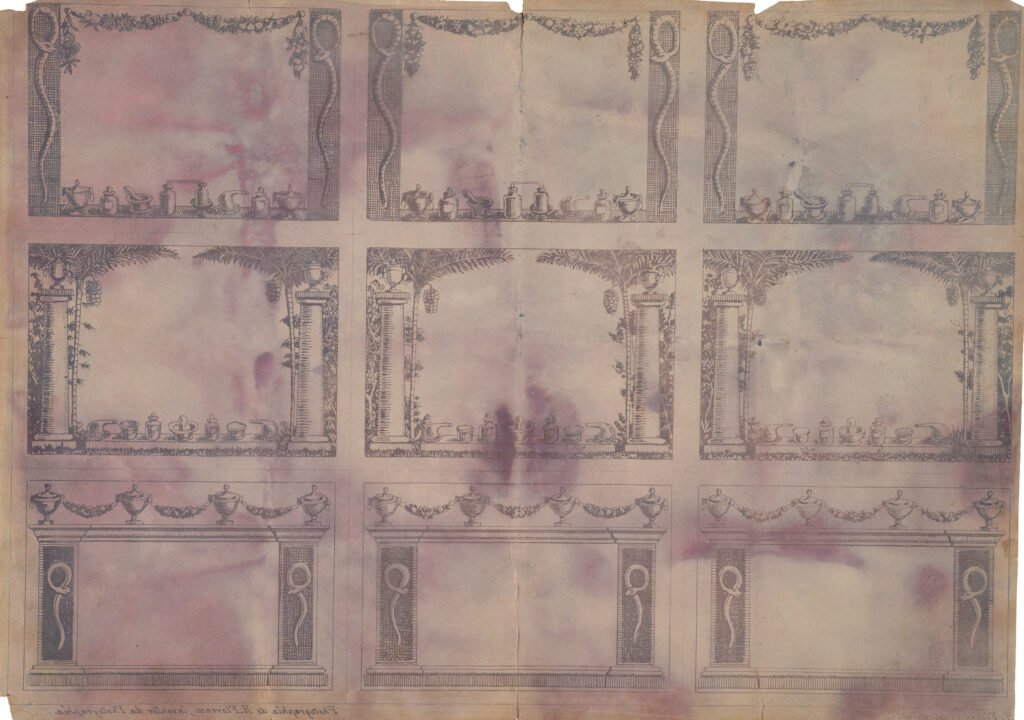
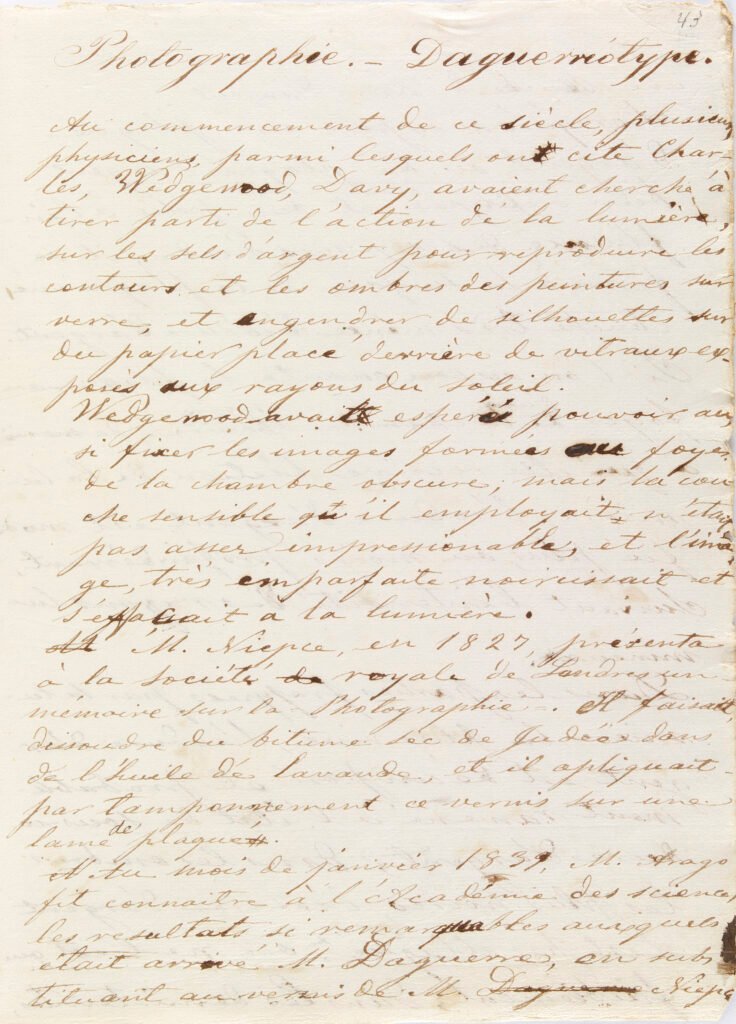
Why that silence? Partly because of what he could not solve, and partly because of what he chose. On 20 January 1833 Hercule made his first negative with a camera obscura. What he could not do, at that point, was turn the negative into a positive. Had it occurred to him to “photograph” the negative again, the history of photography would have changed forever; the idea that would shape Talbot’s destiny was one step away. Blocked there, he turned his discovery to a more immediate use: printing. He began printing with silver and gold salts, with extraordinary results — the three proofs analysed in Évora are still perfectly legible, and according to Art Kaplan of the Getty Conservation Institute they are probably the oldest photographic objects on paper that can still be seen today.
Then came 1839. When a friend told him of Daguerre’s achievement, he conceded the honour to Daguerre without a fight. He knew his own limits in pursuing what he had set out to find — a cheap, easy and effective photographic method — and he said so with great dignity. He kept working on other inventions, never claiming anything around photography for himself.
The rest is the ordinary fate of archives. His manuscripts sat in a family house in Brazil, in French, for a hundred years. The Viscount of Taunay published his account of the expedition in 1875; Boris Kossoy helped by Arnaldo, as mentioned, brought the photographic question to the international stage in 1976, with tests at the Rochester Institute of Technology, and since then Hercule has stood in the literature beside Niépce, Daguerre, Talbot and Bayard as one of the multiple inventors of photography. What was missing was material proof on the originals themselves. That is what has changed in the last four years, on the Institute Hercule Florence’s initiative. In 2022 the IHF brought together in Évora a team of scientists, led by Art Kaplan of the Getty Conservation Institute, and of historians, led by Grant Romer, formerly of George Eastman House in Rochester, and including Boris Kossoy, who spent five days testing the three surviving proofs — two from the IHF collection and one from the Instituto Moreira Salles.
Recent investigations involving the Getty Conservation Institute have brought new evidence to light. What has been established, and what remains to be discovered?
A precision first: the analyses were done in Portugal, in 2022, in the laboratories of the University of Évora, with the Getty scientists leading the work on site. And the laboratory is called HERCULES — Herança Cultural, Estudos e Salvaguarda. We did not choose it for the name but for the extraordinary equipment held by it. It was a coincidence.
The most important result is simple to state: the proofs contain what Hercule said they contain. X-ray fluorescence and electron microscopy on the three originals found silver and gold in the image layer, consistent with the processes he describes in his notebooks. They are not drawings, not later copies, not a family legend; they are photographic prints made by the method he wrote down in 1833. Art Kaplan presented these findings to the conservation community at the ICOM-CC Triennial in Oslo in September 2026, and that is the moment Hercule entered the scientific record rather than only the historical one.
The second result matters almost as much: the gold. Hercule was toning his prints with gold salts to make them permanent, and it worked — the images are legible after nearly two hundred years. Gold toning became standard practice in Europe only in the 1840s and 1850s. He understood the problem of permanence before anyone had named it.
What remains open is the fixing. Hercule describes his procedures in the notebooks, but a description is not a recipe, and the chemistry of 1833 is not easy to reproduce. At this moment Art Kaplan is working empirically in the Getty Conservation Institute’s laboratories in Los Angeles, repeating Hercule’s steps with his materials, to come as close as possible to the method he actually used. If that work confirms what the proofs suggest, it will mean that Hercule fixed a photographic image chemically before anyone else. That is not a footnote to the history of photography; it is a new first page.
Art Kaplan will also present Hercule at the Conference “Le temps de épreuves. 50 ans de preservation des photographies.” www.tempsepreuves.sciencesconf.org. It’s on page 9 of the Programme: P08 – From journal to image: reconstructing Hercule Florence’s photographic experiments in 1830s Brazil.
The Russian expedition that shaped an inventor
Hercule Florence joined the Langsdorff Expedition, organised with the support of the Russian Empire. How important was that experience in shaping the inventor he later became?
It was highly instrumental. Hercule joined the expedition in 1825 as second draughtsman, and the four years that followed — from Porto Feliz down the Tietê to Cuiabá, the Pantanal, the Amazon and back to Rio — were his university. I said earlier that he worked beside men of science; what he learned from them was a discipline, not a set of facts. He learned to observe under pressure, to record fast and accurately, and to improvise with whatever the forest provided. When Taunay drowned in the Guaporé in 1828 and Langsdorff lost his mind to fever, Hercule became in effect the expedition’s eyes. He came back with a method, not a career.
Every invention of the 1830s is an answer to a problem he first met on the river. Zoophonia, his notation of animal sounds, was born there. Polygraphy answers the question of how to multiply an image without a press. Photography answers the one that haunted him most: the fleeting moment — the momento fugidio — that the brush could never fully capture, the light on the water or the face that moved before the drawing was done. A draughtsman who has spent four years with a camera lucida in a canoe does not forget the wish to let the light do the drawing itself.
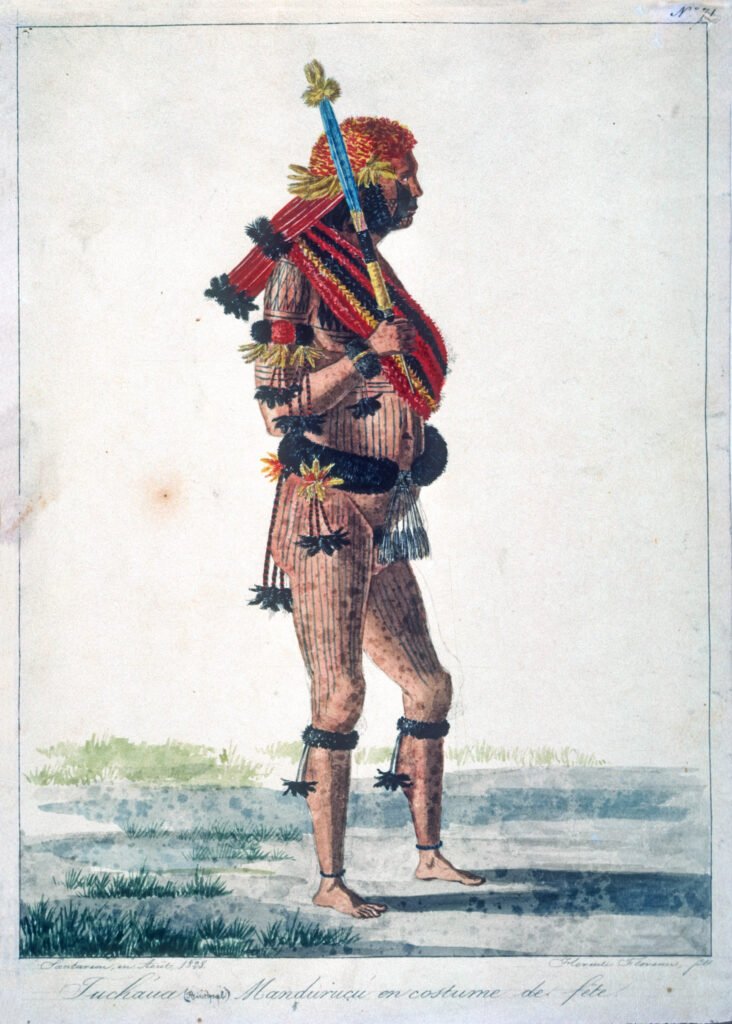
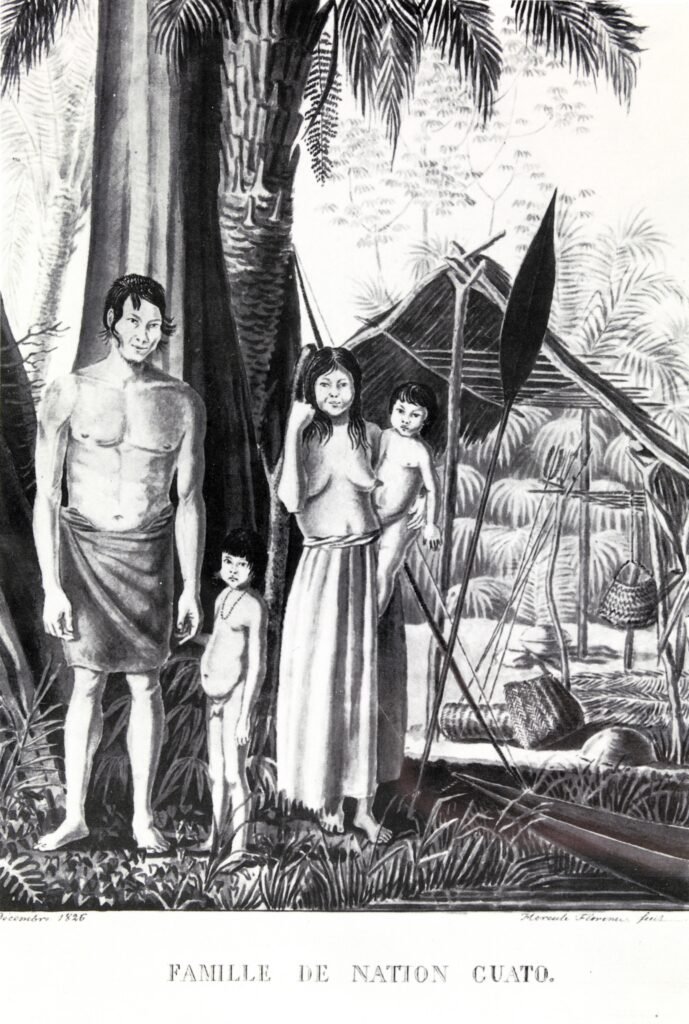
The expedition also gave him his moral compass. He saw indigenous societies and quilombos functioning without masters, and he saw the burning of the forest and the slave caravans on the roads. He wrote against both slavery and deforestation long before it was fashionable to do so. The inventor and the humanist were formed by the same journey.
A scientific legacy preserved in St Petersburg
Some of the expedition’s documents and collections are preserved in St Petersburg. Have you or the Hercule Florence Institute had an opportunity to work directly with these materials or with Russian researchers?
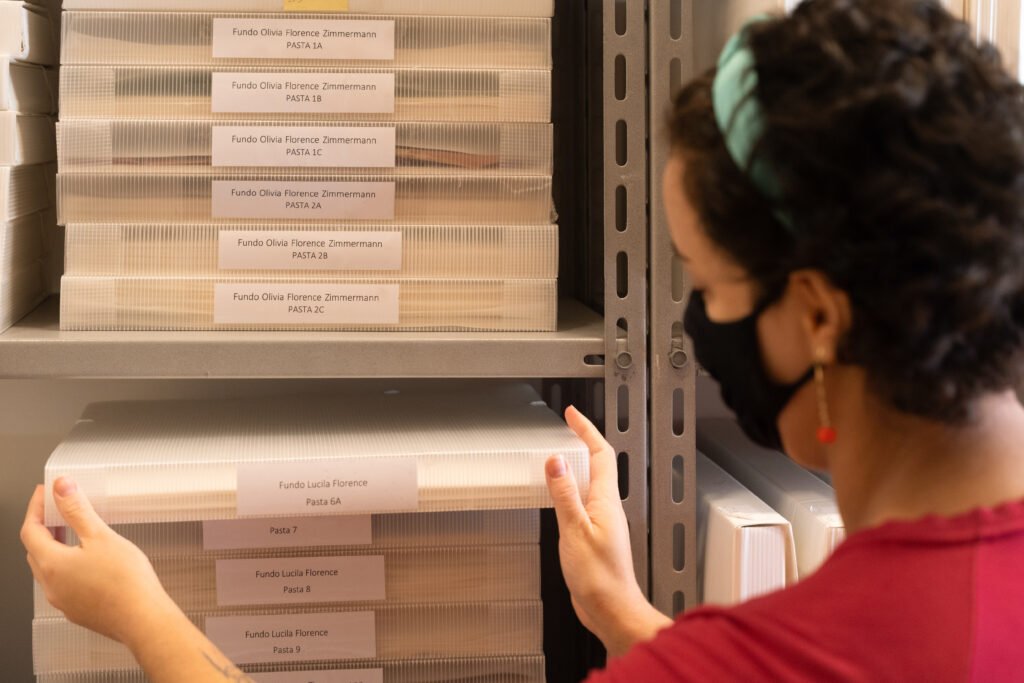
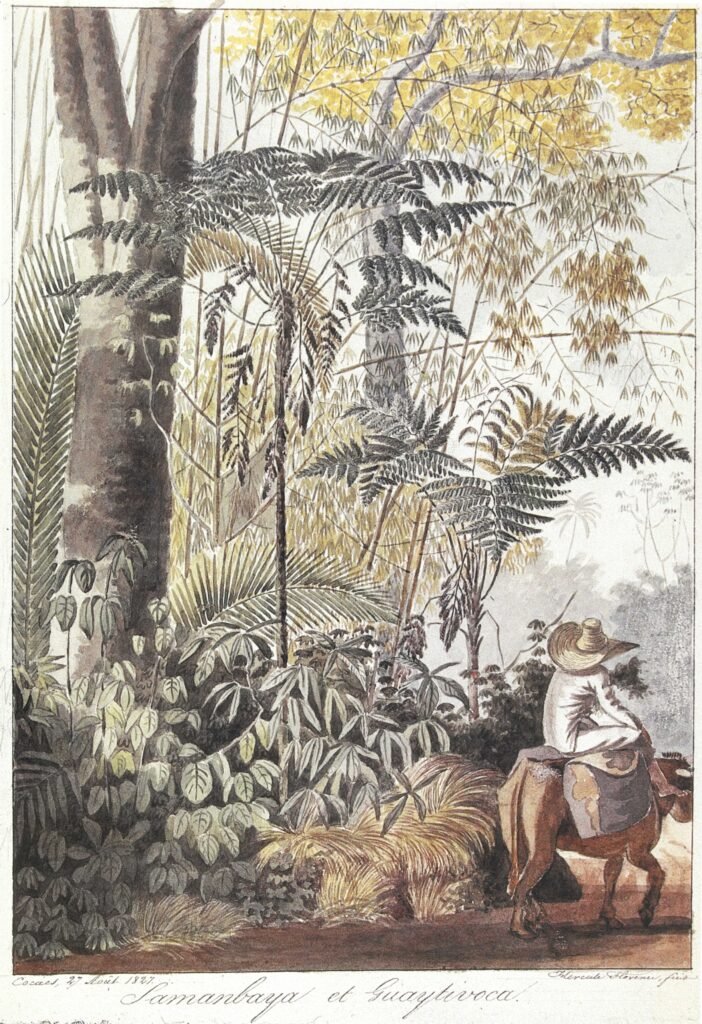
Not yet, and it is one of the things we most want to do. Everything we know about the St Petersburg holdings comes from two books. The first is the complete catalogue of the expedition’s material in Soviet archives, prepared by Bertels, Komissarov and Lysenko and published in Portuguese in 1981 by the Brazilian heritage service; the second is Boris Komissarov’s own study of the expedition’s archive and sources, published by UNESP in 1994. Between them they tell us what is there, and they tell us how much has never been seen. Many of the drawings — Hercule’s included — remain unpublished. The herbarium and the zoological specimens the expedition sent back have never been photographed or studied by a Brazilian scholar. For two hundred years the plants and animals of the Tietê, the Pantanal and the Amazon have been sitting in St Petersburg waiting for someone from the country they came from to look at them.
So the answer is that we have worked with the published record, and that the collection itself is still a promise. We would very much like to be able to visit it.
Do you believe the Russian archives may still contain overlooked documents, drawings or correspondence that could reveal something new about your ancestor?
I am certain of it, for a simple reason: nobody has ever looked at that archive with Hercule in mind. The expedition’s material has been studied, by Komissarov and others, as the record of Langsdorff’s enterprise — the diaries, the itinerary, the scientific collections. Hercule appears in it as the second draughtsman, which is what he was. Nobody has yet gone through it asking the questions we now ask: what did this young man see, what did he note in the margins, what did he keep and what did he hand over, and what in those sheets already announces the inventor of the 1830s.
The drawings are the obvious case. Those that have been published were chosen as illustrations of the expedition; the unpublished ones may be the working sheets, the studies, the second attempts — and it is in the working sheets that one sees a draughtsman thinking. There is also the back of the paper: Hercule wrote everywhere, and a sheet catalogued as a drawing may carry a note nobody has read.
And there is the correspondence around the expedition after Langsdorff fell silent. The fever he caught on the Juruena in 1828 took his mind and never gave it back; from then on it was Hercule and Riedel who prepared the collections and sent everything to St Petersburg. The Langsdorff expedition was the most important scientific expedition into Brazil of the first half of the nineteenth century, and it brought back the most important collection of Brazilian material assembled in the 1820s. Its fate had been sealed before the boats even left Porto Feliz, on 22 June 1826 — we marked that bicentenary this year with an exhibition in São Paulo. Alexander I, who had financed the expedition, had died six months earlier, and Nicholas I had other priorities. The collection went into the Academy’s stores, and there, to this day, most of it remains unknown. It is worth remembering that the last hands to touch many of those crates before they reached Russia were Hercule’s own.
If you could initiate a new research project in St Petersburg, which documents or unanswered questions would you prioritise?
Two things, and both are simple to state. First, photograph everything in high resolution — the drawings, the watercolours and the manuscripts — so that the whole visual and written record of the expedition can be studied anywhere, by anyone, and laid side by side with what is held in Brazil.
Second, have the herbarium and the zoological specimens thoroughly examined by a joint team of Russian and Brazilian specialists. No Brazilian scientist has ever worked on them. For botanists and zoologists studying the Pantanal and the Amazon today, specimens collected in the 1820s are a baseline that exists nowhere else — the only record of what those rivers held before two centuries of change. That is not an antiquarian interest; it is a scientific one, and it belongs to both countries.
A new possibility for Russian–Brazilian scientific cooperation
Would the Hercule Florence Institute be interested in collaborating with Russian archives, museums or researchers — perhaps through digitisation, a joint exhibition or a research project? What would be the most meaningful first step?
Yes. The expedition was a Russian enterprise carried out on Brazilian ground, and its record is divided between the two countries; neither can tell the whole story alone. Scholarship has no borders, and the Institute is open to any exchange that serves the research.
The most meaningful first step is a research project on the natural history collections. The botanical and biological findings are the crucial ones: a joint team of Russian and Brazilian specialists examining the herbarium and the zoological specimens would, for the first time, read the only record of what the Tietê, the Pantanal and the Amazon held two hundred years ago, with results that matter well beyond the history of the expedition. Digitisation of the drawings, watercolours and manuscripts would follow naturally, as the instrument of that work, and exhibitions and publications would come after the documents.
As for the form, the Institute works in partnership — with the Instituto Moreira Salles, the Brasiliana Library at the University of São Paulo, the Getty — and any cooperation with St Petersburg would be built in the same way, with our institutional partners and within the frameworks they work in. Two hundred years ago the expedition was possible because an emperor, a baron from Germany and a young man from Monaco were able to work together. The archive deserves the same spirit.
Monaco, memory and the future
What did it mean to you personally to bring Hercule Florence’s story back to Monaco through this documentary? And how do you envision Monaco, Brazil and Russia working together to preserve his legacy?
It closed a circle that took twenty one years to draw. When I first came to the Principality in 2005, I came to make a case: that Hercule, though born in Nice, was Monegasque by blood, through the Vignalis, and by upbringing — he grew up on the Rock and left from here — and that his story belonged to Monaco. The Palace archives listened — the first biography in the Annales Monégasques followed in 2006, and the exhibition Le Nouveau Robinson at the Nouveau Musée National in 2017. To see Hercule Florence, autorretrato screened at the Auditorium Rainier III on 14 October, under the High Patronage of Prince Albert II and with the Prince in the room, was another important step of that journey. Thomas Fouilleron, the authority on Monegasque history, calls him “our Monegasque son”. For his great-great-great-grandson, that sentence was worth the twenty one years.
Personally it was also a return. Hercule left Monaco at twenty and came back once, in 1855. His letters home never stopped. Bringing his face and his voice back to the Rock, in a film narrated in French, felt less like a première than like delivering a letter that had been in the post for a very long time.
As for the three countries: Brazil holds the life and the inventions, Russia holds the expedition, Monaco holds the origin. Each has a piece of the man, and none has the whole. The natural way to work together is around the archive — the research project and the digitisation I have described — and around a place where the three pieces can be shown side by side.
If you could speak to Hercule Florence today, almost two centuries after his photographic experiments, what would you most want to tell him — or ask him?
I would tell him two things. First, that the chemistry agrees with him: the proofs he made in 1833 are still here, and in 2026 the finest laboratories in the field confirmed what he wrote in his notebook. Second, that the world has caught up with his politics. The man who wrote against slavery, against the burning of the forest and in favour of indigenous ways of living was not eccentric; he was early. Brazil is still arguing about the choices he made in the 1830s.
An unfinished story connecting three countries
Hercule Florence’s legacy continues to reveal new dimensions through scientific research and historical archives. His story connects Monaco, where he grew up; Brazil, where he lived and invented; and Russia, whose imperial expedition helped shape his extraordinary journey.
As Antonio Florence reminds us, each country holds a piece of this history. Bringing those pieces together under one roof may be the next important chapter in preserving the legacy of a remarkable pioneer.