Who Owns the Future of AI? Special coverage of Paris Peace Forum 2026
Governments want technological sovereignty. The real test may be whether they can escape their suppliers.
Everyone wants sovereign AI. Few can afford to build it. And even fewer can afford to become dependent on someone else’s.
As artificial intelligence becomes embedded in national economies and public services, governments face an uncomfortable dilemma. Developing their own systems requires enormous resources. Relying on foreign technology, meanwhile, risks exchanging one form of dependence for another.
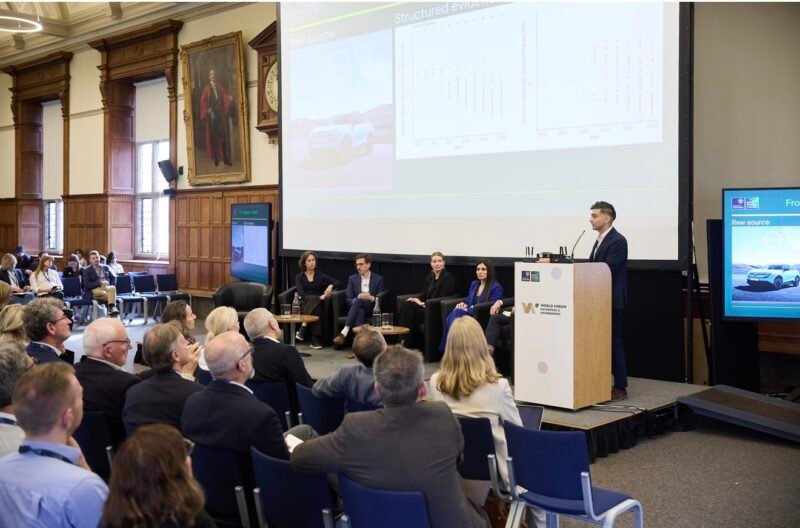
At the Paris Peace Forum 2026, a discussion involving representatives of Microsoft, Cohere, Mistral AI, Mozilla, ROOST and the OECD exposed the limits of a fashionable ambition: technological sovereignty may have less to do with owning artificial intelligence than with retaining the power to choose how it is used.
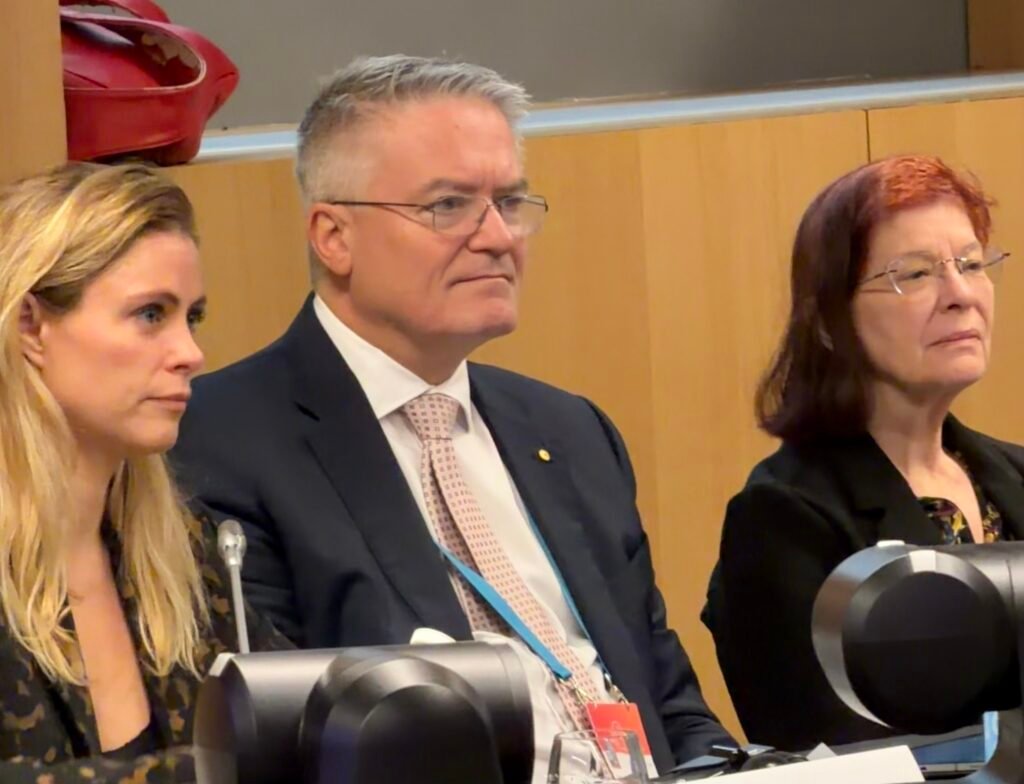
“No country can obviously own every layer of AI and none really needs to,” said Mathias Cormann, Secretary-General of the OECD.
The distinction is more than semantic. Training advanced AI models demands vast computing resources, specialist talent and substantial capital. But dependence on a handful of commercial suppliers carries its own costs. Prices can rise, access conditions can change and technological reliance can become a source of political leverage.
For Joëlle Pineau, Chief AI Officer at Cohere, greater openness offers part of the answer.

Making AI models available beyond the organisations that develop them allows researchers and users to identify weaknesses that internal testing may overlook. Contributions from different languages, industries and communities can improve performance and broaden the technology’s usefulness.
“That is the fastest path to improving the technology,” she argued.
Openness can also help address the industry’s persistent problem of public trust. Systems that can be examined, tested and adapted by a wider community offer opportunities for scrutiny that closed development processes may not.
“That process is the basic ingredient to building trust,” Ms Pineau said.
Yet wider access does not automatically mean greater safety. The same openness that accelerates innovation can also spread vulnerabilities. Ms Pineau therefore argued for risk assessments and clearer criteria governing the release of increasingly capable models.
That tension was central to Natasha Crampton’s argument. Microsoft’s Chief Responsible AI Officer cautioned against assuming that either open- or closed-weight models are inherently safe.

“Open and closed-weight models have a range of risks, many of which are shared and in common, and some unique ones,” she said.
What matters is understanding those risks and identifying effective safeguards. But Ms Crampton also drew attention to a subtler threat to technological independence: the architecture of AI systems themselves.
Modern deployments rarely rely on a single model. They combine multiple models with software, safety mechanisms, proprietary data and institutional knowledge. If that knowledge becomes inseparable from one provider’s technology, the freedom to change suppliers may exist on paper but not in practice.
“A core part of true resilience is having the capability to make the right choices for your country, for your organization,” she argued.
For governments and businesses, that means designing systems that preserve their own data, expertise and ways of working even as the underlying models change. The most powerful model is not necessarily the most appropriate one. Cost, performance and the ability to switch providers also matter.
But technological independence is of limited value if societies cannot defend themselves against the risks AI creates.
Camille François, President of ROOST, brought that concern into sharper focus.

“I don’t think it’s a taboo to say that when it comes to safety, capabilities have progressed faster than our defenses,” she warned.
Much of the public debate about AI safety concentrates on the most advanced systems. Yet schools, newsrooms and civil-society organisations face more immediate problems: child protection, fraud, scams and the wider social consequences of increasingly accessible AI.
These institutions need safeguards they can understand, adapt and deploy according to their own languages, cultures and communities. Open-source safety tools, Ms François argued, can make that possible.
“We have this need to ensure that the defenses can diffuse as fast as some of the offense has,” she said.
It is a striking reversal of the usual argument. Open AI is frequently portrayed as a potential security threat. Yet open protective technologies can also help smaller organisations defend themselves without waiting for a major technology company to provide the solution.
The distinction matters. Opening the most powerful AI models and sharing tools designed to make AI safer are not identical propositions. Both raise questions about access, but their risks and benefits need not be the same.
Mitchell Baker, a co-founder of Mozilla, offered another way to understand the relationship between openness and control.

Recalling the early years of Firefox, she described how contributors developed a sense of ownership over software that nobody exclusively possessed.
“I don’t own it, but I own the ability to shape it and control it,” she observed.
That paradox captures the appeal of open technological infrastructure. Governments and organisations may not need to own every component if they can inspect it, adapt it and influence its development.
But access alone does not guarantee independence. Without common standards and interoperability, switching providers can remain prohibitively difficult. A supposedly open ecosystem can still produce new forms of lock-in.
The speakers approached AI sovereignty from different directions. Their arguments nevertheless exposed a common problem: technological power does not reside solely in the model. It also lies in the infrastructure that runs it, the data that makes it useful, the safeguards that make it trustworthy and the standards that determine whether users can leave.
None of this makes openness a universal remedy. Computing power and capital remain concentrated. Widely available models can create risks that smaller institutions are poorly equipped to manage. And governments cannot achieve strategic autonomy simply by declaring their technology sovereign.
A country may build its own AI model and still depend on foreign infrastructure. Another may rely on shared technology yet retain control over its data, institutions and choices.
Sovereignty, in other words, is not necessarily a question of ownership.
The next contest in artificial intelligence may be decided not by who builds the most powerful model, but by who can afford to walk away from it.