Beyond Medals: European Para-Golf Champion Caroline Mohr on the True Meaning of Success
In an exclusive interview with Ad Astra Journal Monaco at the Council of Europe Sports Ministers’ Conference, the European para-golf champion and Princess Charlene of Monaco Foundation ambassador speaks about resilience, vulnerability and the freedom to define success on her own terms.
Caroline Mohr spent years learning how to win. It took losing the future she had imagined to discover what success really meant.
The Swedish athlete had just earned her professional golf licence when a cancer diagnosis changed the course of her life. The career she had worked towards was suddenly overshadowed by a far more immediate challenge: surviving an illness that would ultimately lead to the amputation of her leg.
What followed was not simply a return to sport. It was a fundamental reassessment of ambition, identity and the fragile relationship between achievement and self-worth.
Today, Mohr is a European para-golf champion, a mother of two, an ambassador for the Princess Charlene of Monaco Foundation and Global Keynote Speaker. Yet the lesson she speaks about most passionately has little to do with trophies.
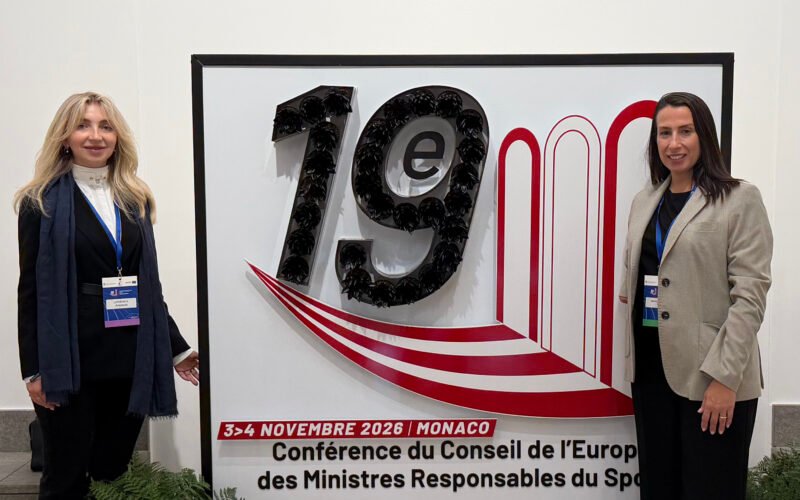
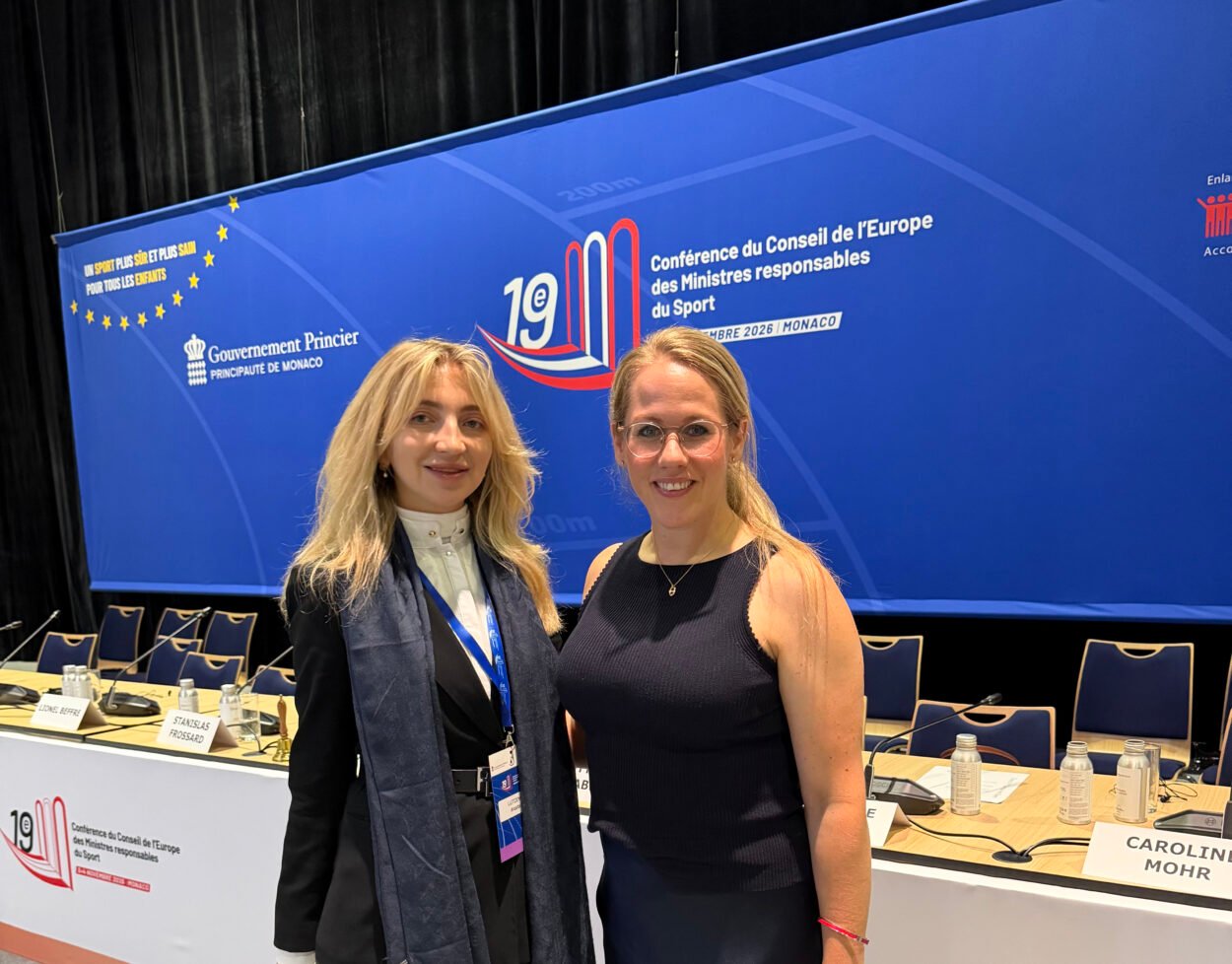
We met during the 19th Council of Europe Conference of Ministers responsible for Sport at Monaco’s Grimaldi Forum, where European leaders were discussing how to make sport safer and healthier for children.
Against a backdrop of policy debates and institutional commitments, Mohr brought a perspective shaped by lived experience: what happens when athletes are taught to measure their value by results — and what it takes to unlearn that belief.
For Ad Astra Journal Monaco, whose philosophy is To the Stars, her story raises a question that reaches far beyond sport: what if the courage to pursue extraordinary dreams begins with understanding that we are already enough?
Ad Astra Journal Monaco: You are an ambassador for the Princess Charlene of Monaco Foundation. What does that role mean to you?
Caroline Mohr: It is an enormous honour. I am passionate about helping children and young people develop life skills through sport.
Being an ambassador gives me the opportunity to carry that message further. Wherever I go, whether I am giving an interview or meeting someone, I talk about the Foundation’s mission and the work it does.
I see it as a ripple effect. You share a message with someone, and they carry it forward.
What inspires you about Princess Charlene’s commitment to children through sport?
What inspires me is that she understands these experiences from the inside.
She had an excellent career as an elite sportswoman. Now she takes the lessons and experiences from that career and uses her position to help others.
I find that beautiful. It is about giving something back — passing on what you have learned so that children can carry those values into their own lives and eventually help others.
Was there a moment that completely changed your understanding of success?
I grew up with loving parents who taught me to look for happiness and opportunities. That positive environment helped me through the difficult transitions I later faced.
But the real turning point came during my amputation.
Before that, I believed my self-worth depended on my results. When I went through surgery, I received tremendous support from my family, friends, coaches and the people closest to me.
We came together as a team. And I realised that the sense of worth I felt had nothing to do with sporting results.
I was not achieving anything in that moment. Yet I felt included, seen and heard. I could still contribute to the people around me, just as they were helping me.
That was when I understood what success really meant to me.
So winning and self-worth are two very different things?
Exactly.
In elite sport, it is easy to attach your identity to your achievements. You stand on a podium, receive a medal and begin to think that the result defines who you are.
But if your identity depends entirely on your results, you are going down a dangerous road.
You need to separate the two.
That is something I believe the Princess Charlene Foundation does beautifully: helping children understand who they are and recognise that, whether they win or lose, they remain wonderful human beings with the potential to grow.
People see your positivity. What don’t they see about the difficult moments?
I experienced everything.
Receiving a cancer diagnosis, undergoing an amputation and learning to live differently were traumatic experiences.
I was sad. I was angry. I was frustrated.
I had just received my professional licence. I was supposed to go on tour and live the dream I had worked so hard for. Suddenly, that future was taken away from me.
I was also frightened because I had no idea what life would look like.
But at the same time, I felt grateful that I was alive. And I was curious. I asked myself: Do I really know what life with one leg will be like?
The answer was no.
I allowed myself to experience all those emotions. When I was sad, I cried. When I was angry, I acknowledged it.
Being positive does not mean refusing to feel pain.
Where did you find the courage to begin again?
The people around me gave me the freedom to be honest about how I felt.
I could say that I was not OK. I could show vulnerability without being judged.
That trust made it easier to cope with what was happening and eventually return to the approach to life my parents had taught me: look for a solution, look for an opportunity.
My mother used to tell me about selling door to door when she was young. If someone closed a door in her face, she simply went to the next one.
I carry that lesson with me.
When something does not work out, I allow myself to feel disappointed. But I do not have to stay in that disappointment forever.
And everyone needs their own time. There is no universal timetable for grief or recovery.
In my case, I had only three weeks to prepare for the surgery.
Has motherhood changed your relationship with ambition?
Absolutely.
I am incredibly grateful to be a mother. My children are one of the greatest blessings in my life.
My daughter has already started participating in sport, and I want her to grow up with a different understanding of achievement from the one I once had.
I want her to know that making a mistake or losing a competition does not diminish her value as a person.
Here at the Council of Europe conference, the focus is on safer and healthier sport for children. What needs to change?
I would love to see greater awareness among parents and coaches about how they speak to children about success and failure.
Children need to understand that their results are not their identity.
When they know that, they become more resilient. They can look at a mistake objectively, change their strategy and try again.
But when children believe that failure means they are not good enough, the consequences can go much deeper.
We should be teaching them that they are enough, regardless of the outcome.
At Ad Astra, our philosophy is “To the Stars.” What is the next dream you want to pursue?
I have many dreams!
Last year, I published my book in Swedish. But Swedish limits the number of people who can read it, and I work internationally, as a speaker in English.
My next dream is to find a publisher in the United Kingdom or the United States who will bring the book to an English-speaking audience.
I would also love to see it published in German and French.
For me, reaching more people with that message would be wonderful.
The Victory That Cannot Be Measured
Today, Mohr continues to pursue new dreams, no longer defined by their outcome.
True success is reaching for the stars without measuring your worth by how far you go.