Paris 1 Panthéon-Sorbonne: What Is a University For in the Age of AI?
Artificial intelligence is doing more than changing the way students study. It is forcing universities to ask an older and more difficult question: what, exactly, are they for? At Paris 1 Panthéon-Sorbonne, that question now sits at the heart of the debate. If information can be produced in seconds, the university’s task is no longer simply to transmit knowledge. For its president, Christine Neau-Leduc, the challenge is to preserve what technology cannot readily supply: judgement, intellectual independence and the habit of thinking critically.
There are institutions for which technological change carries a particular symbolic weight.
A university shaped by centuries of European intellectual tradition now finds itself confronting a machine capable of producing an argument, summarising a book or explaining a legal concept almost instantaneously. What is genuinely new is that the finished answer can now be detached from much of the thinking that once had to produce it.
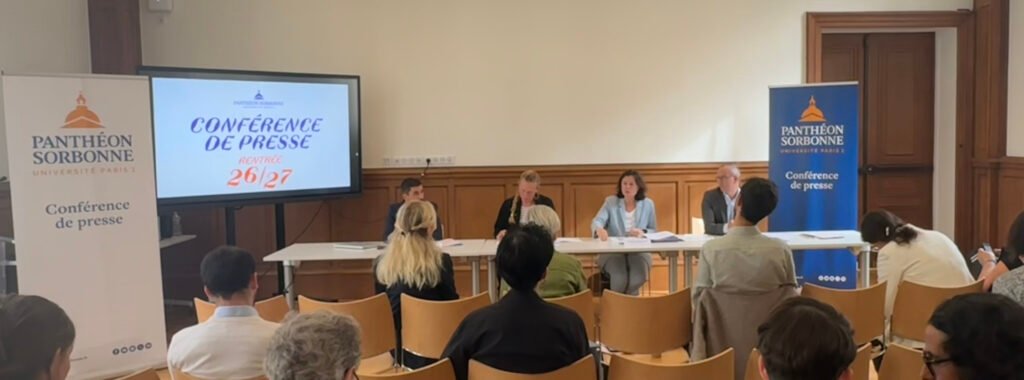
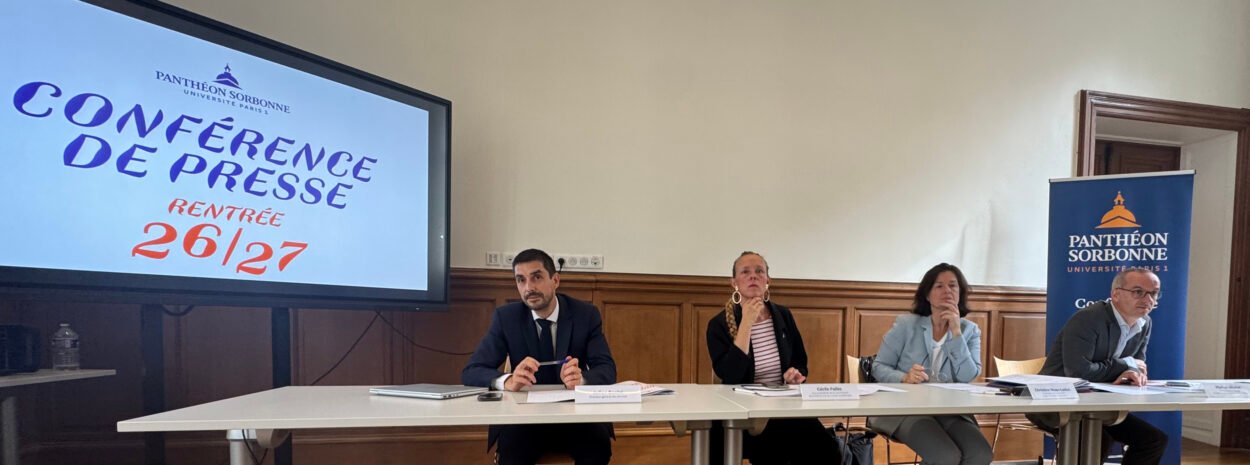
At the press conference marking the start of the 2026–27 academic year, Ad Astra Journal Monaco asked the President of Université Paris 1 Panthéon-Sorbonne, Christine Neau-Leduc, how the rapid rise of artificial intelligence was changing education—and what place critical thinking would retain in this new environment.
Banning AI, she suggested, would make little sense: many students already use it routinely, and some have done so since secondary school. The question is no longer whether artificial intelligence belongs in the university. It is already there. The more interesting question is what the university should now make of it.
That distinction matters.
If answers are easy to come by, the harder task is knowing what to make of them. That is where education still matters.
The rising value of judgement
Generative AI is often discussed as another stage in digitisation. In higher education its implications may be more fundamental.
For generations, academic work followed a relatively stable sequence. A student searched for information, read sources, compared them, constructed an argument and produced a piece of work. Artificial intelligence can now perform portions of that sequence with remarkable speed.
That forces an uncomfortable but useful question: what exactly should a university assess when a plausible answer can be generated almost instantly?
Neau-Leduc spoke of changes to teaching methods, the training of academics and the way knowledge and skills are assessed. Different disciplines will experience the disruption differently, but the transformation of teaching and evaluation is already becoming unavoidable.
The issue is therefore larger than detecting whether a student used an AI system to write an essay. If a machine can complete an assignment with little difficulty, educators must also ask whether the assignment still measures what they intended it to measure.
Artificial intelligence may prove an uncomfortable examiner of universities themselves. It exposes the difference between reproducing information and understanding it; between producing fluent prose and forming a defensible judgement; between having an answer and knowing whether that answer deserves to be trusted.
For Paris 1, the distinction goes to the heart of what the university does. In the humanities and social sciences, context, evidence and interpretation are not extras; they are the work itself.
Neau-Leduc linked the rise of AI to precisely these abilities. She emphasised critical reflection, interdisciplinarity and the importance of the humanities and social sciences in addressing questions of democracy, information and disinformation.
The irony is hard to miss.
Artificial intelligence is often presented as a threat to humanities education. Yet the easier it becomes to generate information, the more valuable may become the disciplines that teach people how to interrogate it.
A lawyer does not merely need a well-written answer; she must understand the legal consequences behind it. An historian must know where a source came from and why it should be believed. An economist must distinguish an elegant explanation from a sound one. A political scientist must understand how information, institutions and public trust interact.
When answers are plentiful, judgement becomes the scarcer skill.
From principle to practice
Paris 1 is already trying to translate this idea into education by making AI part of a broader education rather than leaving it to computer science. Its Collège de l’IA includes students from law, economics, history and geography, with further work on AI and governance. In practice, that means teaching students not just how to use these systems, but how to judge them.
Ambition meets constraint
Yet intellectual ambition is only one half of the story.
Paris 1 is attempting to redesign parts of its educational model while operating under the very practical pressures facing much of French higher education.
Demand remains exceptionally high. During the press conference, the university referred to more than 168,000 applications, compared with a far smaller number of available places—around 7,200 in the first year of undergraduate study and 5,200 at master’s level.
The university also faces staffing pressures. Its leadership described the need to recruit more teacher-researchers, particularly as further retirements approach, while warning that student capacity cannot expand indefinitely without corresponding human resources.
Julien Benini, Paris 1’s director-general of services, approached the same challenge from the administrative side: how to modernise a large institution while improving working conditions and preparing for significant changes in its workforce. AI is entering this part of university life too, with Paris 1 already examining how generative tools might be used in administrative work.
Finance therefore ran through the discussion almost as insistently as technology.
Neau-Leduc spoke of underinvestment in French universities and argued for higher education and research to be understood as investments in a country’s future rather than simply as costs to be contained.
The pressure is physical as well as financial. Florian Michel, vice-president responsible for the university estate, brought another dimension to the discussion: the need to maintain and modernise the spaces in which university life actually takes place. At Paris 1, transformation is therefore not confined to curricula or digital tools; it also concerns the campuses themselves.
The modern European university is expected to be accessible yet excellent, internationally competitive yet socially inclusive, technologically advanced yet intellectually independent. It must produce research, prepare students for changing professions, engage with society and increasingly demonstrate its economic relevance.
None of these expectations is unreasonable. The problem is their accumulation. Universities are being asked to do more, and to do it differently. Whether they can will depend as much on public investment as on academic ingenuity.
Knowledge beyond the campus
Paris 1’s response to these pressures is not confined to the classroom.
One of its initiatives, Campus des élus, is designed to bring academic expertise into closer contact with local government. Researchers can contribute to policy analysis, produce policy briefs and work with elected officials and local authorities on practical questions facing their territories.
Cécile Faliès, vice-president of the Academic Council’s Research Commission, placed this within a broader effort to bring research into closer contact with society — not simply by producing knowledge, but by making it useful beyond academic circles.
At its simplest, the idea is that knowledge should travel. Paris 1 wants research to move beyond academic circles and into the conversations where public choices are made.
The university is also looking beyond the academic audience. Making research more accessible is part of a larger effort to strengthen trust in science and in the institutions that produce it.
Research connected with the memory of the terrorist attacks of November 13th 2015 illustrates this broader role. The work brings together several disciplines and draws on more than a thousand testimonies, using research not merely to archive an event but to understand how individuals and societies remember it.
This is where information becomes understanding. A database can preserve testimony; a university can ask what it means.
An increasingly European university
Paris 1 is also seeking a deeper form of internationalisation.
Neau-Leduc argued that international agreements should increasingly go beyond student exchanges and programmes taught abroad. Educational partnerships, in her view, should be accompanied by structured research projects, exchanges between academics and longer-term scientific collaboration.
That reflects a wider change in European higher education.
The traditional image of internationalisation was mobility: a student spending a semester elsewhere, a professor visiting another campus, a bilateral agreement between two institutions.
The emerging model is more integrated. Universities increasingly seek to design programmes, conduct research and train students across institutional and national boundaries.
For Paris 1, the move towards a more integrated European university space has historical logic. Academic life has never fitted neatly within national borders. What is new is the attempt to turn that tradition into durable structures.
The real test is whether those structures deepen teaching and research, rather than simply multiplying partnerships on paper.
What cannot be delegated
AI brings these questions into sharp focus because it goes to the heart of the university’s purpose. For generations, universities offered something students could not easily get elsewhere: access to knowledge, expertise and serious intellectual exchange. That scarcity has largely disappeared. Information is abundant, and explanations are becoming easier to generate. The harder thing now is knowing what to trust, what to question and what matters.
Paris 1 Panthéon-Sorbonne is not attempting to place a wall between students and artificial intelligence. The direction set out by Christine Neau-Leduc is more demanding: to incorporate the technology while preserving the intellectual autonomy of the person using it.
For centuries, universities have taught people how to acquire knowledge. Their next challenge may be to teach them how to remain intellectually independent when knowledge—or something that closely resembles it—can be produced on demand.
In a world of instant answers, universities may matter less for the answers they provide than for the habits of mind they cultivate: knowing what to ask, what to doubt and what must remain a matter of human judgement.