UNESCO, AI and Humanity: Who Shapes Whom?
At UNESCO in Paris, a forum on youth and artificial intelligence moved beyond what machines can do and asked what thinking, culture and responsibility still demand of us.
When a fifth-grader was assigned The Giver, Lois Lowry’s novel about a society stripped of memory, feeling and choice, part of the work was handed to artificial intelligence.
Alisia Simmons, a student at the American University of Paris and president of its Human Rights & Technology Think Tank, brought the story to UNESCO‘s Forum for Youth in the Era of AI on 25 September. Its irony captured the morning’s central anxiety: a book about the erasure of human experience had been processed by a machine in a way that risked removing the experience of reading it.
“Are we using AI to expand the mind or quietly replace one?” Simmons asked.
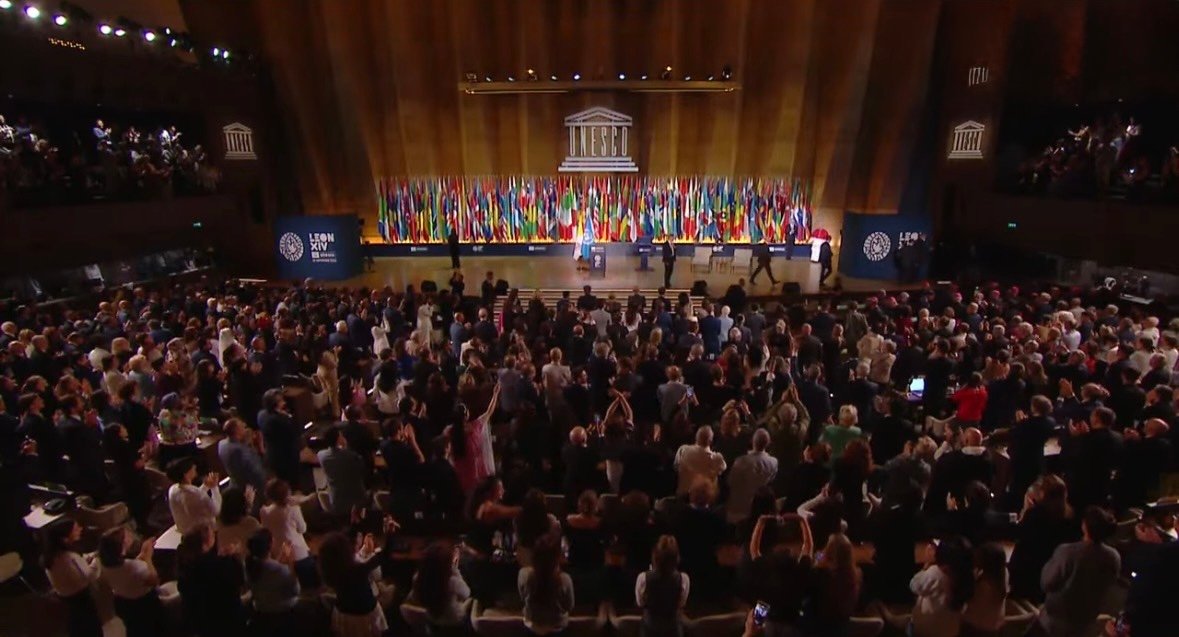
That question followed the forum through three discussions on learning, creativity and human agency. Young moderators shared the stage with students, educators, artists, philosophers and AI specialists. Later that day, Pope Leo XIV addressed UNESCO during the first papal visit to the organisation since John Paul II’s speech in 1980.
The gathering did not become a contest between technological optimism and fear. Instead, it concentrated on a more difficult question: what happens when a useful tool begins to remove the friction through which people learn, form judgment, create meaning and become themselves?
The gap between use and understanding
The scale of the challenge was set out at the opening. Maria-Liz Proveyer Llopiz, a youth representative from Aruba, cited a 2025 UNESCO-UNEVOC survey of 4,268 young people in 128 countries. Sixty-two per cent were already using AI in real-world contexts, but only 30 per cent had received formal training.
Learning to use AI, she argued, cannot mean only learning to prompt it more effectively. It must also mean learning to question, assess and verify what it produces. She asked what young people want AI to do for them – and what they are unwilling to surrender in return: creativity, freedom of thought, cultural diversity, human connection and, above all, the ability to think and decide for themselves.
AI ethicist Enrico Panai described education as a process that needs time, friction and the capacity to manage uncertainty. Those are precisely the conditions that automated systems are often designed to remove. If every difficulty is smoothed away and every answer arrives pre-digested, efficiency may rise while learning declines.
For Lucky Geluk, a South African literature scholar, the risk is also cultural. AI hallucinations can distort concepts embedded in histories of slavery, apartheid and colonialism, while African languages remain poorly represented in many models. A generated interpretation may sound authoritative while missing the historical or intertextual meaning carried by a word:
“We cannot outsource our thinking, our empathy, our emotion, as well as our discretion to machines.”
The educational challenge, then, is not merely to police cheating. It is to redesign assessment around the reasoning process, teach students to identify sources and train teachers to use AI as a sounding board rather than a substitute for thought.
Culture is more than an output
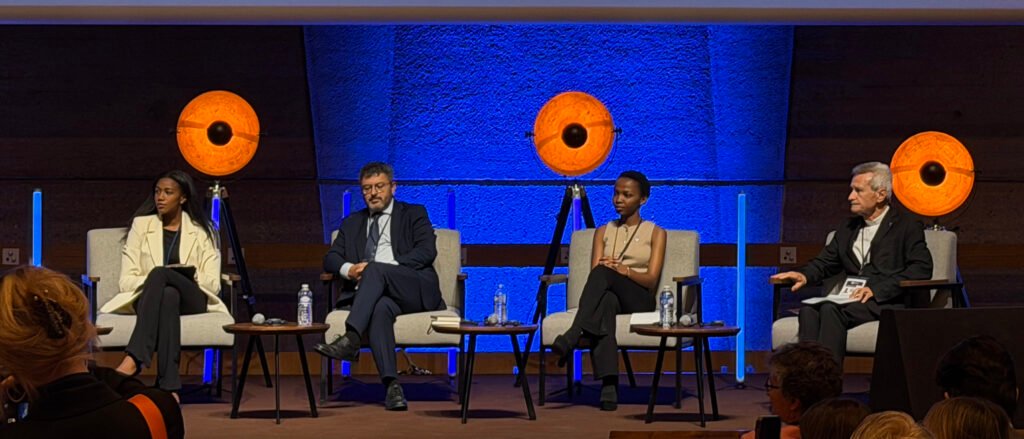
In the panel on creativity, theatre director Olivier Py confronted the possibility that language may no longer provide a secure border between human and machine. Two years ago, he said, he still believed that a distinctly human je-ne-sais-quoi would make a human text recognisable. He no longer felt certain.
Theatre is made through embodied intelligence: actors and audiences occupy the same room, at the same time, exposed to one another. AI may reproduce style and generate language, but it cannot share that physical encounter. Culture, in this view, is not simply a product. It is a relationship.
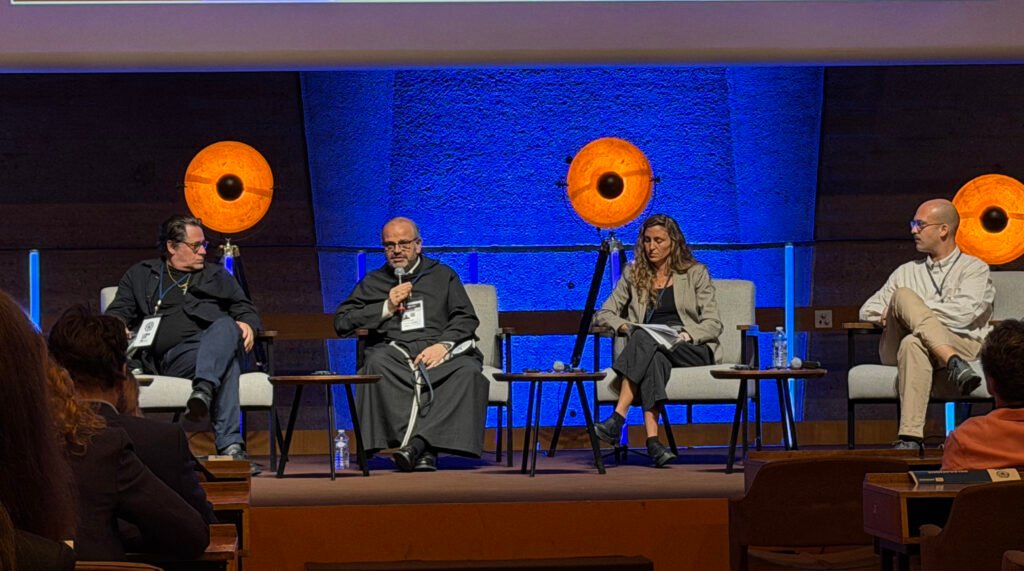
Father Paolo Benanti, a Franciscan priest, moral philosopher and member of the Pontifical Academy for Life, placed responsibility at the centre of that relationship. A system designed in one country can later shape the language, culture and understanding of people far from its creators. Before deciding what a machine should be permitted to do, he argued, society must identify the people responsible for its design, deployment and effects.
Benanti also offered one of the day’s most memorable metaphors.
Comparing AI-generated culture with ultra-processed food, he raised the prospect of “ultra-processed creativity”: fluent, attractive and frictionless, yet offering little nourishment. The danger is not simply that machines will produce bad art. It is that fluency will be mistaken for meaning and consumption for creative experience.
Philosopher Alejandra López Gabrielidis widened the debate from individual authorship to collective ownership. AI systems derive their power not from algorithms alone, she said, but from vast quantities of cultural data: artworks, writing, images, habits, values and everyday human expression. She proposed treating such data less as freely extractable raw material and more as a form of collective heritage.
UNESCO has previously created frameworks for protecting World Heritage and intangible cultural heritage. López Gabrielidis suggested that cultural data may now require an equivalent form of collective stewardship. Among the possible mechanisms she raised was a specific AI tax that could return part of the value generated from shared cultural material to society.
Information is not understanding
The forum’s sharpest examination of AI and news came from South African digital creator Amahle-Imvelo Jaxa, known as Jaxx of All Trade.
Asked which human ability AI should never replace, she chose thinking. Returning to university, she had watched younger classmates gain rapid access to explanations while losing confidence in their own opinions. Their work began to resemble everyone else’s.
AI can read ten articles and produce a summary. A creator can turn a 400-page document into a ten-minute video. Both can make difficult subjects accessible, particularly in politics, economics and international affairs. But, Jaxa warned, information does not automatically become understanding. A summary may not explain why a story matters, how a decision affects a person’s life or what has been omitted.
Her critique also turned inward. If audiences increasingly avoid original documents and rely on her compressed explanations, she asked,
“Am I also AI?”
For Jaxa, responsible creators should disclose their sources and their own use of AI, encourage audiences to move beyond headlines and create content that poses questions rather than merely dispensing answers. But she rejected the idea that the burden should rest on teenagers alone. Young people cannot simply be told to remain critical while companies build systems designed to predict and capture their attention.
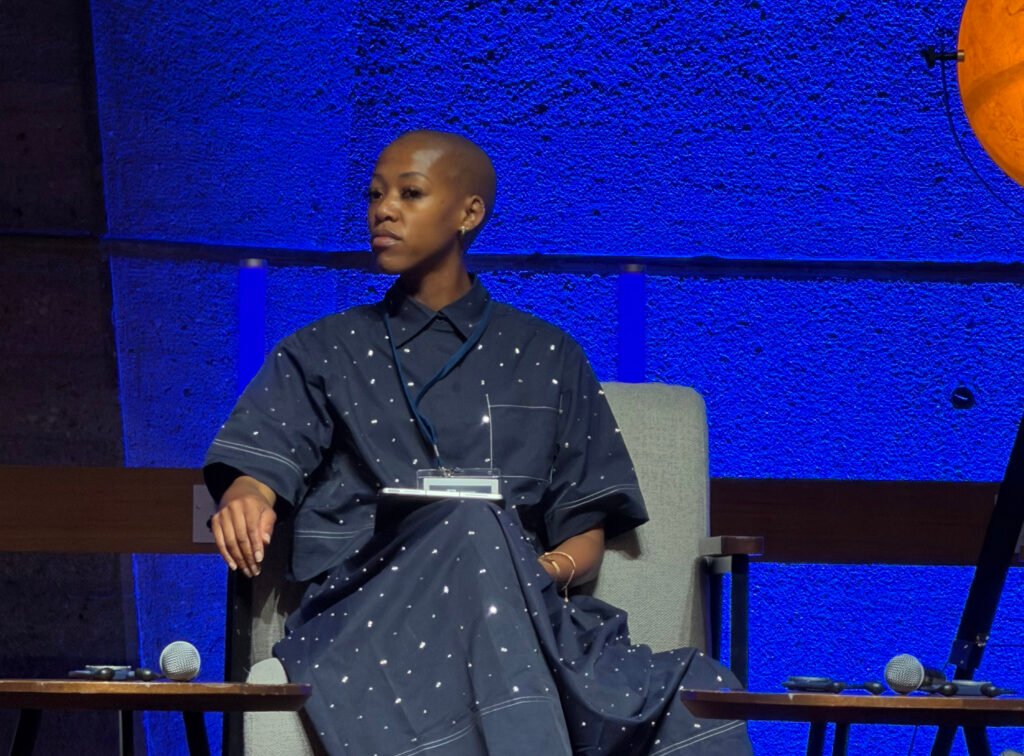
Maxime Derian, an AI specialist and co-founder of Technoréalisme.org, offered a useful paradox: AI can make us more efficient now while leaving us less capable later.
“AI is a tool, not a friend.”
Synthetic companions can imitate humour, concern and intimacy convincingly enough for children to form emotional attachments. Derian called for evidence-based, enforceable AI safety standards designed specifically for children and adolescents, rather than relying on voluntary measures or asking children to adapt to systems built without their developmental needs in mind.
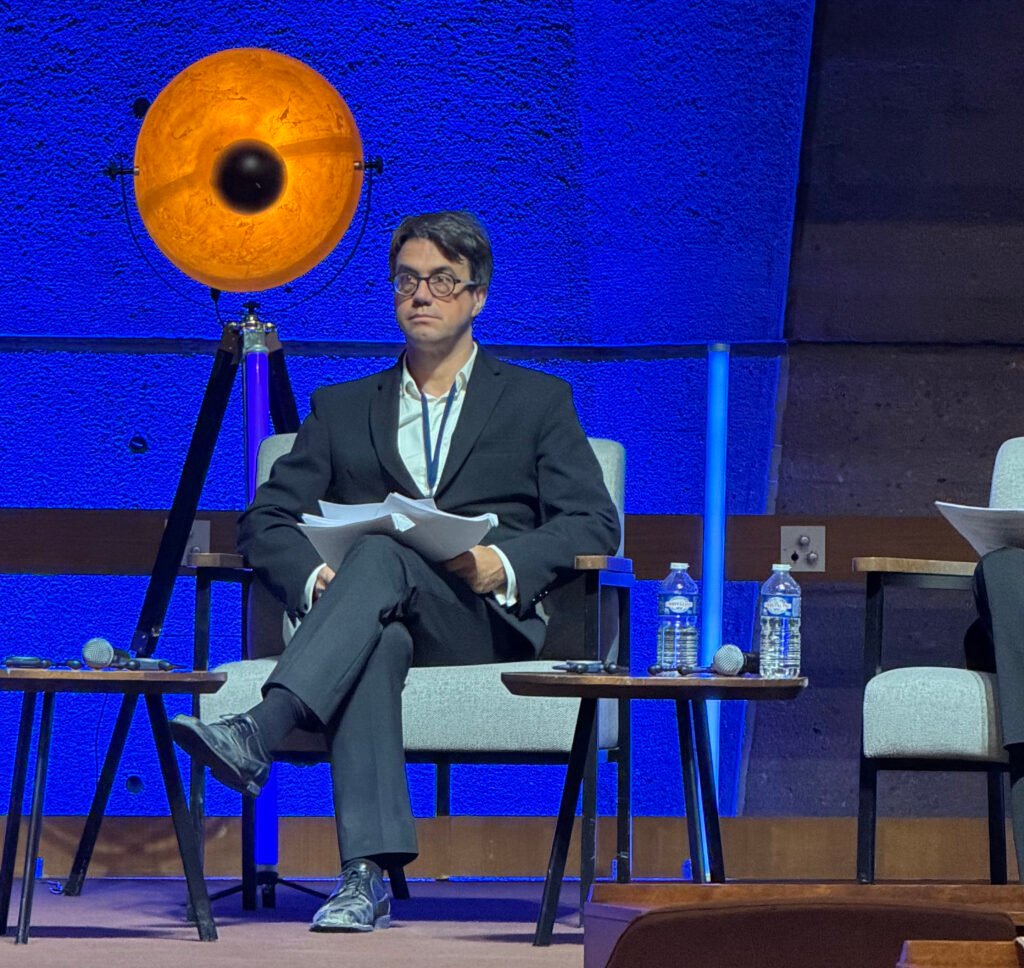
Divina Frau-Meigs, professor emerita at Sorbonne Nouvelle and holder of the UNESCO Chair Savoir devenir, argued that ordinary AI literacy is not enough. Young people must also learn to ask who controls a system, who benefits from it, who may be harmed and what alternatives exist. She placed particular emphasis on teacher training: a short standalone course cannot match the influence of educators working across subjects and over many years.
From ethical principles to human responsibility
In his afternoon address, Pope Leo XIV connected these concerns to a larger crisis of meaning.
He urged the international community to protect children and young people from digital exploitation and to safeguard their freedom to think and discern. UNESCO’s Recommendation on the Ethics of Artificial Intelligence, adopted in 2021, already provides a global framework. The discussions in Paris showed where the difficult work begins: turning principles into design requirements, educational practice, cultural policy and enforceable accountability.
Schools must decide what students should still learn to do unaided. Creators and journalists must make their methods visible without confusing compression with understanding. Technology companies must answer for the habits and relationships their products encourage. Cultural institutions must determine whose work trains generative systems and how the value created from that inheritance should be shared.
The forum offered no reason to reject AI. It offered a more demanding standard by which to judge it. When a system saves time, what happens to the time saved? If it supplies the answer, does the user still understand the question? If it can imitate care, language or creativity, who remains responsible for the human consequences?
After all, it is not AI’s ambition that should worry us, but our appetite for convenience.