Paris 2.0: Climate Leadership Faces Its Oxford Exam
Ten years after the Paris Agreement, Oxford’s Smith School brought together people from business, finance, politics and academia to ask how countries can act together in a world where agreement is becoming harder to find.
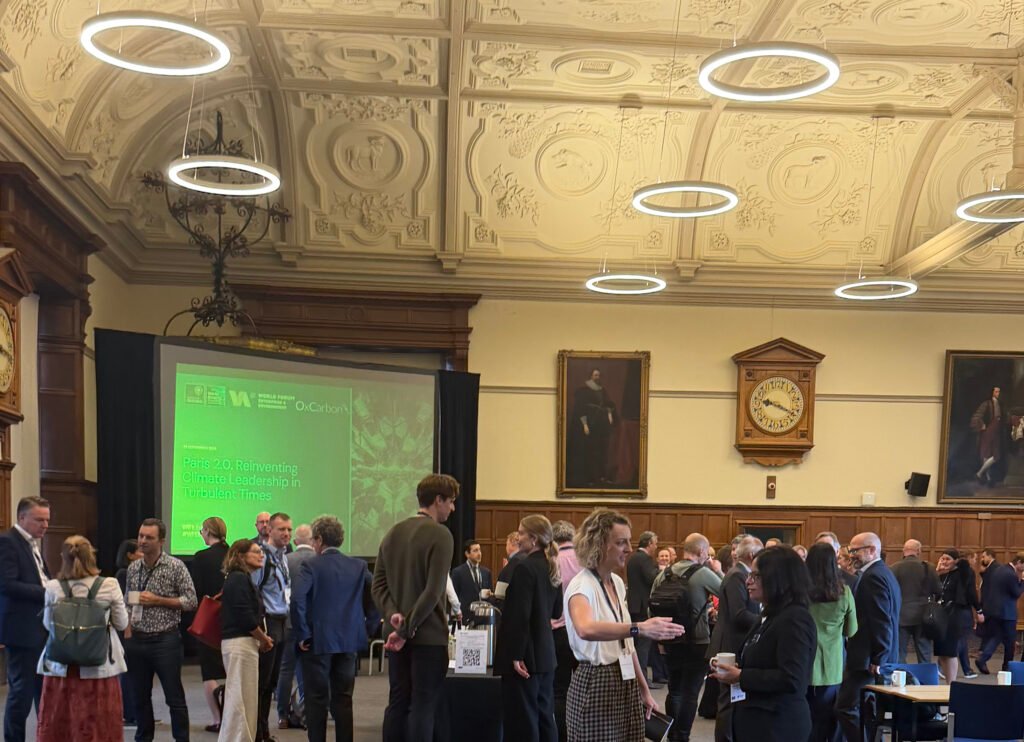
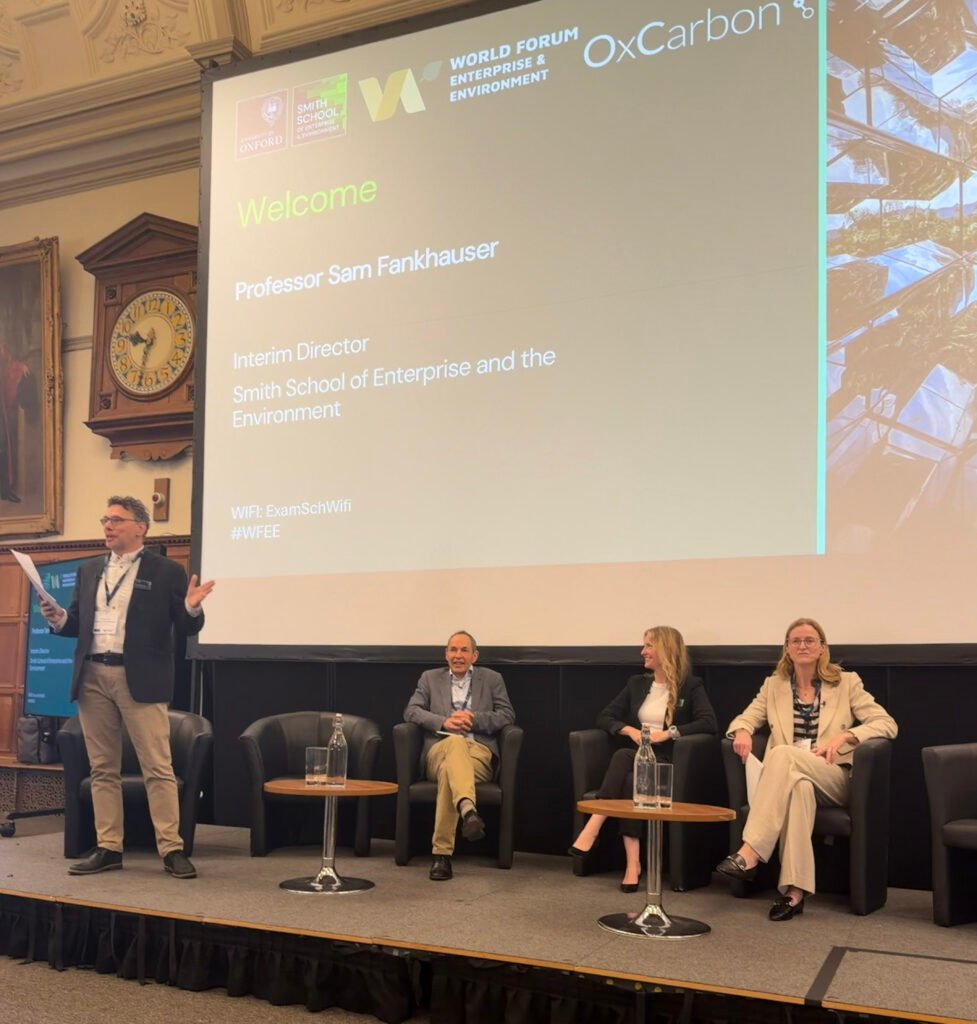
“There won’t be a test,” Sam Fankhauser said as he opened the World Forum hosted by Oxford’s Smith School of Enterprise and the Environment.
In the Examination Schools, where generations of Oxford students have sat their exams, it was a well-judged joke — and a slightly bold one. This time, what was being tested was not an individual student’s knowledge, but whether the climate leadership built around the Paris Agreement could withstand the pressures of 2026.
Much has changed in the decade since Paris. Solar power has become cheaper than many expected, Fankhauser observed. The effects of climate change are no longer a distant threat; they are a “lived reality”. Artificial intelligence has grown into a force whose scale would have been hard to imagine during the Paris negotiations. The political landscape in which countries must reach agreements has changed, too.
The Forum was titled Paris 2.0: Reinventing Climate Leadership in Turbulent Times. By the end of the day, there was no ready-made plan for a second version. But it had become clearer why one would be so difficult to devise: countries, companies and investors still need to work together, even as it becomes harder to trust one another.
The New Geography of Climate Power
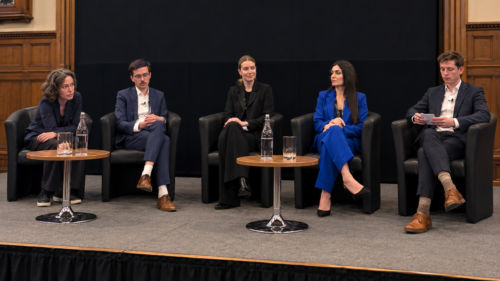
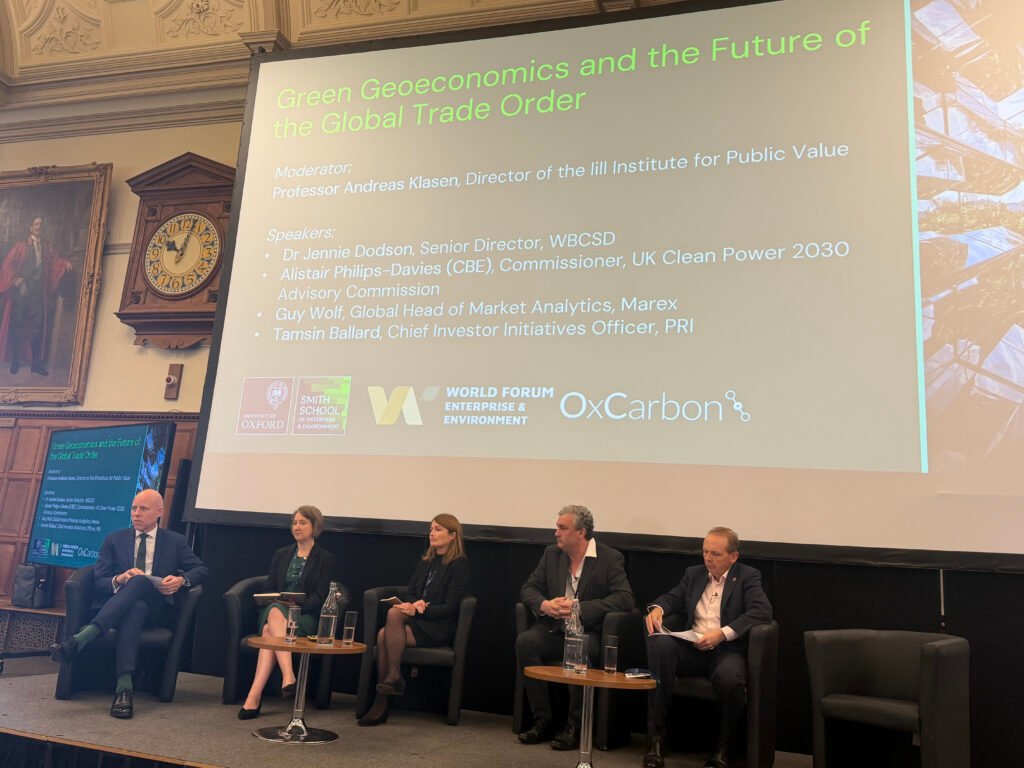
Andreas Klasen, who chaired the trade discussion, began by arguing that the old question — whether trade rules help or hinder climate action — no longer went far enough. Climate policy now runs through trade, industrial strategy, innovation and security. The economy, he suggested, is changing faster than the rules meant to govern it.
The discussion bore him out. It soon moved from trade to supply chains, national security and the materials needed for clean energy. Governments want to know where those materials and technologies come from, who controls them and whether they can be relied upon.
Jennie Dodson of the World Business Council for Sustainable Development described one of the problems facing companies: “The thing that most concerns businesses at the moment is the policy flip-flopping that we’re seeing.”
It is not hard to see why. Companies can prepare for demanding rules; clear rules make it possible to plan investments. Constant changes make both harder. Building a factory or an energy project takes years. Political decisions can change course much faster.
Alistair Phillips-Davies, Commissioner, UK clean power 2030, warned that the UK and Europe are unlikely to match US energy prices soon. That makes the shift to renewables more urgent, but harder to manage as households already feel the cost of living squeeze.
For investors, climate is only one part of a broader picture of risk. Tamsin Ballard of the Principles for Responsible Investment spoke of an “interconnected set of system-level risks”, including resource security, pressure on public finances and geopolitical fragmentation.
Once you start to trace those connections, the risks no longer look like separate subjects. A trade dispute can disrupt supplies of clean technology. An energy shortage can influence where a company builds. Political tension can make a long-term investment seem far less secure.
Guy Wolf, Marex’s Global Head of Market Analytics, suggested calling the shift “re-globalisation” rather than de-globalisation. Supply chains are not disappearing, he said; they are being reconfigured as countries reconsider who and what they are willing to depend on.
The world is not dividing neatly into countries that no longer need one another. Instead, each is trying to decide which dependencies are acceptable. In climate policy, that means cooperation continues — but with an increasingly pressing question attached: who will control the technology, materials and money?
Mike Berners-Lee, author and chair of the National Emergency Briefing, approached the climate challenge from another angle: “It’s not enough just to have good things happening.”
New technologies and successful initiatives matter only if they change the overall direction of travel.
The discussion of artificial intelligence gave that idea a very concrete dimension.
AI’s Energy Bargain
“The cloud” is a convenient metaphor. It makes digital technology seem almost weightless, with few consequences in the physical world. But behind AI are data centres, electricity networks, cooling systems, water, land, minerals and infrastructure.
The potential benefits were part of the discussion, too. AI could help researchers work with complex datasets, improve climate analysis and make energy and transport systems more efficient. But the conversation did not boil down to whether AI is good or bad. The more useful question was what its growth would require — and who would benefit.
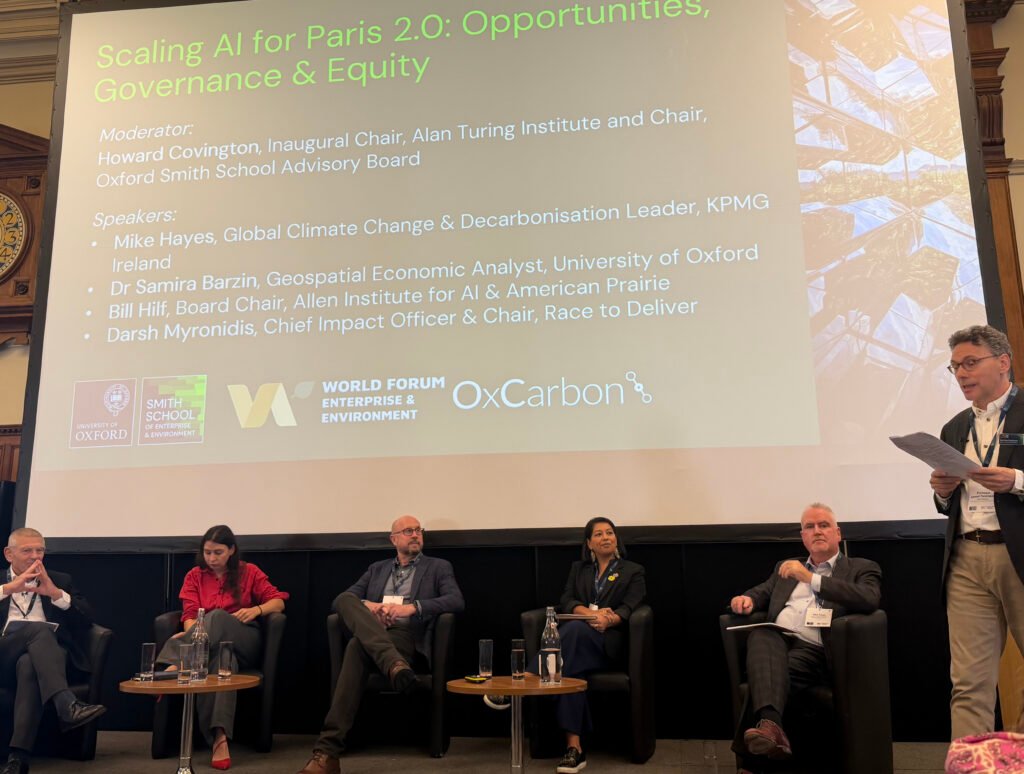
“They need energy. They fundamentally need energy,” said Mike Hayes, KPMG’s climate and decarbonisation leader.
For companies developing AI, electricity is not a marginal expense; it is a condition of growth. Hayes suggested that demand from data centres could put additional strain on energy systems, while also encouraging investment in new generation and power networks. Countries with reliable, low-carbon electricity may be better placed when companies choose where to build.
That is one possible outcome, not a guaranteed one. New demand could accelerate investment in clean energy, or be met by whatever power is easiest to secure. The technology itself cannot answer that question. Governments, energy companies and businesses will.
Bill Hilf, chair of the board at the Allen Institute for AI, spoke about AI’s potential to put powerful tools within reach of more people. But he was quick to qualify the claim: “That’s an opportunity, not a promise, not a guarantee.”
The caveat matters. New technology can make something possible. It cannot ensure that the benefits will be widely shared or that the costs will be fairly distributed.
Who Pays for Paris 2.0?
Darshana Myronidis raised a harder question: who pays for AI?
“I think we need to build in who bears the cost,” she said, pointing to the minerals, natural resources and human supply chains on which AI depends. Speaking from an African perspective, she urged the audience to look beyond the polished digital surface.
A data centre may be in one country, use minerals from another and generate returns somewhere else. Those who bear the environmental and social costs do not necessarily own the technology or receive its profits.
For countries in the Global South, the question is not only whether AI can help address climate challenges. It is also whether they can build the expertise and influence to share in the value it creates.
Samira Barzin, an Oxford researcher, brought the discussion back to how countries can use the data available to them. Her work applies geospatial data and economic analysis to developing economies. Data alone is not enough, she said. People and institutions need the capacity to turn it into decisions.
“Capacity building will remain a big, big issue,” she said. Then she summed up the challenge: “There’s a big opportunity, but a big task.”
By the end of the day, that phrase seemed to fit the Forum as a whole. The Paris Agreement gave countries a shared framework. Making it work now involves governments concerned about dependence, companies seeking stable rules, investors weighing political risks, technology firms looking for power and local communities asking what they will gain from hosting new infrastructure.
The Smith School’s forum in the Examination Schools offered no easy blueprint for Paris 2.0. It did leave us with the questions that matter: who will invest, who will work together, and who will bear the cost?