From Education to Action: Inside UNITAR’s Educating for Futures Conference
At UNITAR’s Educating for Futures conference in Brussels, three speakers challenged a familiar assumption: that preparing people for tomorrow is simply a matter of giving them the right skills.
The future is often discussed as though everyone were approaching it from the same starting line. But the ability to plan ahead, influence decisions or even imagine what comes next depends heavily on the circumstances in which we live.
For some, the future is a landscape of technological possibilities. For others, it is a question of whether tomorrow will offer the security that today cannot guarantee.
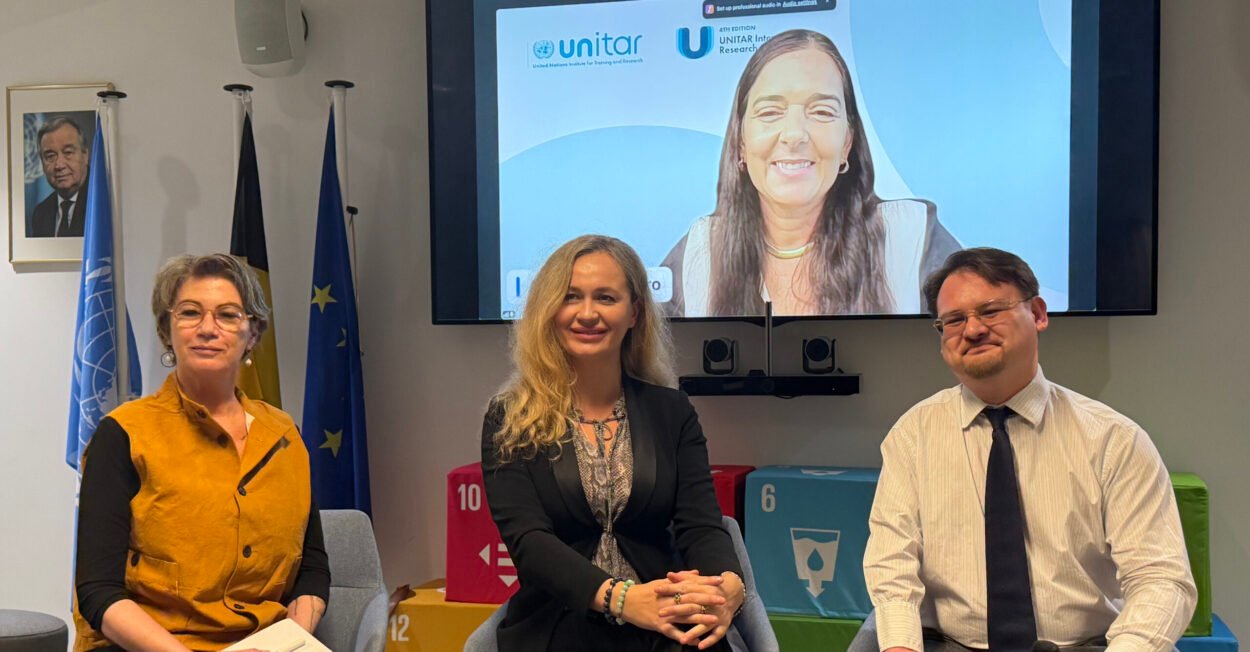
That distinction ran through Leadership and Professional Education for Future-Ready Practice, a session at the 4th UNITAR International Research Conference, Educating for Futures, held at UN House in Brussels.
Chaired by Dr Nicolai Due-Gundersen, the session brought together Catherine Hamel of the University of Calgary, Dr Olesya Meskina of the Swiss School of Business and Management Geneva, and Dr Alexandra Ribeiro of Portugal’s National Institute of Public Administration.
Their subjects ranged from architectural leadership to corporate human rights and public governance. Yet each, in a different way, questioned the assumption that knowledge alone prepares people to shape the future.
The Privilege of Planning Ahead
“Anticipation itself is never neutral.”
Catherine Hamel’s observation offered a compelling starting point for the discussion.
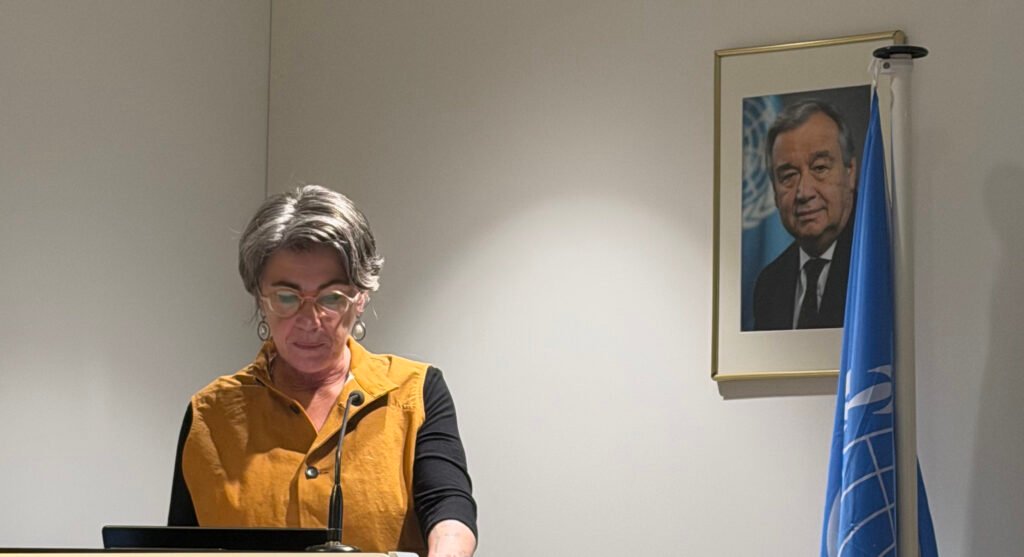
An architect and educator at the University of Calgary’s School of Architecture, Planning and Landscape, Hamel grew up in Beirut, experiencing the city before, during and after the Lebanese civil war. That background informed her presentation, Leadership in Architecture: Authoring Futures from Unequal Ground.
For some, the future is a horizon of possibilities. For others, it begins with a far more urgent question: how to stay safe tomorrow.
Hamel challenged the notion that imagining new opportunities is somehow more forward-looking than navigating uncertainty. A young person crossing a border, weighing risks and planning each step, may be exercising extraordinary foresight — with almost no room for error. The difference is not ambition or ability, but the security from which each person begins.
This perspective also shapes Hamel’s teaching. In architecture, where decisions are shared among clients, authorities and communities, leadership rarely comes with absolute power. Instead, students learn to influence change through dialogue, negotiation and the ability to see possibilities others have overlooked.
Her warning about artificial intelligence brought the argument into sharper focus:
“When recognition routes through data, absence is not privacy, it is erasure.”
When entire communities are missing from the data, they risk disappearing from the futures technology helps us imagine. The real question is not simply who has access to AI, but whose world it sees — and whose it leaves out.
When Human Rights Leave the Classroom
Where Hamel examined the conditions that shape individual agency, Dr Olesya Meskina turned to the responsibilities of those who will soon occupy positions of corporate power.
“Today’s business students are tomorrow’s directors and CEOs.”
Speaking on behalf of the Swiss School of Business and Management Geneva, Meskina presented research into an educational approach that brings business students into contact with United Nations human rights mechanisms.
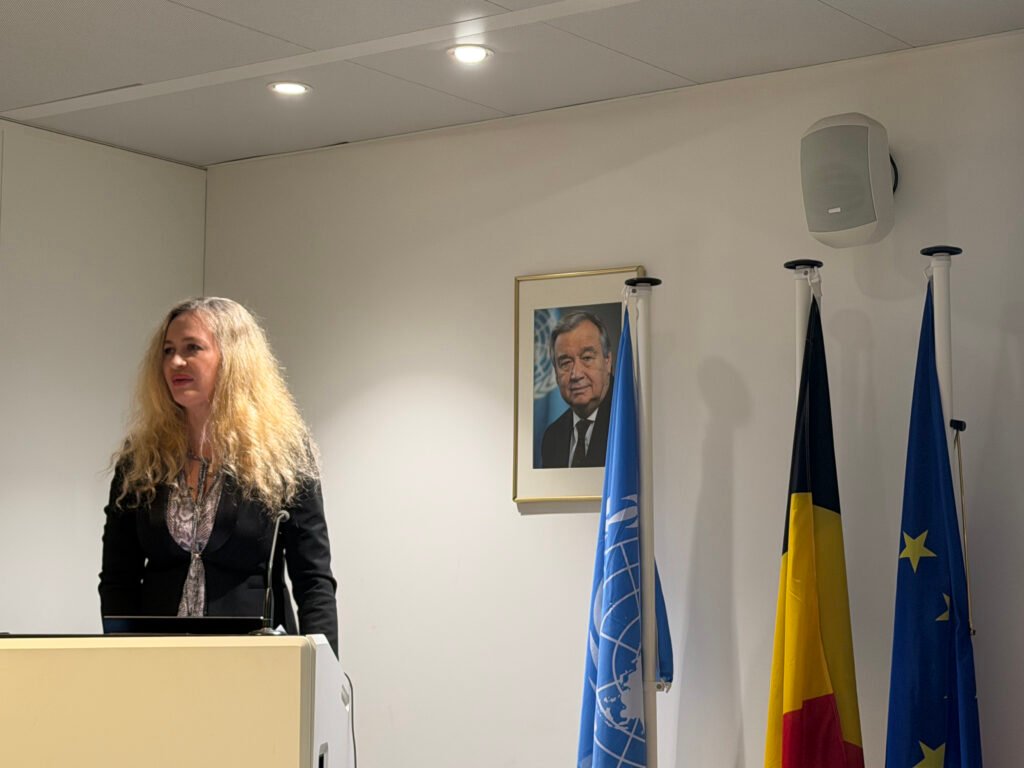
The problem she identified is familiar. Sustainability and human rights appear increasingly often in business-school mission statements, accreditation reports and course materials. But their presence on paper offers little assurance that graduates know how to apply them.
Meskina examined five educational programmes conducted between January 2025 and July 2026, involving more than 65 students from different parts of the world.
Working with partner NGOs, students stepped beyond the classroom and into the UN Human Rights Council in Geneva, observing negotiations, preparing reports and, in some cases, delivering statements.
The experience revealed how closely human rights are tied to everyday business decisions, from employment practices to supply chains. As one participant observed, financial success does not absolve a company of responsibility for how it treats people.
Meskina’s preliminary findings exposed a crucial gap: while students became more adept at identifying human rights risks, translating that knowledge into management decisions proved harder.
Understanding responsibility is one thing. Exercising it when commercial interests and human consequences collide is another. That, Meskina suggested, is where business education must go beyond theory.
The Limits of Transparency
The final presentation shifted the discussion from professional education to the institutions within which decisions are made.
Joining online, Dr Alexandra Ribeiro of Portugal’s National Institute of Public Administration examined transparency and integrity as capacities for sustainable development governance.
“Publishing a document creates an opportunity for access.”
Making information public does not necessarily give citizens a voice. Governments may publish detailed policy proposals, yet leave people struggling to understand their implications — or invite feedback only after key decisions have been made.
Drawing on research into sustainability governance in Portugal, Ribeiro explored the gap between institutional commitments and the capacity to put them into practice. Her proposed framework calls for information that is accessible, understandable and timely, alongside genuine opportunities for citizens to question decisions and contribute their own knowledge.
A transport plan, for instance, may look convincing on paper while overlooking an unsafe crossing or an inaccessible route that residents know all too well.
Although Ribeiro’s framework remains to be tested, it raises a compelling question: what is transparency worth if people cannot use it to influence the decisions that shape their lives?
Education Is Only Part of the Answer
Though their fields differed, the three speakers returned to the same question: what does it take to turn knowledge into meaningful change?
For Hamel, it begins with recognising that not everyone has the same freedom to plan for the future. For Meskina, it means preparing business leaders to put ethical principles into practice. And for Ribeiro, it requires institutions that do more than share information — they must give citizens a genuine voice.
Together, their perspectives suggest that preparing for tomorrow is about more than acquiring skills or embracing new technologies. It is about creating the conditions in which people can use what they know to influence the world around them.
We often ask how to prepare the next generation for the future. Perhaps we should also ask whether our institutions are ready to listen to them.