The National Council of Monaco: Priorities for the Season Ahead
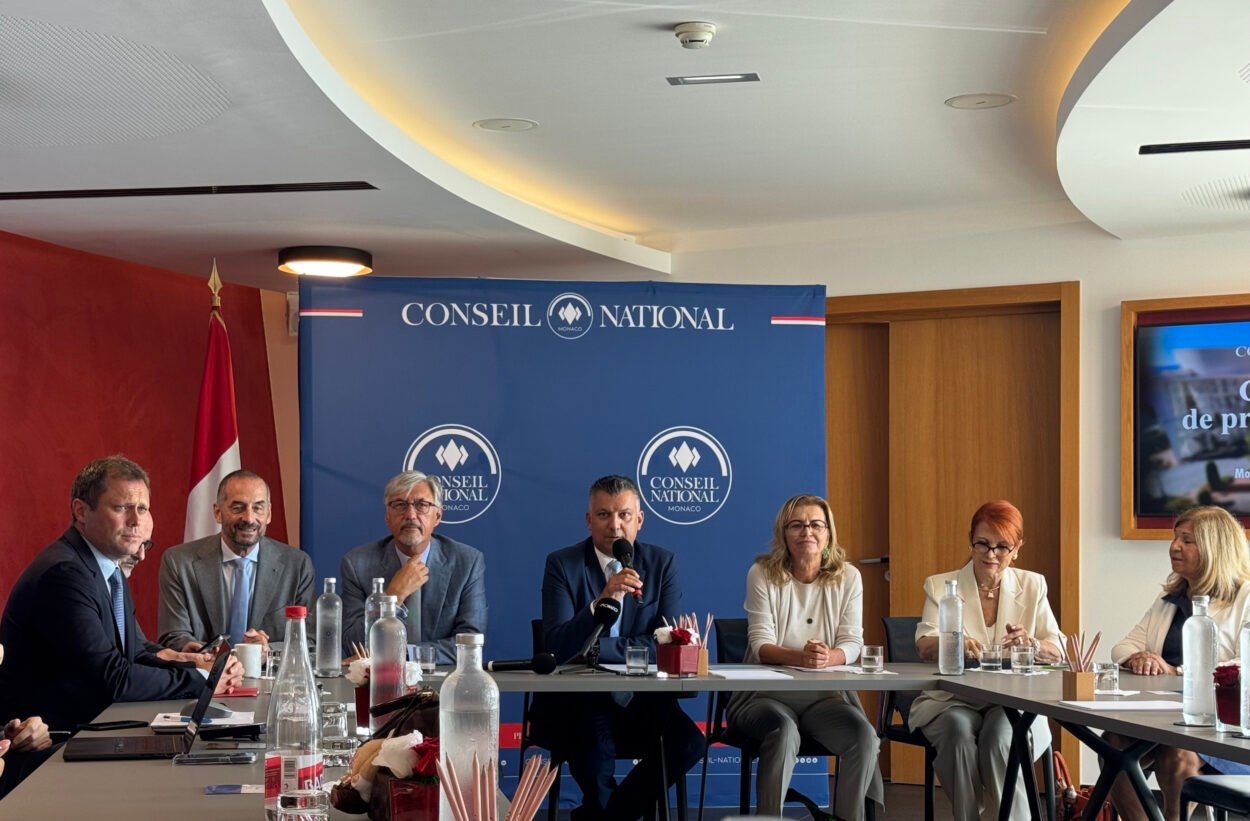
At its traditional rentrée politique, President Thomas Brezzo and members of the National Council set out their priorities for the season ahead — from housing and national priority to the future of Fontvieille, crypto-assets and artificial intelligence. Behind these different issues lies a larger question: what kind of Monaco is the Principality building for the next generation?
What does Monaco need to ensure that the next generation can continue to build its future here?
Housing for Monegasques. Career opportunities. A vibrant urban environment. Security. And the ability to keep pace with a world increasingly shaped by artificial intelligence and digital finance.
These themes shaped the National Council of Monaco’s rentrée politique, held ahead of debates on the 2026 Revised Budget and the 2027 Initial Budget. The mood was constructive and decidedly forward-looking.
From the outset, Thomas Brezzo, President of the National Council, underlined the quality of the institutional dialogue:
“Relations are good. There are no tensions between the National Council and the Government.”
The emphasis was on continuity, dialogue and, above all, turning priorities into progress. In Monaco, where every square metre matters, nowhere is that long-term thinking more tangible than in housing.
For the National Council, housing remains an absolute priority. Throughout the meeting, one French verb kept returning: anticiper — to anticipate.
The focus is firmly on the long term: anticipating Monaco’s housing needs well beyond the immediate future. With an estimated requirement of around 100 new homes a year, the Council stressed the importance of maintaining a pace of development that can meet the needs of future generations.
Behind those numbers lies a more human question: will young Monegasques be able to remain in Monaco, build careers, start families and imagine their lives here?
That leads naturally to another defining issue: national priority.
During the meeting, members pointed to figures showing that the number of Monegasques employed in the civil service fell from 1,032 in 2019 to 993 in 2024, even as the administration as a whole expanded.
For the National Council, national priority remains a cornerstone of Monaco’s social model, helping to ensure that Monegasques continue to benefit from the opportunities created by the Principality’s success.
“It is a right enshrined in our Constitution,” members stressed during the meeting.
Here lies one of Monaco’s most interesting balancing acts. The need to protect opportunities for its citizens exists precisely because the Principality remains so attractive to the rest of the world.
That openness was acknowledged candidly during the discussion on residency. New residents play an important part in Monaco’s economic model: they buy and rent property, establish companies and contribute to economic life. At the same time, the Council argued that such desirability should come with equally high standards, particularly when it comes to security and the quality of those choosing to make Monaco their home.
Remaining international while preserving a strong national identity has long been one of Monaco’s strengths. The same balance applies not only to who lives here, but to the kind of place Monaco wants to become.
Which brings the conversation to Fontvieille.
The National Council’s ambitions for the area go well beyond the renovation of a shopping centre. The vision discussed includes restaurants, a cinema, green spaces and places designed to bring more life and activity to the district. The work of Corinne Bertani, who has been closely involved with the Fontvieille dossier, was also highlighted during the meeting.
Just as important are the businesses already there. Members stressed the need to give Fontvieille’s retailers greater visibility on the project’s timetable and future, allowing them to plan and invest with confidence.
If the word for housing was anticiper, Fontvieille had its own:
“Pour le centre commercial, le seul mot qui me vient, c’est avancer.”
“When it comes to the shopping centre, the only word that comes to mind is: move forward.”
Anticipate and move forward. The two ideas capture much of the spirit of this rentrée politique — and they extend well beyond housing and urban development.
This autumn, the National Council will also consider highly technical legislation concerning crypto-assets and international tax standards. The challenge is not simply to adopt new rules, but to ensure that Monaco’s regulatory framework remains effective as financial markets and technologies evolve.
For an international financial centre, that ability to adapt matters.
The same principle emerged in the discussion around artificial intelligence and video surveillance. Facial recognition and AI have advanced rapidly, raising new questions about how legislation can keep pace with technologies that evolve faster than conventional legislative cycles. The National Council has brought in legal expertise to help anticipate those changes.
Yet its position was expressed in strikingly simple terms:
“We are in favour of security. But not at the expense of individual freedoms.”
It is perhaps the clearest expression of the balance running through the entire conversation.
Monaco wants to remain one of Europe’s safest environments while embracing technological innovation. It wants to continue attracting international residents and investment while protecting opportunities for Monegasques. And it wants to modernise its urban landscape without sacrificing the quality of life that has made the Principality so distinctive.
Ultimately, the rentrée politique offered a broader perspective on Monaco’s priorities — and on how the Principality is preparing for the years ahead.
For a new generation, the Principality’s appeal will not be measured solely in property values or views over Port Hercule. It will also depend on the possibility of living here, pursuing a career, starting a family or a business, and doing so in a country confident enough to evolve without losing its identity.
Monaco has long shown that a small country can have an international presence far beyond its size. The task now is to carry that success forward — to anticipate where necessary, to move forward where possible, and to ensure that the Monaco of tomorrow remains unmistakably Monaco.